From the blog
2026 Cost vs. Value Report: GAF Roof Replacement ROI for Middle Tennessee Homes
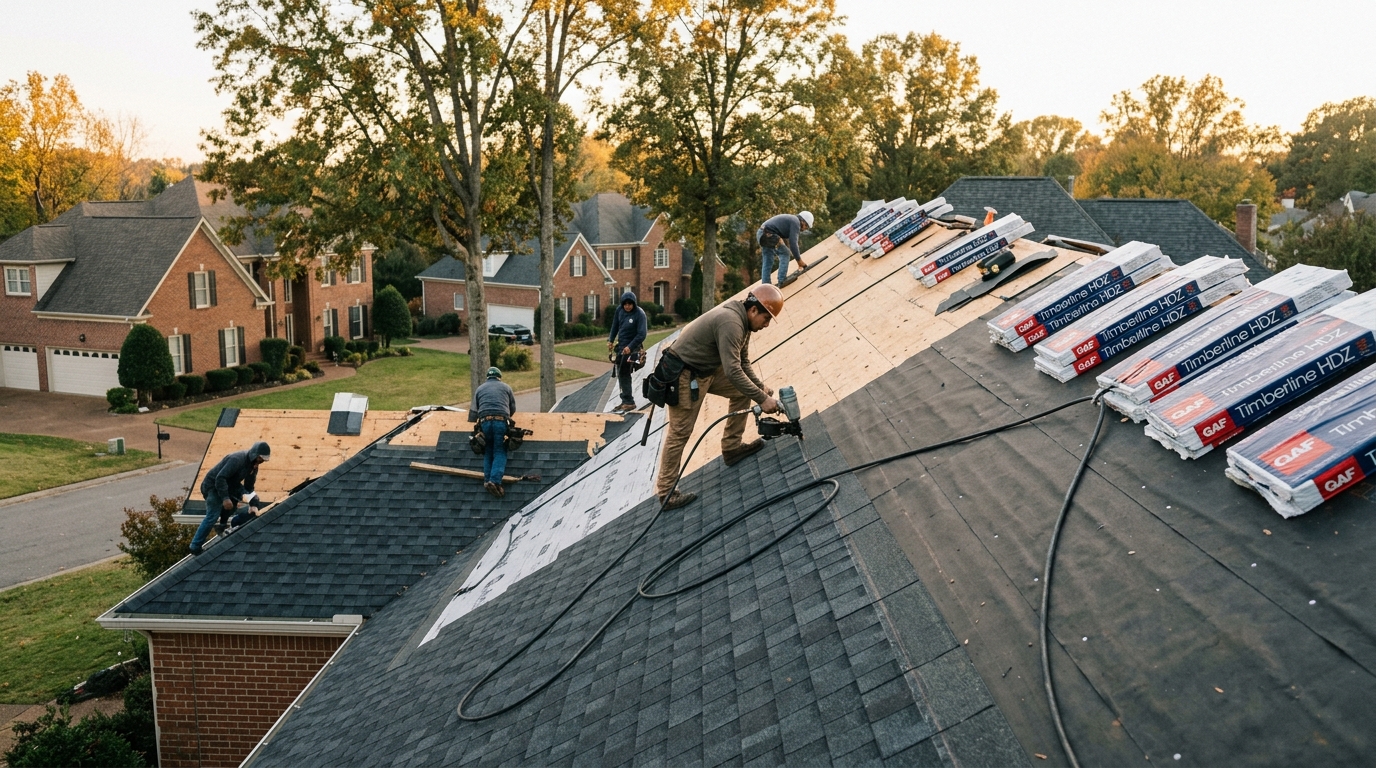
A GAF roof replacement in Middle Tennessee typically costs $11,000–$22,000 for an average 2,200 square foot home in 2026, and recoups roughly 55–65% of that cost at resale while cutting insurance premiums and repair spend. Architectural shingles like GAF Timberline HDZ deliver the best balance of cost, wind resistance, and curb appeal for Nashville, Franklin, Brentwood, Murfreesboro, and Hendersonville homes.
What a GAF Roof Replacement Costs in Middle Tennessee in 2026
Roofing is priced per "square," which equals 100 square feet of roof surface. Most Middle Tennessee homes run 22–32 squares once pitch, valleys, and waste are included. Installed pricing for GAF systems in our market generally falls in these ranges:
- 3-tab shingles: $400–$500 per square installed (largely phased out for quality-focused installs)
- Architectural shingles (GAF Timberline HDZ): $480–$700 per square
- Designer shingles (GAF Grand Sequoia, Camelot II): $800–$1,200 per square
- Metal and specialty add-ons: priced separately by scope
Four variables move your total more than shingle choice: roof pitch (steep roofs above 8/12 add labor and safety costs), number of layers to tear off, decking repairs, and complexity such as dormers, valleys, and chimneys. A simple gable roof in Murfreesboro costs far less per square than a cut-up hip roof in Brentwood. Request a written scope that lists decking replacement pricing per sheet, so a surprise rotted-plywood discovery does not become an open-ended change order.
Asphalt Shingle Types: What Each One Delivers
Asphalt shingle types differ in thickness, wind rating, and expected life. Here is how the main GAF options compare:
| Shingle type | Typical lifespan | Wind rating | Best fit |
|---|---|---|---|
| 3-tab (GAF Royal Sovereign) | 15–20 years | 60 mph standard | Rental or short-term ownership |
| Architectural (GAF Timberline HDZ) | 25–30 years | Up to 130 mph with LayerLock and 4-nail pattern | Most Middle Tennessee homes |
| Designer (GAF Camelot II, Grand Sequoia) | 30–40 years | Up to 130 mph | High-end homes, HOA-driven aesthetics |
Timberline HDZ is the volume leader for good reason. It uses GAF's LayerLock fastening zone, a wider nailing area that holds the nail in place under high wind. It also carries StainGuard Plus algae protection, which matters in our humid summers where black streaking from algae is the most common cosmetic complaint on older roofs.
Best Roofing Materials for Tennessee Weather
Middle Tennessee roofs face a specific stress profile: spring hail and straight-line wind from severe thunderstorms, occasional tornado-adjacent events, humidity that feeds algae and moss, and freeze-thaw cycles in winter. Material choice should address those threats directly.
- Hail: Standard architectural shingles handle small hail, but 1.5 inch stones and larger cause granule loss and mat fractures. GAF Timberline AS II and impact-resistant options carry a UL 2218 Class 4 rating and can qualify for insurance premium discounts. Ask your carrier for the exact discount before choosing.
- Wind: Shingle rating only matters if installed correctly. Six nails per shingle in high-wind zones and proper starter strips at eaves and rakes prevent the edge lift that begins most wind failures.
- Humidity and algae: Algae-resistant granules (StainGuard Plus) hold up in Nashville's moisture. Pair them with proper attic ventilation to reduce heat and moisture buildup.
- Heat: Reflective colors such as Barkwood or Weathered Wood handle summer attic heat better than black or charcoal, though the energy difference is modest.
Roofing Components Explained
A shingle is only one layer of a roofing system. GAF's warranty and performance both depend on using matched components. Each layer has a defined job:
- Roof deck: Plywood or OSB, typically 7/16 or 1/2 inch. Damaged or soft sections must be replaced before anything goes on top.
- Ice and water barrier (GAF StormGuard): A self-sealing membrane installed in valleys, eaves, and around penetrations. It stops wind-driven rain from entering if a shingle is lost.
- Underlayment (GAF Deck-Armor or FeltBuster): A synthetic layer across the rest of the deck. It resists tearing, wrinkling, and moisture better than old 15-pound felt.
- Starter strip (GAF WeatherBlocker): Seals eaves and rakes, where wind uplift usually starts.
- Shingles: The weather-facing layer that sheds water and blocks UV.
- Ridge cap (GAF Seal-A-Ridge, TimberTex): Covers hips and ridges and finishes the look.
- Ventilation (Cobra ridge vent): Balanced intake and exhaust. Poor ventilation shortens shingle life and can void manufacturer warranties.
- Flashing: Metal at chimneys, walls, and valleys. Reusing old flashing is a common shortcut that leads to leaks.
Why the GAF Master Elite Credential Affects ROI
Only about 2% of roofing contractors in the U.S. hold GAF Master Elite status. To qualify, a contractor must be licensed, carry insurance, and maintain a strong reputation. This credential unlocks GAF's strongest coverage: the Golden Pledge Limited Warranty, which provides a 50-year coverage on materials and 25 years of workmanship coverage when the full GAF system is installed. The System Plus and Silver Pledge tiers cover less.
The financial logic is simple. A roof that fails at year 12 due to installation error costs far more than the 5–10% premium for a certified installer. A transferable warranty also gives a buyer confidence at resale, which supports the value you recapture. Read our overview of lifetime workmanship warranties explained to compare what each tier covers.
Calculating Your Real ROI
Roof replacement ROI comes from four sources, and homeowners often count only the first:
- Resale value: Industry cost-versus-value studies place asphalt roof replacement recovery near 55–65% of project cost, and homes with new roofs often sell faster.
- Insurance savings: Newer roofs and impact-rated shingles can reduce premiums, and some carriers refuse to renew policies on roofs older than 15–20 years.
- Avoided repairs: Patching an aging roof commonly costs $400–$1,500 per incident, and interior water damage multiplies that.
- Energy and comfort: Proper ventilation and a reflective shingle color reduce attic heat load, trimming cooling costs modestly.
For a $16,000 Timberline HDZ replacement, recovering about $9,600 at resale plus $200–$400 yearly in insurance and repair savings brings the true net cost well below the sticker price over a 10-year hold. If storm damage prompted the project, your insurer may cover most of it. See our guide to navigating insurance claims for roof damage before signing a contract.
Repair or Replace: A Quick Decision Rule
Repair when damage is isolated to less than 25–30% of the roof and the shingles are under 12–15 years old. Replace when you see widespread granule loss, curling or cupping across multiple slopes, repeated leaks, or a roof past 20 years. A drone roof inspection documents these conditions without anyone walking on fragile shingles, and the images support an insurance claim.
GAF Roof Replacement FAQ
What is the best roofing material for Tennessee homes?
GAF Timberline HDZ architectural shingles are the best fit for most Middle Tennessee homes. They offer a 130 mph wind rating when installed with the proper nailing pattern, algae resistance, and a cost per square well below metal or designer shingles.
How long does a GAF roof last in Nashville?
A properly installed GAF architectural roof lasts 25–30 years in Middle Tennessee. Ventilation quality, hail exposure, and tree cover shift that range by several years in either direction.
Does a new roof increase home value?
Yes. Asphalt roof replacement typically recovers 55–65% of its cost at resale, and it removes a common buyer objection and inspection issue, which shortens time on market.
Is the Golden Pledge warranty worth it?
Yes, for owners planning to stay or sell. It covers both materials and workmanship, transfers to a new owner, and requires a GAF Master Elite contractor and a full GAF component system.
Will insurance pay for a roof replacement after a storm?
Insurance pays when hail, wind, or falling debris causes covered damage and the claim is documented. Most Tennessee policies pay actual cash value or replacement cost depending on your policy, minus your deductible, which is often a separate 1–2% wind and hail deductible.
