From the blog
My Roof is Leaking After a Storm in Nashville: What To Do Right Now
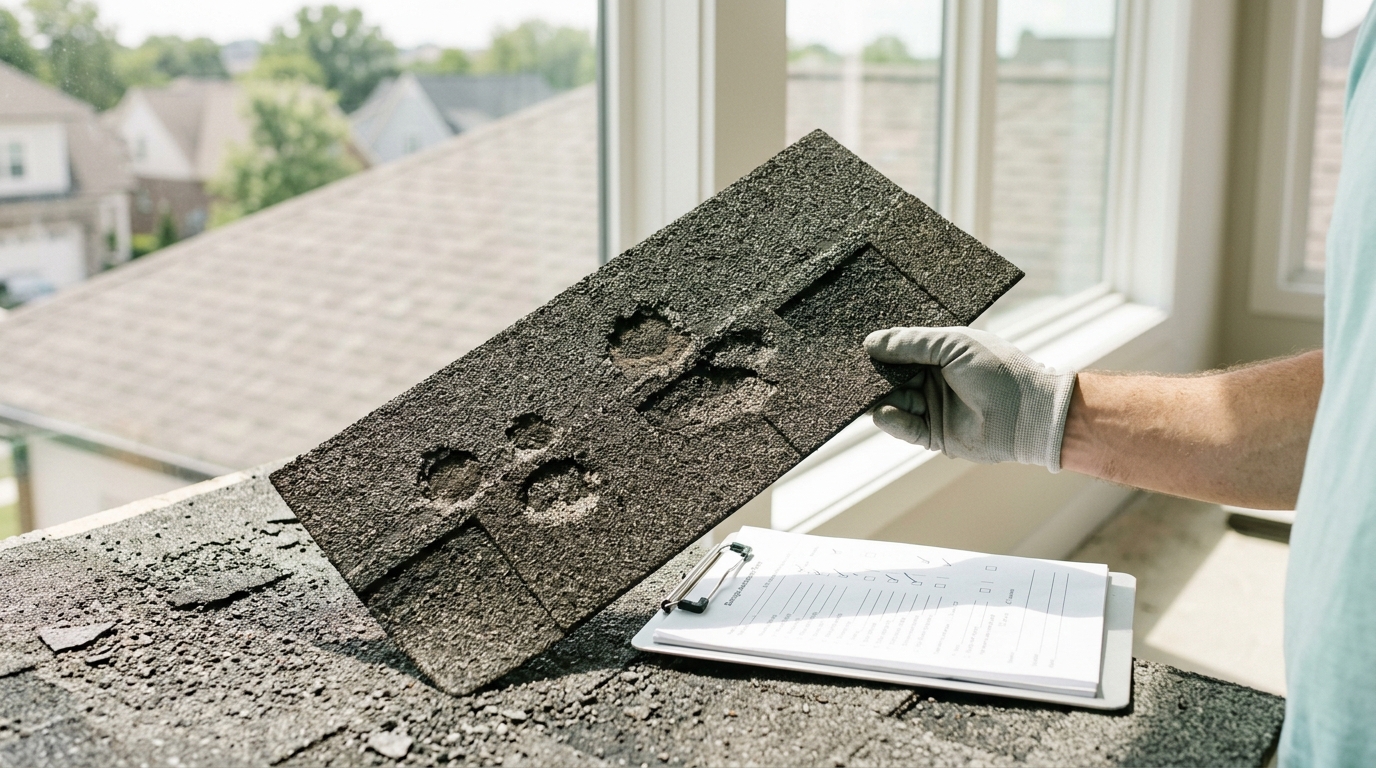
A roof leak after a storm in Nashville requires four immediate actions: stop interior water damage, document everything with photos and video, avoid climbing on the roof yourself, and call a licensed roofing contractor for a professional inspection within 24–48 hours. What happens in the first few hours after storm damage directly affects both your repair outcome and your insurance claim.
Why Nashville Storms Are Especially Hard on Roofs
Middle Tennessee sits in one of the most active severe weather corridors in the Southeast. Nashville and surrounding communities - Franklin, Brentwood, Murfreesboro, Hendersonville - experience an average of 50+ severe thunderstorm events annually, many producing hail stones between 1 and 3 inches in diameter. That combination of hail, straight-line winds exceeding 60 mph, and tornado-spawning supercells makes roof damage a near-certainty for homeowners who stay in the area long enough.
Understanding exactly what type of damage your roof has sustained helps you communicate accurately with your insurance adjuster and your roofing contractor - and it keeps you from being caught off-guard by what an inspection reveals.
What Hail Damage Looks Like on a Roof
Hail damage on a roof is one of the most misidentified types of storm damage because it is not always visible from the ground. Here is what professional inspectors look for when evaluating hail damage on a roof:
- Circular bruising or dents on shingles: Hail impact knocks granules loose, leaving a dark, pitted depression roughly the size of the hailstone. These spots feel soft when pressed - like a bruise on an apple.
- Random pattern of impact points: Hail strikes are scattered across a roof surface, not concentrated in one area. This random pattern distinguishes hail damage from foot traffic or installation errors.
- Exposed black asphalt mat: Once granules are knocked away, the underlying asphalt mat becomes visible. This is the clearest sign that a shingle's protective layer has been compromised.
- Dented metal components: Check gutters, downspouts, flashing, ridge cap, and any metal vent covers. Denting on metal surfaces is hard evidence of hail impact and supports an insurance claim.
- Granules in gutters or at downspout outlets: A significant volume of granules in your gutters after a storm - not just trace amounts - indicates acute shingle erosion from hail impact.
Hail as small as 1 inch in diameter can cause functional damage to standard 3-tab shingles. Architectural shingles with heavier granule coverage are more resistant, but no asphalt shingle is immune to 2-inch-plus hail.
Signs of Wind Damage to Shingles
High winds attack roofs differently than hail. The signs of wind damage to shingles include:
- Lifted or curling shingle edges: Wind gets underneath shingle edges and breaks the adhesive seal strip. Once that seal fails, the shingle is vulnerable to being fully torn off in the next storm.
- Missing shingles: Entire shingles - or sections of shingles - torn away and displaced. Check your yard, gutters, and neighboring properties after a wind event.
- Creased or folded shingles: Wind can fold a shingle back on itself, cracking the asphalt layer even if the shingle does not fully detach. These shingles look intact from the ground but are structurally compromised.
- Exposed nail heads or fasteners: When shingles shift or lift, nail heads become exposed. Exposed fasteners are direct entry points for water infiltration.
- Damaged ridge cap shingles: The ridge cap runs along the peak of the roof and catches the full force of wind from any direction. Ridge cap shingles are frequently the first to fail in a windstorm.
Tree and Debris Damage: The Most Visible - and Most Dangerous
Fallen branches or full tree strikes are the most dramatic form of storm roof damage. Even a branch that looks small can puncture decking, crack rafters, or tear off multiple shingles in a single impact. If a tree or large limb has contacted your roof:
- Do not attempt to remove the debris yourself. Shifting a branch can cause secondary structural collapse or worsen the breach.
- Stay out of rooms directly below the impact point until a contractor assesses structural integrity.
- Contact your roofing contractor immediately - tree damage almost always requires emergency tarping to prevent interior water damage.
Immediate Steps When You Have a Roof Leak After a Storm
A roof leak after a storm requires a calm, systematic response. Follow these steps in order:
- Contain interior water damage: Place buckets, use towels, and move furniture and electronics away from the affected area. If water is near electrical fixtures, shut off power to that circuit at the breaker panel.
- Document the damage: Take timestamped photos and video of interior water intrusion, ceiling staining, and any visible exterior damage you can safely observe from the ground. This documentation is essential for your insurance claim.
- Apply temporary protection if safe: A tarp weighted with sandbags or secured with roofing nails can limit ongoing water entry if you can access the area safely from attic level - never from the roof surface itself after a storm.
- Call a licensed roofing contractor: Request a professional inspection within 24–48 hours. Many Nashville-area roofing companies offer drone roof inspections that allow a thorough assessment without anyone walking the damaged surface.
- Contact your insurance company: File your claim promptly. Most homeowner policies require notification within a reasonable time frame after a loss event. Provide your photo documentation at the time of the claim.
Roof Damage Comparison: Hail vs. Wind vs. Falling Debris
Damage Type Visible Signs Common Areas Affected Insurance Claim Difficulty Hail Granule loss, bruising, dented gutters Entire roof surface, all metal components Moderate - requires documented inspection Wind Missing/lifted shingles, exposed fasteners Edges, ridge cap, corners Low - damage is typically visible Falling Debris Punctures, cracked decking, displaced shingles Localized impact zone Low - impact point is obviousWhy a Drone Roof Inspection Matters After a Storm
A drone roof inspection gives your contractor a complete, high-resolution view of every section of your roof - valleys, ridges, flashings, and field shingles - without subjecting an inspector to the risk of walking a potentially compromised surface. Drone inspections produce dated, georeferenced image files that serve as objective evidence in an insurance claim. If an adjuster questions the extent of the damage, those images are difficult to dispute.
For Nashville-area homeowners, choosing a contractor who performs drone inspections as a standard part of their storm assessment process is a meaningful advantage during the claims process.
Repair vs. Replacement: When a Leak Means More Than a Patch
Not every post-storm leak requires a full roof replacement. A professional inspection will evaluate:
- Age of the existing roof: A roof with less than 5 years of service life remaining may not justify repair costs. A full replacement with a GAF Master Elite installer may deliver better long-term value and qualify for a manufacturer-backed lifetime warranty.
- Percentage of damaged shingles: When hail or wind damage covers more than 30% of the total roof surface, most insurance policies and professional contractors recommend full replacement over spot repair.
- Underlying decking condition: If water infiltration has compromised the roof deck (OSB or plywood sheathing), a patch will not address the structural problem. Decking replacement requires removing and reinstalling the shingles above it.
Protecting Your Gutters After a Storm
Hail and debris damage does not stop at the shingle layer. Gutters take a direct beating during severe storms, and damaged gutters accelerate moisture damage to your fascia, soffit, and foundation. After any significant storm event, inspect your gutters for:
- Visible dents or deformation from hail impact
- Sections pulled away from the fascia board
- Seam separations that allow water to escape between gutter sections
- Excessive granule accumulation blocking flow
Seamless gutters - cut to the exact length of each run on-site - eliminate seam separations entirely and are the most durable option for Middle Tennessee homes that face repeated storm seasons.
---What does hail damage look like on a roof?
Hail damage on a roof appears as circular, bruise-like depressions on shingles where granules have been knocked away, exposing the dark asphalt mat beneath. The impact pattern is random across the roof surface. Metal components like gutters and flashing will show visible denting. Granule accumulation in gutters after a storm is a secondary indicator of acute hail impact.
How soon should I call a roofer after storm damage in Nashville?
Contact a licensed roofing contractor within 24–48 hours of a storm event. Nashville experiences high claim volumes after major storms, and contractors book quickly. Early inspection also ensures your damage is documented before weather conditions change the appearance of the affected areas.
Will my homeowner's insurance cover storm roof damage?
Most standard homeowner's insurance policies in Tennessee cover sudden storm damage - including hail, wind, and falling trees - as a covered peril. Coverage depends on your policy's terms, your deductible, and the age and condition of your roof. A professional inspection report with dated drone imagery significantly strengthens your claim documentation.
Is a roof leak after a storm always a sign I need a full replacement?
Not always. A single missing shingle or a damaged flashing can cause a leak that a targeted repair resolves. However, when hail damage affects more than 30% of the roof surface, when the roof is near the end of its serviceable life, or when decking damage is present, full replacement is the more cost-effective and structurally sound solution.
What are the signs of wind damage to shingles I can see from the ground?
From ground level, look for missing shingles, shingles with visibly lifted or curled edges, shingles that appear creased or folded back, and any exposed dark areas where shingles have been fully removed. Ridge cap shingles along the peak of the roof are often the first to show wind failure and are visible from the ground with binoculars.
