From the blog
What Does Hail Damage Look Like on a Roof? A Middle TN Homeowner's Guide
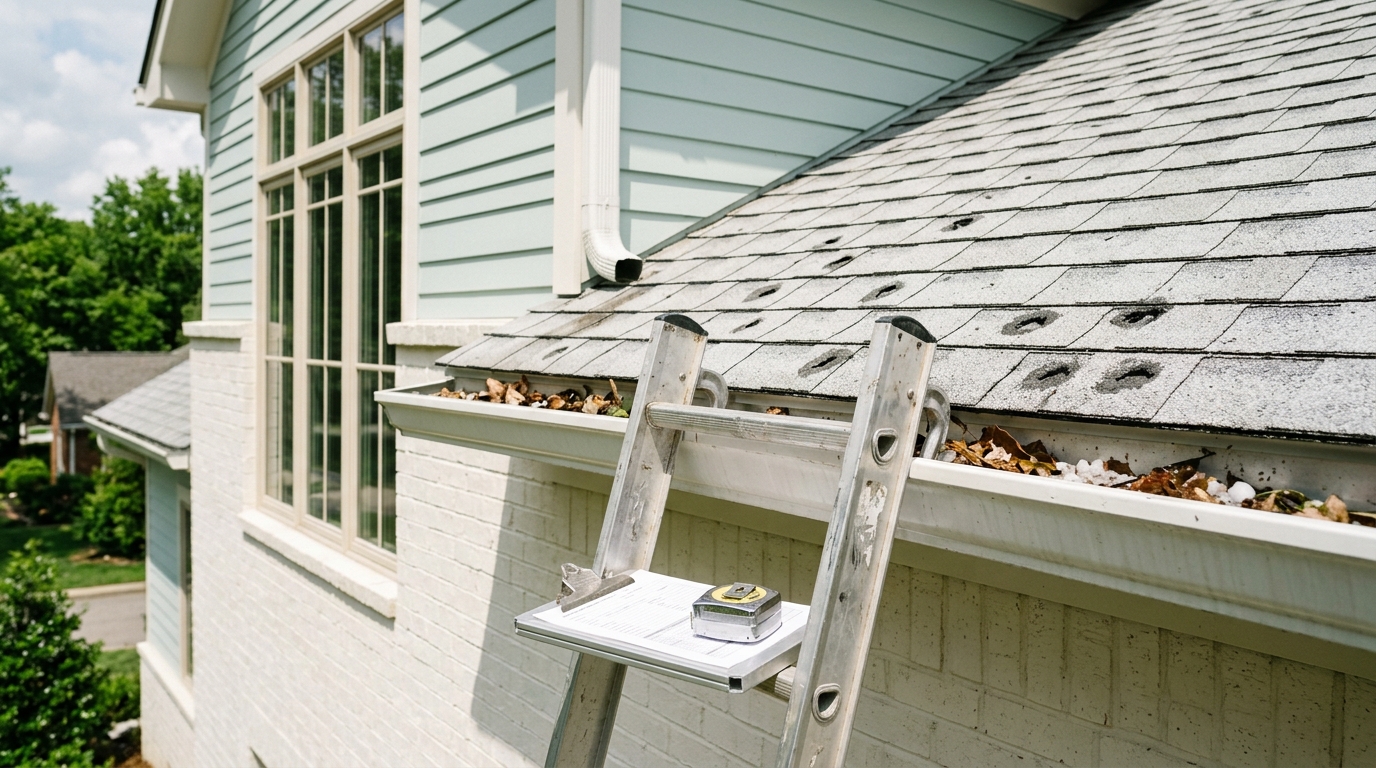
Hail damage on a roof appears as dark, bruised dents on asphalt shingles - circular impact marks roughly the size of a dime to a quarter - where the granules have been knocked away, exposing the underlying asphalt mat. Wind damage shows as cracked, curling, or missing shingles, while tree and debris damage creates visible punctures or crushed decking. Knowing exactly what to look for helps Middle Tennessee homeowners act quickly before a minor storm event becomes a major roof leak.
Middle Tennessee's storm season runs nearly year-round, but spring and early summer bring the most intense hail and wind events to Nashville, Franklin, Brentwood, Murfreesboro, and Hendersonville. After every significant storm, your roof has a story to tell - and reading that story correctly determines whether you file an insurance claim, schedule a repair, or simply clear some debris from your gutters.
What Hail Damage Looks Like on Asphalt Shingles
Hailstones hit shingles with significant force, and the evidence is distinctive once you know what to look for. Here are the specific visual markers of hail damage on a residential roof:
- Circular impact craters: Round dents that look and feel like a bruise, typically 0.75 to 2 inches in diameter depending on hail size.
- Granule loss at impact points: The protective granule coating is knocked away, leaving a shiny, exposed asphalt spot that's immediately visible from the ground on a sunny day.
- Black or dark gray discoloration: The exposed asphalt mat oxidizes quickly, creating a darker patch at each strike location.
- Soft spots when pressed: On a hands-on inspection, hail impacts leave a soft, spongy feel - the underlying mat is fractured even if the surface still looks relatively intact.
- Dented metal components: Hail leaves unmistakable round dents on metal ridge caps, flashing, vents, and gutters. Dented gutters are often the easiest ground-level confirmation of a hail event severe enough to damage shingles.
A 1-inch hailstone - roughly the size of a quarter - generates enough force to begin compromising the waterproof integrity of a standard 3-tab or architectural shingle. Larger hailstones, which Middle Tennessee sees multiple times per year, can crack shingles outright or cause immediate roof leaks after the storm.
Signs of Wind Damage to Shingles
Wind damage looks different from hail damage and is sometimes easier to spot from the ground. High-wind events in Middle TN - including straight-line winds from summer storms and tornadic activity - produce these specific signs:
- Missing shingles: The most obvious sign. You'll see bare, dark patches on the roof deck where shingles have been lifted and blown away entirely.
- Lifted or curling edges: Wind gets underneath shingle edges and breaks the seal strip, causing corners and edges to curl upward. These shingles look intact from a distance but are no longer waterproof.
- Cracked shingles: Wind stress causes shingles to crack horizontally across the middle, particularly on older roofs where the material has become brittle.
- Exposed nail heads: When shingles shift or lift, previously covered nail heads become visible - a direct path for water infiltration.
- Granule accumulation in gutters: Wind accelerates granule shedding. After a major wind event, check your downspout discharge areas for heavy granule deposits.
Hail vs. Wind vs. Tree Damage: A Direct Comparison
Damage Type Visual Appearance Where to Look First Urgency Level Hail Damage Circular dents, granule loss, bruised shingles, dented gutters Metal ridge cap, gutters, downspouts High - schedule inspection within 7 days Wind Damage Missing or lifted shingles, curling edges, cracked shingles Roof edges, ridge line, valleys Critical - missing shingles allow immediate water entry Tree/Debris Damage Punctures, crushed decking, torn shingles, broken fascia Impact zone and surrounding 3–4 foot radius Emergency - call immediately Falling Debris Scattered impact marks, surface scratching, granule displacement Entire roof surface near overhanging trees Moderate - inspect within 2 weeksWhat to Look For: Tree Damage to Your Roof
Tree damage to a roof is the most visually dramatic and structurally serious category. When a limb - or an entire tree - contacts your roof, the damage extends beyond the visible impact point. The roof deck beneath may be cracked, the rafters compromised, and the waterproofing membrane torn across a wide area.
After a tree impact, inspect for these signs from a safe ground-level vantage point:
- Visible depression or sag in the roofline where impact occurred
- Torn or missing shingles in a concentrated area
- Broken fascia board or gutters along the eave
- Visible daylight when looking up from the attic
- Immediate interior water staining on ceilings or walls after rain
Even a branch that appears to have caused only surface scratching can compromise the granule coating enough to accelerate shingle aging by several years. Any direct tree contact warrants a professional inspection, not just a visual check from the driveway.
How to Spot a Roof Leak After a Storm
A roof leak after a storm doesn't always announce itself immediately. Water takes the path of least resistance through the roof assembly, and the entry point can be several feet from where the water actually appears inside your home. Interior warning signs of storm-related roof leaks include:
- Water stains or dark rings on drywall ceilings - particularly in upstairs rooms or directly below the attic
- Wet insulation in the attic, visible as compressed or discolored batts
- Dripping from light fixtures or ceiling fan housings after heavy rain
- Musty odor in upper-level rooms indicating moisture accumulation
- Peeling paint on interior walls near exterior corners or under the roofline
If you notice any of these signs within 48–72 hours of a storm, treat the situation as urgent. Extended water intrusion damages roof decking, attic framing, insulation, and interior finishes - costs that dwarf the price of prompt roof repair.
Why a Drone Roof Inspection Is the Right First Step
In Middle Tennessee, reputable roofing contractors use drone inspection technology to document storm damage across the entire roof surface without sending a crew onto a potentially compromised structure. A professional drone roof inspection captures high-resolution images of every impact point, crack, and lifted shingle - creating a visual record that supports your insurance claim and gives the contractor an accurate scope of damage before a single shingle is touched.
This matters for insurance purposes. Adjusters from major carriers operating in Tennessee require photo documentation of damage to process claims efficiently. Drone imagery timestamps each photo, establishing a direct connection between the storm event and the observed damage - critical for preventing a claim denial based on "pre-existing conditions."
When to Repair vs. When to Replace
Not every hail or wind event requires a full roof replacement in Middle Tennessee. The decision depends on the extent of damage, your roof's age, and the shingle product installed. As a general benchmark:
- Repair is appropriate when damage is isolated to less than 25–30% of the roof surface and the existing shingles are less than 10 years old.
- Replacement is appropriate when damage affects more than 30% of the roof surface, when the roof is within 5 years of its expected lifespan, or when the damage includes the decking or structural components.
- Insurance often dictates replacement when an adjuster determines that matching replacement shingles are unavailable - a common scenario with discontinued product lines.
A GAF Master Elite certified contractor can assess your specific situation and give you an honest answer. GAF Master Elite status is held by only the top 3% of roofing contractors nationally, meaning the contractor has met rigorous training, licensing, and insurance standards that most local roofers do not.
Protecting Your Roof Before the Next Storm
Middle Tennessee homeowners can reduce storm vulnerability with a few proactive steps:
- Trim overhanging tree limbs to maintain at least 6 feet of clearance from the roof surface.
- Clean gutters twice per year - spring and fall - to prevent debris buildup that traps moisture against fascia and soffits.
- Inspect roof flashing around chimneys, skylights, and pipe boots annually; failed flashing is the leading cause of non-storm-related leaks.
- Consider impact-resistant shingles rated Class 4 on the UL 2218 scale when it's time to replace - these products are proven to withstand hail up to 2 inches in diameter and may qualify for insurance premium discounts in Tennessee.
Hail Damage On Roof FAQ
How do I know if my roof has hail damage without getting on it?
Check your gutters and downspouts first - dented aluminum gutters and heavy granule deposits at downspout exits are reliable ground-level indicators of a hail event significant enough to damage shingles. Also inspect any exposed metal on your property: AC unit fins, patio furniture, mailbox tops, and window screens all show hail impact marks. If you see dents on soft metal surfaces, assume your shingles were also struck and schedule a professional inspection.
How long after a storm do I have to file a roof damage insurance claim in Tennessee?
Most homeowner insurance policies in Tennessee allow 1 year from the date of the storm to file a claim for storm damage. However, filing within 30–60 days is strongly recommended. Delayed claims face greater scrutiny from adjusters who may attribute damage to wear and aging rather than the specific storm event. Document everything immediately after the storm, including photos, dates, and any interior damage you observe.
Can wind damage cause a roof leak even if no shingles are missing?
Yes. Wind can break the factory seal strip that bonds shingles to one another without visibly displacing them. Lifted and re-seated shingles look intact from the ground but allow wind-driven rain to penetrate beneath the shingle layer, reaching the underlayment and eventually the decking. This type of damage is consistently missed during DIY visual inspections and is one reason drone inspections with high-resolution imagery are the standard for post-storm assessments.
What does tree damage to a roof typically cost to repair in Middle Tennessee?
Minor branch contact requiring localized shingle replacement typically runs $400–$1,200. Significant limb impacts involving decking repair range from $1,500–$5,000 depending on the affected area. Full-tree impacts that compromise the roof structure are treated as partial or full replacements and are almost always covered under homeowners insurance as a sudden and accidental loss event. A professional assessment is the only way to establish an accurate scope before any cost estimate is meaningful.
Is hail damage always covered by homeowners insurance?
In Tennessee, standard HO-3 homeowners policies cover hail damage as a named peril. Coverage is subject to your deductible, which in many Middle Tennessee policies is a separate wind-and-hail deductible expressed as a percentage of the home's insured value - commonly 1% to 2%. On a home insured for $400,000, that means a $4,000–$8,000 out-of-pocket threshold before insurance pays. Review your specific policy declarations page and consult with your insurance agent to confirm your deductible structure before filing a claim.
