From the blog
2026 Roof Replacement Cost Analysis for Nashville, Franklin, and Murfreesboro
Roof Replacement Cost in Nashville, Franklin, and Murfreesboro: 2026 Figures
A full roof replacement in Middle Tennessee costs between $9,000 and $22,000 for most residential homes in 2026, with the majority of Nashville, Franklin, and Murfreesboro homeowners landing between $11,500 and $16,500 depending on square footage, pitch, and material choice. That range accounts for labor, tear-off of one existing layer, underlayment, flashing, and a standard 30-year architectural shingle. Understanding exactly what drives your number up or down is the fastest way to evaluate any estimate you receive.
What Drives Roof Replacement Cost in Middle Tennessee
Four variables account for roughly 80 percent of the spread between a $9,000 quote and a $20,000 quote on the same neighborhood street.
Roof size and measured squares. Roofing contractors price by the "square," which equals 100 square feet of roof surface. A 2,000-square-foot home does not have a 20-square roof because the pitch adds surface area. A moderately pitched roof on a 2,000-square-foot home typically measures 22–26 squares. Labor and material costs run $350–$600 per square for architectural shingles installed by a licensed Middle Tennessee contractor in 2026.
Pitch and accessibility. Roofs steeper than a 6/12 pitch require additional safety equipment, slower installation, and more physical labor. Expect a pitch surcharge of $50–$100 per square on roofs with a 7/12 or steeper slope. Many Franklin and Brentwood custom homes carry 9/12 or 12/12 pitches, which can add $1,500–$3,000 to a project that would otherwise be straightforward.
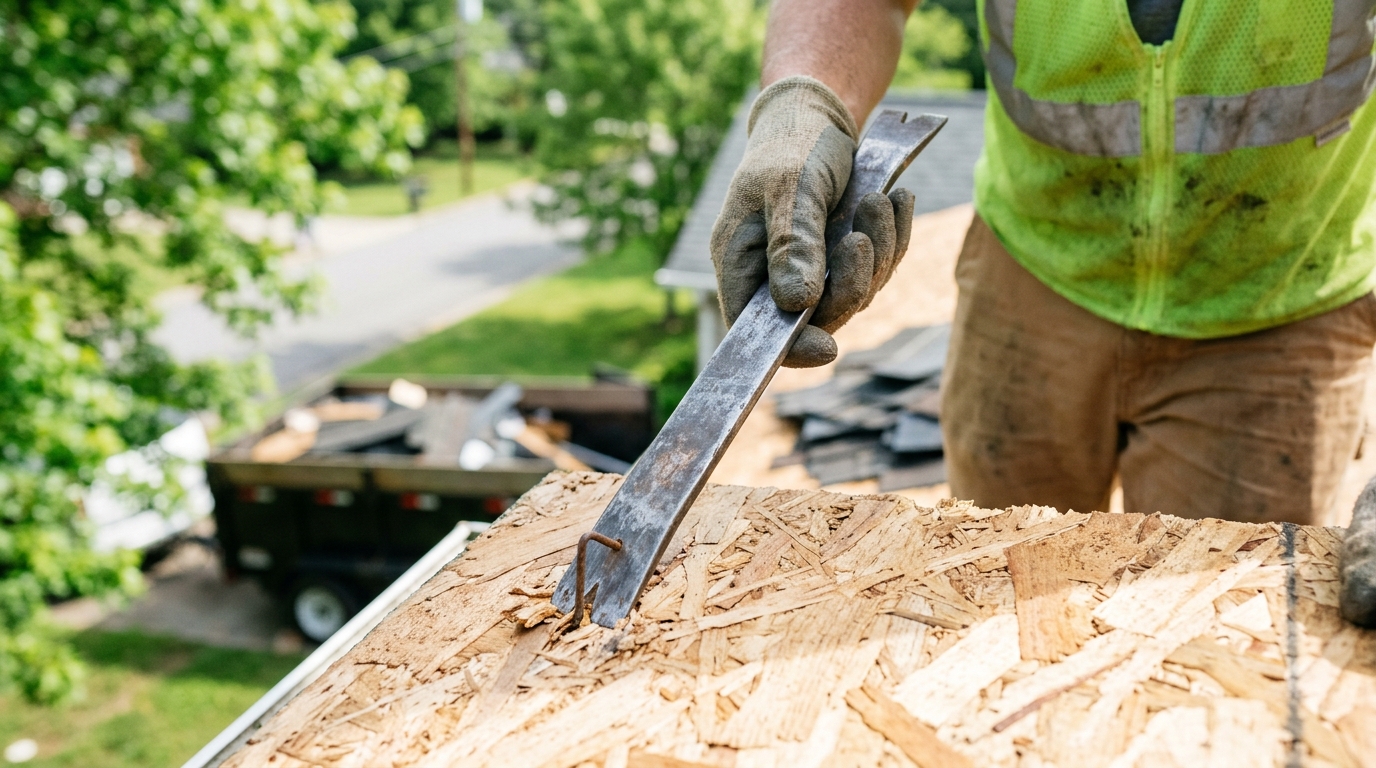
Decking condition. If your inspector finds rotted or delaminated OSB decking during tear-off, replacement costs $2.50–$4.00 per square foot of affected material, plus labor. Homes built before 2000 with original decking have a meaningful probability of needing partial replacement. Always ask your contractor whether their estimate includes a per-sheet decking allowance or treats it as a separate line item.
Material tier. The shingle grade you select is the single largest lever you control. The table below compares the three most common material paths for Middle Tennessee homeowners.
| Material | Installed Cost per Square (2026) | Expected Lifespan | Wind Rating | Best Fit |
|---|---|---|---|---|
| 3-Tab Asphalt Shingle | $300–$380 | 15–20 years | 60–70 mph | Short-term budget, rentals |
| Architectural (Laminate) Shingle | $380–$520 | 25–30 years | 110–130 mph | Most owner-occupied homes |
| GAF Timberline HDZ / Designer Series | $480–$620 | 30–50 years | 130–150 mph | Long-term ownership, insurance discounts |
| Metal Standing Seam | $900–$1,400 | 40–70 years | 140–160 mph | Hail-prone areas, maximum longevity |
City-Level Cost Differences: Nashville vs. Franklin vs. Murfreesboro
Labor rates across Middle Tennessee are largely unified because contractors service the entire metro area. The differences that exist are driven by housing stock, not geography.
Nashville (Davidson County) has a high concentration of older homes in East Nashville, Sylvan Park, and Germantown with complex roof geometries, multiple penetrations, and original decking. Average projects in these neighborhoods run $13,000–$18,000. Newer construction in Antioch and Donelson is closer to $10,500–$14,000.
Franklin and Brentwood (Williamson County) feature larger footprints and steeper pitches. A 2,800-square-foot home in Westhaven or Fieldstone Farms typically runs $15,000–$20,000 for premium architectural shingles. The average roof replacement cost in Franklin, TN for a standard colonial-style home sits around $14,500 in 2026.
Murfreesboro (Rutherford County) has substantial inventory of homes built between 2000 and 2015, which generally have clean decking, simple hip or gable designs, and straightforward access. Roofing estimates in Murfreesboro for a 2,200-square-foot home with architectural shingles average $11,000–$14,500, making this market slightly more affordable than the Williamson County corridor.
The Real Cost to Reroof a House in Tennessee: What Estimates Often Exclude
A low estimate is only meaningful if it covers the same scope as a higher one. Before signing any contract, confirm these line items are explicitly included.
- Ice and water shield: Tennessee building code requires ice-and-water barrier in valleys and at eaves. Some budget quotes substitute felt underlayment. The material difference is roughly $80–$120 per square, and the performance difference in a heavy rain event is significant.
- Ridge cap and ventilation: Ridge vent replacement should accompany any full reroof. Omitting it voids most shingle manufacturer warranties and accelerates attic heat buildup, which shortens shingle life by 15–20 percent in Middle Tennessee summers.
- Pipe boot and flashing replacement: Rubber pipe boots deteriorate on a 10–15 year cycle. Replacing shingles without replacing compromised boots creates a leak point within 2–4 years. Expect $25–$60 per penetration.
- Haul-away and disposal: Dumpster fees and landfill charges for a standard tear-off run $350–$600. Confirm this is in the contract, not billed separately after completion.
- Permit fees: Davidson, Williamson, and Rutherford Counties all require a building permit for full roof replacement. Permit cost is typically $150–$400 and should be pulled by the contractor, not the homeowner.
Roofing Financing Options for Middle Tennessee Homeowners
With average project costs exceeding $12,000, most homeowners benefit from reviewing financing before selecting a material tier. Four paths are available in 2026.
Contractor-sponsored financing. Many established roofing companies partner with GreenSky, Synchrony Home, or similar lenders to offer 12–18 month same-as-cash promotions. These work well for homeowners who can pay the balance before the deferred interest period ends. Miss the deadline and retroactive interest applies to the original principal.
Home equity line of credit (HELOC). With significant equity built up across Middle Tennessee over the past several years, a HELOC gives homeowners access to funds at variable rates tied to prime. HELOCs are appropriate for larger projects or homeowners who want to combine a roof replacement with other improvements under a single credit facility.
Personal installment loan. Online lenders and local credit unions offer unsecured installment loans in the $8,000–$25,000 range with fixed rates and 24–60 month terms. These are appropriate when HELOC access is limited or when a homeowner prefers a fixed monthly payment without tying the debt to the property.
Insurance claim with supplemental financing. When storm damage contributes to the need for replacement, insurance covers the depreciated value or replacement cost value depending on your policy. If your deductible or the gap between actual cash value and replacement cost creates an out-of-pocket balance, contractor financing can bridge that specific amount rather than financing the entire project.
ROI and Long-Term Value of a New Roof
A 2025 Remodeling Magazine Cost vs. Value report found that asphalt shingle roof replacement returned an average of 61 percent of project cost at resale nationally, but markets with high home turnover and strong buyer competition like Franklin and Brentwood outperform that average. More practically, a new roof eliminates the most common negotiating chip buyers and their inspectors use to reduce offer prices in Middle Tennessee transactions.
Insurance premium impact is also material. Several major carriers active in Tennessee offer 5–15 percent annual premium reductions for homes with roofs less than five years old or rated for 130 mph or higher wind resistance. Over a 10-year period, those savings compound to $1,500–$4,000 depending on your coverage level, meaningfully improving the effective ROI of upgrading from a standard architectural shingle to a GAF Timberline HDZ or equivalent wind-rated product.
Choosing a GAF Master Elite certified contractor adds a further financial advantage: access to the GAF Golden Pledge Limited Warranty, which covers both materials and workmanship for 25 years. Standard contractor warranties in Tennessee typically cover workmanship for one to five years. The gap in protection is substantial and directly relevant to the resale disclosure requirements in Tennessee real estate transactions.
How to Evaluate a Roofing Estimate in Middle Tennessee
Get a minimum of three written estimates. Verify that each one specifies the shingle product name and model number (not just "30-year architectural"), the underlayment brand, the number of layers being torn off, the ventilation plan, and the warranty terms in writing. A legitimate contractor will provide proof of general liability insurance and workers' compensation coverage before work begins. Require a lien waiver upon final payment to protect against suppliers filing against your property for unpaid material invoices.
Roof Replacement Cost Nashville FAQ
What is the average cost to reroof a house in Tennessee in 2026?
Most Tennessee homeowners pay between $9,000 and $22,000 for a full roof replacement, with the Middle Tennessee average for a 2,000–2,400 square foot home landing near $12,500–$15,500 using 30-year architectural shingles. Higher pitches, complex geometry, and premium materials push costs toward the upper end of that range.
Does homeowner's insurance cover roof replacement in Nashville?
Insurance covers roof replacement when damage results from a covered peril: wind, hail, falling trees, or fire. Normal wear and age-related deterioration are not covered. Tennessee policies vary between actual cash value (ACV) and replacement cost value (RCV). RCV policies pay the full replacement amount minus your deductible after you complete repairs. ACV policies deduct depreciation, leaving a larger out-of-pocket gap.
How long does a roof replacement take in Middle Tennessee?
Most residential roof replacements in Nashville, Franklin, and Murfreesboro are completed in one to two days for homes under 3,000 square feet. Larger homes, steep pitches, or projects requiring significant decking repairs may take two to three days. Weather holds are common from November through March, so scheduling flexibility is advisable during winter months.
Is it worth upgrading to a metal roof in Tennessee?
Standing seam metal roofing costs two to three times more than premium architectural shingles upfront but carries a 40–70 year lifespan versus 25–30 years for shingles. For homeowners planning to stay in their home long-term and in areas with frequent hail events (Murfreesboro and Smyrna see elevated hail frequency), the math often supports the upgrade. Metal also qualifies for greater insurance discounts in Tennessee given its impact resistance rating.
What financing is available for roof replacement if I can't pay out of pocket?
Middle Tennessee homeowners have four primary financing paths: contractor-sponsored promotional financing through lenders like GreenSky or Synchrony, home equity lines of credit using built-up property equity, unsecured personal installment loans from banks or credit unions, and insurance claim proceeds combined with a targeted financing bridge for the deductible or depreciation gap. A reputable contractor will provide financing options at the estimate stage without requiring you to commit to a material or scope upgrade to access them.
