From the blog
Choosing the Right Seamless Gutters for Your Nashville Home
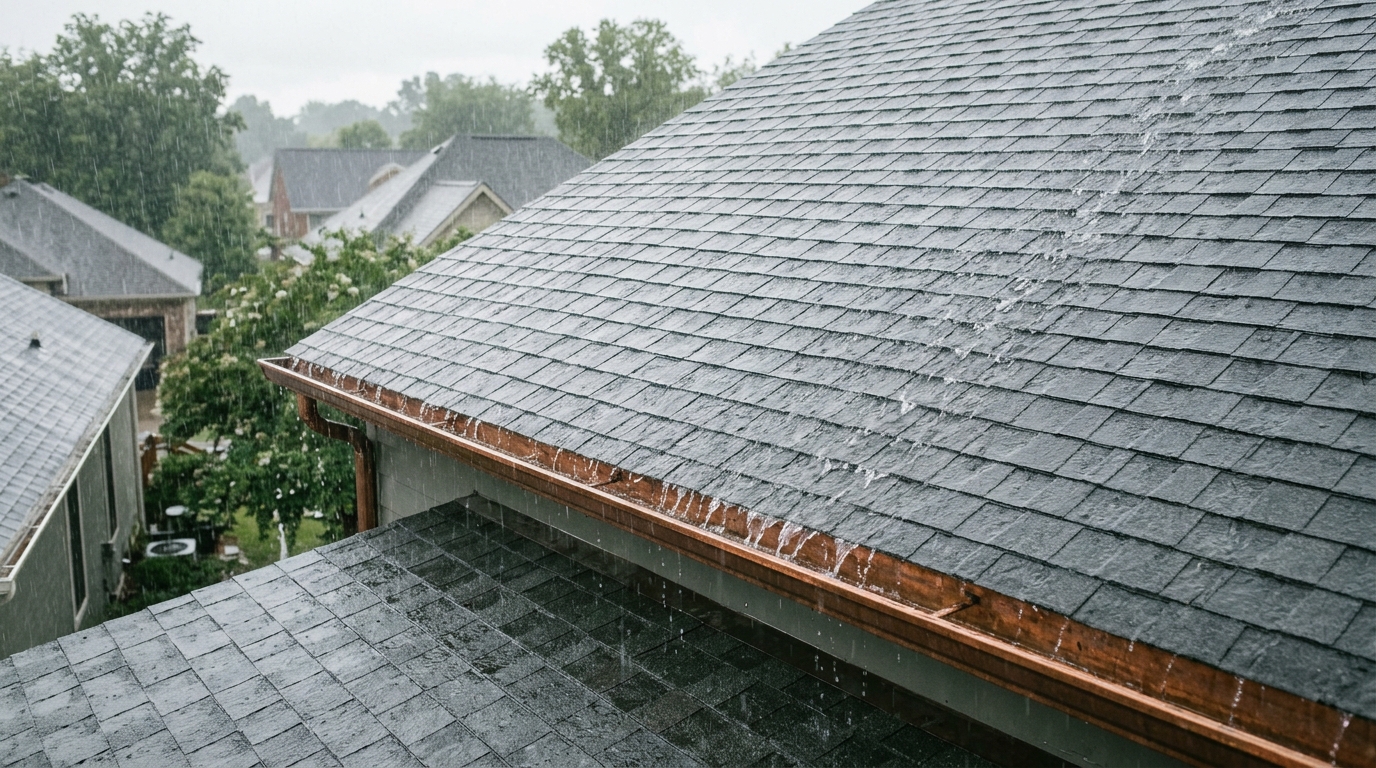
Seamless gutters are the single most effective drainage upgrade a Nashville homeowner can make to protect a roof's long-term integrity. A properly sized, professionally installed seamless gutter system channels water away from fascia boards, soffits, and your foundation before damage begins.
Why Seamless Gutters Matter for Middle Tennessee Roofs
Nashville receives an average of 47 inches of rain per year, well above the national average of 38 inches. During a single severe storm, a 2,000-square-foot roof can shed more than 1,200 gallons of water. Without a functioning gutter system, that water saturates the soil along your foundation, erodes landscaping, and backs up under roof shingles causing premature deterioration.
Seamless gutters outperform sectional gutters in one critical way: they eliminate the seams where leaks start. Sectional gutters join together in 10-foot or 12-foot lengths. Every joint is a potential failure point. Seamless gutters are fabricated from a single continuous run of aluminum, steel, or copper on-site, cutting leak risk to nearly zero along the gutter body itself.
Seamless vs. Sectional Gutters: 5 Key Differences
| Feature | Seamless Gutters | Sectional Gutters |
|---|---|---|
| Leak Points | Seams only at corners and downspouts | Every 10–12 feet along the run |
| Lifespan | 20–30 years with proper maintenance | 10–15 years |
| Maintenance Frequency | Cleaning 2x per year | Cleaning plus joint resealing annually |
| Installation | Professional only, fabricated on-site | DIY-compatible, sold in sections |
| Curb Appeal | Clean, uninterrupted profile | Visible joints along roofline |
Roof Maintenance Tips That Work Alongside Your Gutter System
Gutters and roofing function as a connected drainage system. Strong gutter performance depends on a roof that is also in good condition. These roof maintenance tips keep both systems working together:
- Clean gutters twice a year. Schedule cleanings in late November after leaf fall and again in April after spring pollen and seed pods drop. Clogged gutters cause water to pool at the roofline, accelerating fascia rot and shingle edge deterioration.
- Inspect flashing at every valley and penetration. Flashing around chimneys, skylights, and vent pipes fails before the shingles do. Gaps in flashing send water directly behind your gutter's attachment point, rotting the fascia behind it.
- Trim overhanging branches. Middle Tennessee's oak and maple canopy drops debris year-round. Branches within 3 feet of the roofline deposit organic matter that retains moisture and accelerates shingle granule loss.
- Check downspout extensions annually. Downspouts should terminate at least 4 feet from the foundation. Extensions and splash blocks redirect flow away from basement walls and crawl spaces.
- Look for standing water in gutters after rain. If water sits more than 30 minutes after a storm stops, your gutter pitch is off. Gutters require a slope of at least 1/4 inch per 10 feet toward the downspout to drain effectively.
How to Tell If You Need a New Roof (Not Just New Gutters)
Homeowners frequently mistake roof-related water intrusion for a gutter problem. Knowing how to tell if you need a new roof saves money by addressing the actual source of damage. Look for these warning signs:
- Granules in the gutter trough. A small number of granules is normal. Heavy granule accumulation, especially after rain, signals that shingles have reached the end of their protective life cycle.
- Shingles that curl, cup, or crack. These are visible from the ground with binoculars. Curling edges mean the asphalt mat has dried out and can no longer shed water effectively.
- Daylight visible in the attic. Stand in your attic on a sunny day with the lights off. Any light penetrating through the decking indicates compromised sheathing or missing shingles.
- Sagging roof deck sections. A roof deck that appears to sag or dip between rafters indicates moisture intrusion has weakened the structural sheathing beneath the shingles.
- Interior water stains on ceilings or walls. Brown or yellow ring stains on ceilings point to active or past roof leaks. These often first appear near exterior walls or at chimney penetrations.
Roof Inspection Checklist for Nashville Homeowners
A structured roof inspection checklist gives you a repeatable process each spring and fall. Walk through each item before severe weather season arrives:
- Inspect shingles for cracking, blistering, missing tabs, or cupping
- Check all flashing points: chimney, valleys, skylights, vent boots
- Examine gutter hangers and fascia boards for rot or separation
- Confirm downspouts are secure and extensions direct flow away from the foundation
- Clear all debris from gutters, valleys, and flat sections of the roof
- Check attic ventilation: soffit vents should be unobstructed and ridge vents intact
- Look for moss or algae growth, common in Middle Tennessee's humid climate
- Assess caulking around all roof penetrations and pipe boots
- Verify attic insulation is not blocking soffit vents, which causes heat buildup and ice damming
If you identify issues during this checklist process, request a professional drone roof inspection before scheduling repairs. Drone inspections provide high-resolution imagery of areas inaccessible from the ground and document pre-existing conditions accurately for insurance purposes.
Common Roof Problems Worsened by Poor Gutter Performance
Understanding common roof problems in Middle Tennessee means understanding how gutters interact with them. These are the most frequent failures roofing contractors see in Nashville and the surrounding area:
- Ice damming at the eaves. Gutters clogged with debris trap snowmelt in winter, which refreezes at the cold eave edge and forces ice under shingles. This is most common in Brentwood, Hendersonville, and Franklin neighborhoods with mature tree canopies.
- Fascia board rot. Overflowing gutters dump water directly onto the fascia board behind the gutter. Over 12–18 months, this produces soft, rotted wood that can no longer support gutter hardware or the roofing system at the eave.
- Soffit damage and pest entry. Saturated soffits deteriorate and eventually open gaps that allow wasps, squirrels, and bats access to attic spaces.
- Shingle edge deterioration. Water that sits at the bottom course of shingles because the gutter is clogged or pitched incorrectly accelerates granule loss and asphalt cracking on the first 3–6 inches of the lowest shingle row.
How Long Does a Roof Last in Tennessee?
The question of how long does a roof last in Tennessee depends on material choice, installation quality, and maintenance. Tennessee's climate combines high UV exposure in summer, freeze-thaw cycles in winter, and above-average annual rainfall. That combination shortens lifespans compared to drier climates.
- 3-tab asphalt shingles: 15–20 years in Middle Tennessee conditions
- Architectural (dimensional) shingles: 22–30 years with proper attic ventilation
- GAF Timberline HDZ or comparable premium shingles: 30+ years when installed by a certified contractor
- Metal roofing (standing seam): 40–70 years; performs especially well in high-wind zones
- Copper or slate: 75–100 years, though rare in residential Nashville construction
Gutters extend roof lifespan by preventing the water retention issues that accelerate every one of these material failures. A roof installed without a functioning gutter system loses 3–7 years of service life on average, according to industry estimates from roofing professionals in the Southeast.
Choosing the Right Gutter Profile for Your Roofline
Nashville homes present a range of architectural styles, from craftsman bungalows in East Nashville to traditional colonials in Brentwood. Profile selection affects both performance and appearance:
- K-style gutters (5-inch or 6-inch): The most common residential profile. The flat back mounts flush against fascia, and the ogee front profile complements traditional and colonial architecture. A 6-inch K-style gutter handles roughly 40% more water volume than a 5-inch version and is preferred on steep-pitch roofs.
- Half-round gutters (6-inch): Standard on older craftsman and historic homes. They drain more efficiently because the circular trough has no corners for debris to collect, but they require specialized hangers and often cost 20–30% more than K-style.
- Box gutters: Built into the roof structure on some older Nashville homes. These require specialized maintenance and are typically replaced during full roof replacement projects.
Material choice also matters. Aluminum is the dominant option in Middle Tennessee because it does not rust, accepts paint, and weighs less than steel. Copper is a premium aesthetic upgrade with superior longevity but requires a significantly higher upfront investment. Steel offers added strength in high-impact hail zones but requires protective coating to prevent rust.
Seamless Gutter FAQ for Nashville Homeowners
How much do seamless gutters cost in the Nashville area?
Seamless aluminum gutter installation in Middle Tennessee typically ranges from $8–$15 per linear foot installed, depending on profile size, material gauge, and home height. A 200-linear-foot installation on an average Nashville home runs $1,600–$3,000. Copper gutters run $25–$40 per linear foot installed.
How often should gutters be cleaned in Middle Tennessee?
Clean gutters a minimum of twice per year: once in late November after leaf drop and once in early spring. Homes beneath heavy oak or pine canopy may require a third cleaning in summer when seed pods and pollen accumulate.
Can I install seamless gutters myself?
No. Seamless gutters require a commercial gutter machine that forms the continuous run on-site. This equipment is not available for consumer rental. The installation also requires proper pitch calibration and hanger spacing of every 24–36 inches to prevent sag. Professional installation is the only option.
Do new gutters affect my homeowner's insurance?
Gutters themselves are not typically a rated factor in homeowner's insurance premiums. However, a well-documented gutter and roof system condition, supported by inspection reports and photos, strengthens insurance claims when storm damage occurs. Insurers assess overall property maintenance when evaluating claim legitimacy.
When should gutters be replaced alongside a new roof?
Replace gutters at the same time as a roof replacement if the existing gutters are more than 15 years old, show visible sag or separation, or have sustained hail or impact damage. Removing and reinstalling old gutters during a roofing project risks fascia damage and misalignment. Coordinating both installations with one contractor produces cleaner flashing integration and a single warranty timeline.
