From the blog
Financing a New Roof in Tennessee: Loan Options vs. Paying with Insurance
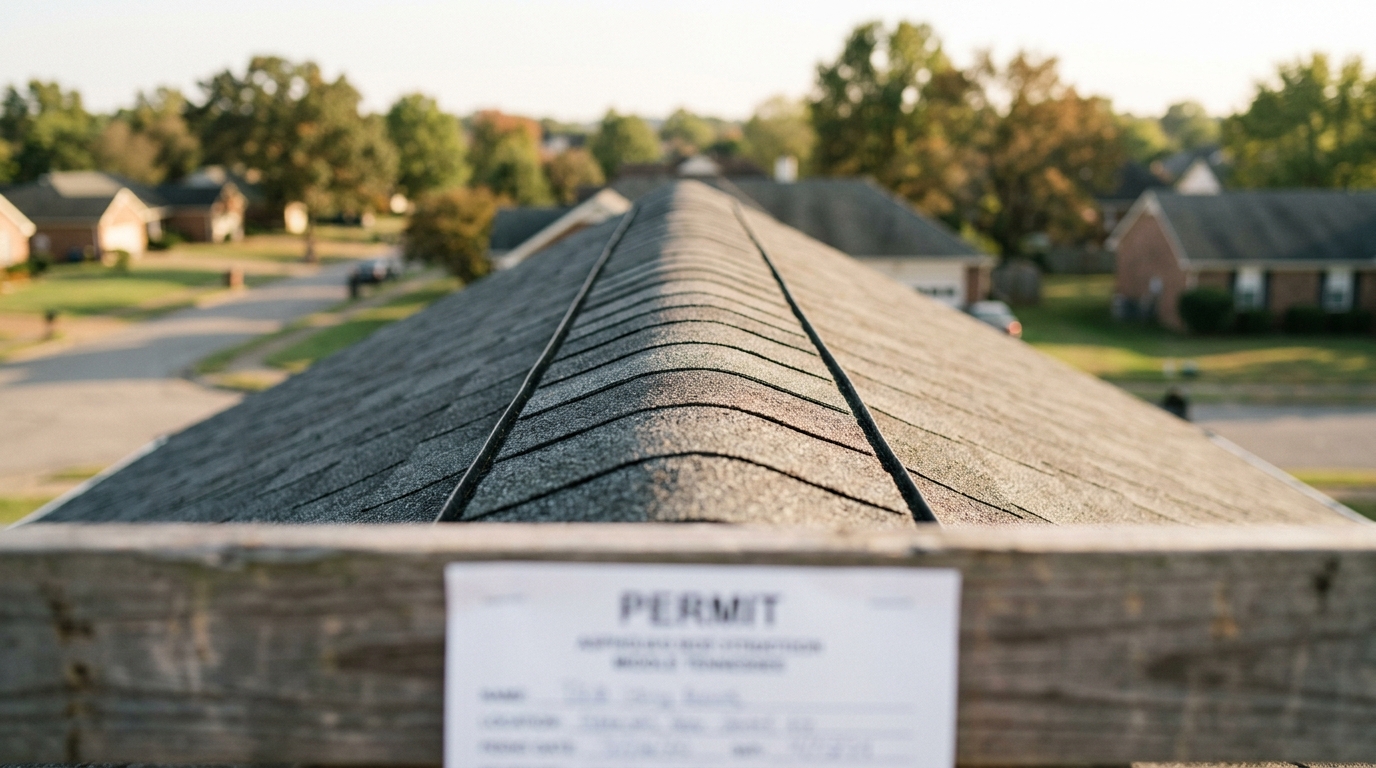
A full roof replacement in Middle Tennessee costs between $8,500 and $22,000 for most residential homes, depending on square footage, materials, and pitch complexity. Knowing that figure up front lets you evaluate your two primary payment paths clearly: financing through a loan product or recovering costs through a homeowner's insurance claim. Each path has distinct mechanics, timelines, and trade-offs that affect your out-of-pocket exposure significantly.
What a Roof Replacement Actually Costs in Middle Tennessee
Roof replacement cost in Nashville, Franklin, Brentwood, Murfreesboro, and Hendersonville follows a consistent regional pricing structure tied to labor markets and material supply chains. For a standard 2,000-square-foot single-story home with a 6/12 pitch, expect the following ranges in 2026:
- 3-tab asphalt shingles: $8,500–$11,000 installed
- Architectural (dimensional) shingles: $11,000–$16,000 installed
- GAF Timberline HDZ or Camelot II (designer): $15,000–$22,000 installed
- Metal roofing (standing seam): $18,000–$35,000 installed
The cost to reroof a house in Tennessee rises with pitch steepness, accessory structures like dormers and skylights, and the number of layers requiring tear-off. A two-story home in Franklin with a 10/12 pitch and multiple valleys can approach $28,000 in architectural shingles. Roofing estimates in Murfreesboro and the broader Rutherford County market typically run 5–8% below Nashville metro pricing due to lower labor overhead, though material costs are essentially identical across the region.
Underlayment upgrades, ice-and-water shield installation, ridge vent systems, and decking replacement for rotted sheeting all add cost outside the base shingle quote. Always request an itemized estimate so you can compare line items across contractors rather than just total figures.
Financing Options for Tennessee Homeowners
When insurance does not cover the replacement or covers only a portion, financing becomes the practical path forward. Four loan structures dominate the Middle Tennessee roofing market.
Home Equity Loan or HELOC
A home equity loan delivers a fixed lump sum at a fixed interest rate, typically 7–9% in the current rate environment, repaid over 5–15 years. A home equity line of credit (HELOC) offers a revolving draw period, which works well if your project scope may expand after tear-off reveals damaged decking. Both products require at least 15–20% equity in the home and a credit score above 620 at most lenders. The primary advantage: interest on home equity debt used for home improvement is generally tax-deductible (consult your tax advisor for your specific situation). The primary risk: your home serves as collateral, so missed payments carry foreclosure exposure.
FHA Title I Property Improvement Loan
FHA Title I loans allow borrowing up to $25,000 for single-family home improvements without requiring equity. Lenders approved through HUD originate these loans, and rates typically run 1–2 percentage points above prime. For homeowners who bought recently and have minimal equity built, this product fills a meaningful gap. Loan terms extend to 20 years for amounts above $7,500, keeping monthly payments manageable on a $15,000 roof. Title I loans are underutilized in Tennessee largely because few contractors advertise them, but any HUD-approved lender can originate one independent of your roofing contractor.
Contractor-Arranged Financing
Many roofing companies in Middle Tennessee partner with financing platforms like GreenSky, Hearth, or Service Finance Company to offer point-of-sale loans at signing. These products often advertise deferred-interest or same-as-cash promotional periods of 12–18 months. The mechanics matter here: deferred interest is not zero interest. If you carry any balance at the promotional period's end, the full accrued interest charges back to your principal. For homeowners who can realistically pay off the balance within the promotional window, this is an effective zero-cost bridge. For anyone likely to carry a balance, a fixed-rate personal loan or HELOC will almost always cost less over the life of the debt.
Personal Loan (Unsecured)
Unsecured personal loans through banks, credit unions, or online lenders fund quickly (often within 48 hours) and carry no lien against your property. Rates for borrowers with scores above 720 run 9–13% in 2026; scores in the 620–680 range see rates of 16–22%. Terms typically cap at 7 years. The speed and simplicity make personal loans appropriate for urgent replacement after storm damage when the insurance process is delayed and you need the roof completed before further interior damage occurs.
Using Homeowner's Insurance to Pay for Roof Replacement
Tennessee homeowners with storm-damaged roofs (hail, wind, falling debris) have a legitimate claim path that can reduce or eliminate out-of-pocket cost to the deductible amount. Understanding how the claim process actually works prevents the most common mistakes that cost homeowners money.
Actual Cash Value vs. Replacement Cost Value Policies
This single policy distinction determines whether insurance pays for a new roof or a depreciated fraction of one. Replacement cost value (RCV) policies pay the full cost to replace your roof with like materials after you complete the work and submit the final invoice. Actual cash value (ACV) policies apply depreciation, meaning a 15-year-old roof with a 20-year lifespan might receive only 25% of replacement cost. Pull your declarations page and confirm which coverage type you carry before filing any claim. If you have ACV coverage and your roof is more than 10 years old, a large depreciation holdback may make financing the gap a necessary part of your plan regardless of the claim outcome.
The Claim Timeline and What to Expect
After a storm event in Middle Tennessee, the claim sequence runs as follows: you file the claim, the insurance adjuster inspects (typically within 7–14 days after a widespread weather event), the adjuster issues a scope of loss document, and the insurer releases an initial payment less your deductible. For RCV policies, the recoverable depreciation is released after the work is completed and you submit the contractor's final invoice. Total timeline from storm to final check: 30–90 days is typical, longer after major regional events like the hail storms that regularly affect Williamson and Rutherford Counties.
Working with a GAF Master Elite Contractor on Insurance Claims
GAF Master Elite contractors represent less than 3% of roofing companies in the country and carry the authority to issue GAF's Golden Pledge warranty: a 25-year coverage guarantee on both materials and workmanship. On the insurance side, documentation quality matters. A contractor experienced with insurance claims will provide photo documentation, a detailed line-item estimate formatted to match Xactimate (the software most adjusters use), and can participate in a supplemental claim if the adjuster's scope undervalues the work. Choosing an unqualified contractor to save money on the estimate often results in scope gaps that leave you paying out of pocket for work the insurance carrier would have covered with proper documentation.
Repair vs. Replacement: Choosing the Right Scope Before You Finance Anything
Financing or filing a claim for a repair when you need a replacement is one of the most expensive mistakes Middle Tennessee homeowners make. A professional inspection determines whether your roof has localized damage (a candidate for repair at $500–$2,500) or systemic deterioration requiring full replacement. Indicators that point firmly toward replacement include granule loss across more than 30% of the surface, multiple layers of existing shingles already in place (Tennessee building code prohibits a third layer), decking soft spots in more than two areas, or an age exceeding 20 years on a 30-year shingle product. A drone roof inspection documents every problem area with precision measurement, giving both your contractor and your insurance adjuster a shared, defensible record of conditions.
ROI of a New Roof on a Tennessee Home
A new asphalt shingle roof in the Nashville metro recovers approximately 60–68% of its cost in resale value according to remodeling cost-value analysis frameworks. In practical terms, a $15,000 roof replacement increases appraised value by roughly $9,000–$10,200 and eliminates the negotiating leverage buyers use to discount offers on homes with aging roofs. In a competitive market like Franklin or Brentwood, a new roof frequently prevents price reductions of $10,000–$20,000 during the inspection contingency period. For investment properties in Murfreesboro or Hendersonville, a new roof also reduces insurance premiums by 15–25% annually when the prior roof was over 15 years old.
Roof Replacement Financing and Insurance FAQ for Tennessee Homeowners
What is the average roof replacement cost in Franklin, TN?
A standard architectural shingle replacement on a 2,000-square-foot home in Franklin runs $12,000–$17,000 installed in 2026, reflecting Williamson County's higher labor costs compared to outlying Middle Tennessee markets. Steeper pitches, multiple stories, and designer shingle upgrades push totals above $20,000.
Can I finance a roof replacement if I have an open insurance claim?
Yes. Many homeowners finance the full replacement cost upfront through a personal loan or contractor financing, then use the insurance payout to pay down the loan balance once the claim settles. This approach gets the roof completed immediately and prevents ongoing interior water damage while the claim processes.
How long does a Tennessee homeowner have to file a roof damage insurance claim?
Most Tennessee homeowner's policies require claim filing within one year of the date of loss, and some restrict the window to 180 days. Review your policy language directly. Waiting too long also makes it harder to establish that damage resulted from a specific storm event rather than gradual wear, which adjusters use to deny claims.
Does my deductible apply to every roofing insurance claim?
Yes, your deductible applies to every claim. Many Tennessee policies now carry a separate wind and hail deductible expressed as a percentage of your dwelling coverage (commonly 1–2%) rather than a flat dollar amount. On a home insured for $400,000, a 2% wind and hail deductible means $8,000 out of pocket before insurance contributes anything. Verify your deductible structure before deciding whether filing a claim makes financial sense.
Are roofing contractor financing offers a good deal?
They depend entirely on whether you use the promotional period as intended. An 18-month same-as-cash offer through a contractor financing platform is genuinely cost-free if you pay the balance in full before the period ends. If you carry a balance past the promotional window, deferred interest charges retroactively applied to the original principal make these among the most expensive financing options available. Homeowners who are uncertain about payoff timelines should choose a fixed-rate personal loan or HELOC instead.
