From the blog
How Clogged Gutters Cause Roof and Fascia Damage in Middle Tennessee Homes
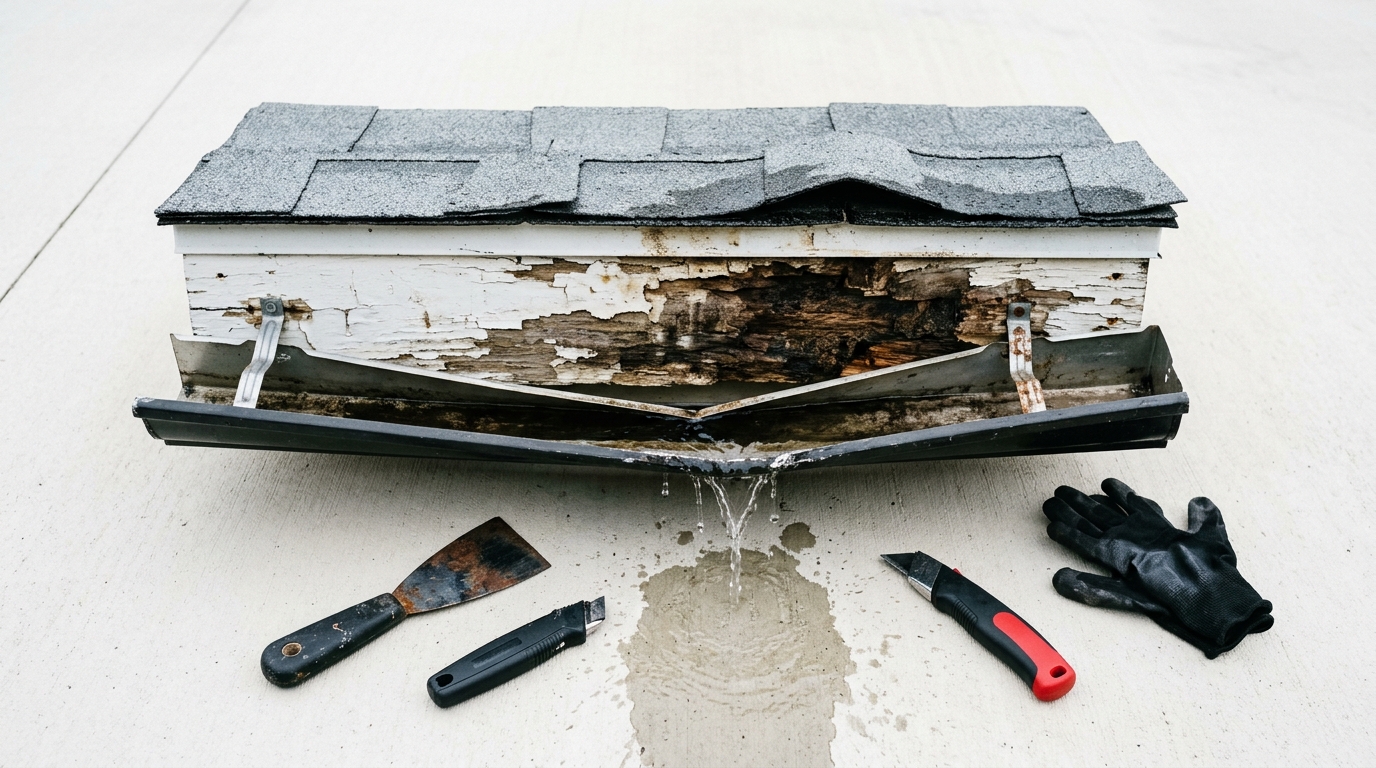
Clogged gutters cause roof and fascia damage by trapping water against the roof edge, which rots the fascia board, soaks the roof decking, and pushes shingles out of alignment. In Middle Tennessee, where Nashville averages roughly 48 to 55 inches of rain a year and heavy oak, maple, and sweetgum debris, gutters should be cleaned at least twice a year, and quarterly for homes under mature trees.
What Happens When Gutters Clog
A gutter works only if water moves through it. When leaves, pine needles, shingle granules, and seed pods form a dam, water has nowhere to go but over the front lip or back against the house. A standard 5-inch K-style gutter holds about 1 gallon per linear foot. A 40-foot run packed with wet debris can hold 40 gallons or more, plus the weight of the debris itself. That load pulls the gutter away from the fascia, stretches the fasteners, and loosens the spikes or hidden hangers that hold it in place.
Middle Tennessee storms make this worse. Spring thunderstorms regularly drop 1 to 2 inches of rain in an hour. A 1,500-square-foot roof sheds roughly 935 gallons of water for every inch of rainfall. If the gutters cannot carry that volume, the overflow lands in the places your home is least able to handle it.
How Clogged Gutters Damage Your Roof
The roof edge is the most vulnerable part of the system. Three failure paths show up repeatedly on homes we inspect in Nashville, Franklin, and Brentwood.
- Water backup under the first shingle courses. When a gutter fills to the brim, water backs up the roof slope. Drip edge and starter strips are designed to shed water into the gutter, not to hold it back. Backed-up water wicks under the shingle edge and soaks the roof decking.
- Decking rot. Plywood or OSB sheathing swells and delaminates after repeated wetting. Once the decking softens, nails lose holding power, and shingles at the eave begin to lift in wind.
- Ice and freeze-thaw damage. Middle Tennessee winters cycle above and below freezing. Standing water in a clogged gutter freezes overnight, expands, and pries the gutter and the shingle edge apart. Even a few cycles a season add up.
Shingle manufacturers, including GAF, warrant their products against manufacturing defects, not against water damage caused by poor drainage. A roof that fails early because of a neglected gutter can fall outside warranty coverage, so maintenance protects the investment directly.
Fascia and Soffit Damage: The Hidden Cost
The fascia is the board behind the gutter. It anchors the gutter, caps the rafter tails, and keeps moisture out of the attic edge. Most Middle Tennessee homes use painted pine or finger-jointed wood fascia, and both absorb water readily.
Chronic overflow soaks the top edge of the board first. Paint blisters, then the wood softens and turns dark. In advanced cases a screwdriver sinks into the board with almost no resistance. Rot then travels in two directions:
- Into the rafter tails, which are structural and far more expensive to repair than a fascia board.
- Into the soffit, where moisture feeds mold, attracts wasps and carpenter bees, and opens gaps that let squirrels and birds into the attic.
Fascia replacement typically costs a few dollars per linear foot for materials, but labor, paint, and gutter removal and reinstallation raise the total. If rafter tails are involved, the repair becomes a carpentry project. Catching the problem at the stage of peeling paint is far cheaper than catching it at the stage of exposed rot.
Foundation and Landscaping Consequences
Overflow that misses the fascia lands at the foundation. A single downspout that discharges at the base of the wall can saturate soil within a few feet of the footing. Much of Middle Tennessee sits on clay-heavy soil that swells when wet and shrinks when dry. That movement stresses foundation walls, opens cracks, and pushes water into crawl spaces and basements.
Warning signs include soil erosion trenches beneath the drip line, mulch washed out of beds, mildew on lower siding, and damp crawl space vapor barriers. Downspouts should discharge at least 4 to 6 feet from the foundation, using extensions or buried drain lines, and the grade near the wall should slope away from the house.
Gutter Cleaning Schedule for Nashville and Middle TN
Frequency depends on the trees around your home, not just the calendar. Use this schedule as a baseline.
| Property Condition | Cleaning Frequency | Best Timing |
|---|---|---|
| Few or no overhanging trees | Twice a year | Late April and early December |
| Moderate tree cover (oak, maple, hickory) | Three times a year | April, July, and after leaf drop in late November |
| Heavy tree cover or pine needles | Quarterly | Every 3 months, plus after major storms |
| Gutters with quality guards | Inspect twice a year | Spring and late fall |
Add an extra check after any storm with high winds, since limbs and debris arrive in a single event. Autumn is the critical window. Leaf drop in Nashville peaks from late October through mid-November, so a cleaning timed before the leaves finish falling leaves gutters full again within weeks.
Gutter Guards vs. Open Gutters
Guards reduce cleaning frequency but do not eliminate it. The trade-offs are practical.
- Micro-mesh guards block the smallest debris, including shingle grit and seeds, but fine pollen and roof granules can still film over the surface and need occasional brushing.
- Perforated or screen guards are cheaper but let small seeds pass and can trap needles on top.
- Reverse-curve guards shed leaves well but can overshoot water in heavy downpours if poorly matched to the roof pitch.
Guard performance depends on the gutter beneath it. Pairing guards with sagging or undersized gutters hides the problem rather than solving it. For homes with large roof planes or steep pitches, 6-inch seamless gutters with oversized 3x4-inch downspouts move roughly double the water of standard 5-inch systems with 2x3-inch downspouts, which matters during Middle Tennessee cloudbursts.
How to Inspect Your Gutters Yourself
You can check the basics from the ground and a stable ladder in about 20 minutes.
- Look for sagging. Gutters should slope about 1/4 inch per 10 feet toward the downspout. Dips mean standing water.
- Check for stains. Vertical streaks on siding below the gutter show overflow.
- Run a hose. Water should reach the downspout quickly and exit freely. Slow drainage points to a clog.
- Probe the fascia. Press a screwdriver tip into the board behind the gutter. Soft wood means rot.
- Inspect the roof edge. Curled, lifted, or granule-bare shingles at the eave suggest chronic wetting.
If the roof edge looks suspect, a drone inspection reveals the condition without walking on shingles and gives you photo documentation for an insurance claim if storm damage contributed.
Insurance and Storm Damage Considerations
Insurers typically cover sudden damage, such as a tree limb tearing off a gutter or wind lifting shingles. They commonly deny claims tied to long-term neglect, including rot from chronic overflow. Documenting maintenance, with dated photos and cleaning receipts, strengthens your position when a claim is borderline. When a storm hits, photograph the damage before cleanup and request a professional inspection before filing.
When Repair Becomes Replacement
Replace rather than repair gutters when seams leak repeatedly, sections have pulled away from the fascia in multiple places, or the system is more than 20 years old. Sectional aluminum gutters have a seam every 10 feet, and each seam is a leak point. Seamless gutters are formed on site from a single coil, which eliminates those joints. Fix fascia first, then reinstall or replace gutters, because new gutters hung on rotten wood fail quickly.
Gutter Maintenance in Middle Tennessee FAQ
How often should I clean gutters in Nashville?
Clean them at least twice a year, in late spring and after leaf drop in late fall. Homes under oak, maple, or pine trees need three to four cleanings annually.
Can clogged gutters really damage a roof?
Yes. Backed-up water soaks the roof decking at the eave, rots the fascia, and lifts shingle edges. Over time this leads to leaks and repairs that cost far more than routine cleaning.
What are the signs of fascia rot?
Peeling or bubbling paint, dark stains, soft wood that a screwdriver penetrates easily, and gutters pulling away from the house all indicate fascia damage.
Do gutter guards eliminate cleaning?
No. Quality micro-mesh guards cut cleaning to once or twice a year for inspection and brushing, but pollen, grit, and debris still build up on the surface.
How far should downspouts discharge from my foundation?
Downspouts should discharge at least 4 to 6 feet from the foundation, onto ground that slopes away from the house, or into a buried drain line.
