From the blog
How Long Does an Asphalt Shingle Roof REALLY Last in Middle Tennessee's Climate?
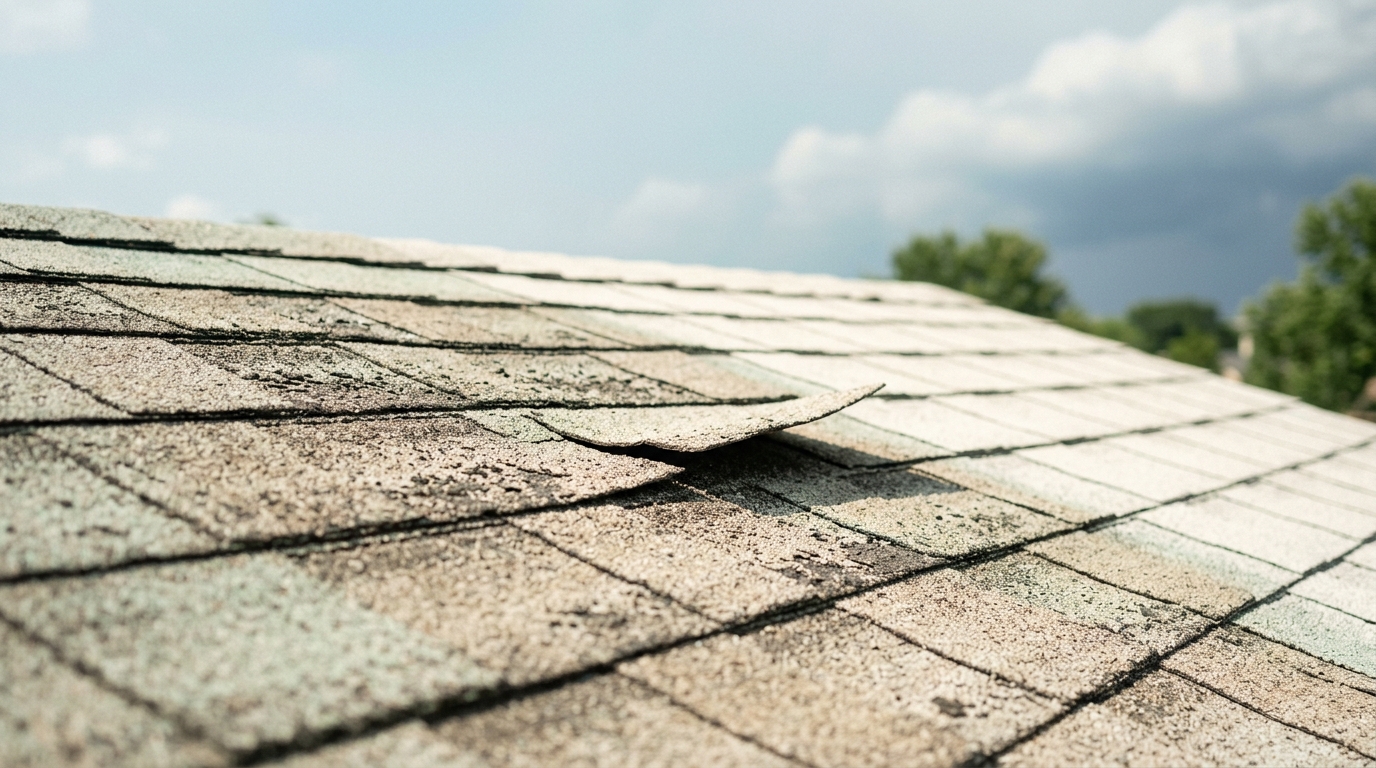
An asphalt shingle roof in Middle Tennessee lasts 15–25 years under typical conditions, compared to the 25–30 year lifespan manufacturers advertise for temperate climates. The region's heat, humidity, and severe storm exposure accelerate wear in ways that homeowners need to understand before a problem becomes a costly emergency.
Why Middle Tennessee Is Harder on Roofs Than Most of the Country
Nashville, Franklin, Murfreesboro, and the surrounding communities sit in a climate zone that delivers punishment from multiple directions. Summers push attic temperatures above 150°F, which cooks shingle adhesive strips and causes granule loss years ahead of schedule. Winters bring ice damming cycles where temperatures swing above and below freezing within 24 hours, forcing water under shingle edges. Spring and fall bring hail events and straight-line wind storms that routinely exceed 60 mph.
The result is a compounding stress cycle that no manufacturer's warranty test fully replicates. A 30-year architectural shingle installed in coastal Maine performs very differently from the same product installed in Brentwood or Hendersonville. Middle Tennessee homeowners who plan around the full rated lifespan typically find themselves with a failing roof and no budget ready for replacement.
Realistic Lifespan by Shingle Grade in Tennessee
| Shingle Type | Manufacturer Rating | Realistic Middle TN Lifespan | Primary Failure Mode in TN |
|---|---|---|---|
| 3-Tab Asphalt | 20–25 years | 12–17 years | Wind uplift, granule loss |
| Architectural (Dimensional) | 30 years | 18–24 years | Thermal cracking, storm damage |
| Premium Designer / Impact-Resistant | 40–50 years | 25–35 years | UV degradation, seam separation |
| GAF Timberline HDZ (Class 4) | Lifetime limited | 28–35 years | Algae staining, flashing failure |
The Factors That Shorten or Extend Your Roof's Life
Lifespan is not a fixed number. Four variables determine whether your roof reaches the top or the bottom of its realistic range.
- Attic ventilation: A properly balanced ridge-and-soffit ventilation system keeps attic temperatures 40–50°F cooler in summer, which directly reduces shingle blistering and adhesive failure. Poorly ventilated attics are the single most common reason Middle Tennessee roofs fail 5–8 years ahead of schedule.
- Installation quality: Improper nailing patterns, skipped underlayment, and inadequate flashing at valleys and penetrations account for a large share of premature failures. A GAF Master Elite installer follows a verified installation protocol that reduces these errors.
- Tree canopy proximity: Overhanging limbs deposit debris that holds moisture against shingles, and falling branches cause direct impact damage. Branches within 10 feet of the roofline should be trimmed annually.
- Maintenance frequency: Homeowners who clear gutters twice per year, address minor repairs within 90 days of identification, and schedule professional inspections every 2–3 years consistently get 20–30% more life from their roofing system than those who ignore the roof until a leak appears.
Roof Inspection Checklist: What to Look For
You do not need to walk the roof to gather useful information. A ground-level walk-around combined with binoculars reveals most early warning signs. Add a drone inspection from a licensed contractor for a complete picture without safety risk.
- Granule loss: Check downspout outlets and gutters after rain. A cup or more of granules per downspout per storm indicates accelerated shingle wear.
- Curling or cupping shingles: Edges that lift or cup upward signal moisture imbalance or heat damage and allow wind uplift to begin.
- Missing shingles: Any exposed decking is an active leak risk. Storms that remove shingles also frequently loosen adjacent shingles that look intact but have broken seal strips.
- Dark streaking or algae: Black streaks running vertically indicate Gloeocapsa magma algae, which degrades shingle surfaces. This is common across Middle Tennessee due to humidity.
- Sagging deck sections: A wavy or dipping roofline means decking or structural members below have absorbed moisture. This requires immediate professional evaluation.
- Flashing condition: Examine the metal flashing around chimneys, skylights, and pipe boots. Rust, gaps, or lifted edges are common entry points for water intrusion.
- Interior signs: Water stains on attic sheathing, daylight visible through the roof deck, or mold growth in the attic are definitive indicators of active or past water intrusion.
Repair vs. Replacement: How to Tell the Difference
The decision between repair and replacement comes down to the roof's age, the extent of damage, and the condition of the surrounding shingles.
- Repair is appropriate when the roof is under 15 years old, damage is confined to less than 10–15% of the total surface, the underlying decking is dry and solid, and the surrounding shingles have intact granules and flat lay.
- Replacement is the better investment when the roof is within 5 years of its realistic end-of-life, when more than 25% of the shingles show wear or damage, when the decking has soft spots or rot, or when insurance is covering storm damage and a full replacement qualifies under the claim.
A professional inspection quantifies these factors with specific measurements. Drone roof inspections now allow contractors to produce detailed photo documentation of every section of the roof without a single boot on the surface, which speeds up both the diagnostic and the insurance claim process.
Roof Maintenance Tips That Add Years to Your Investment
Consistent maintenance is the highest-return activity a Middle Tennessee homeowner can perform on their roofing system. These practices are specific and actionable.
- Clean gutters and downspouts in late November after leaf fall and again in April after spring storms.
- Apply an algae-resistant treatment or install copper or zinc ridge strips to suppress Gloeocapsa magma growth.
- Seal any pipe boot flashings that show cracking. Rubber collars on pipe boots in Tennessee typically fail within 10–15 years and cost under $150 to replace before they cause a leak.
- Schedule a professional drone inspection after any hail event or storm with confirmed wind speeds above 60 mph, even if no interior damage is visible. Hail damage that qualifies for an insurance claim often shows no interior symptoms for 12–18 months.
- Verify attic ventilation meets the 1:300 ratio standard (1 square foot of net free ventilation area per 300 square feet of attic floor space). Deficient ventilation is correctable without a full roof replacement in most cases.
When Storm Damage Changes the Timeline
Middle Tennessee recorded multiple significant hail and wind events through 2024 and 2025 that moved thousands of homeowners into the insurance claim process ahead of their expected replacement schedule. If your roof sustained damage in a named storm event, the insurance claim window matters. Most homeowner policies require damage to be reported within 1–2 years of the event date, and Tennessee insurers are increasingly using aerial imagery databases to cross-reference claim dates against storm records.
Filing a claim with documented inspection findings from a licensed roofing contractor produces significantly better outcomes than filing without supporting documentation. A contractor experienced in the Middle Tennessee market understands what adjusters look for and can present findings in the format that accelerates approval.
Middle Tennessee Roof Lifespan FAQ
How long does a 30-year architectural shingle roof actually last in Nashville or Franklin?
In Middle Tennessee's climate, a 30-year architectural shingle roof realistically lasts 18–24 years with average maintenance. Homes with poor attic ventilation or significant storm exposure may see failure at 15–18 years. The 30-year rating assumes moderate temperatures and limited UV exposure, conditions Middle Tennessee does not provide.
What are the most common signs that I need a new roof rather than a repair?
The clearest indicators of replacement need are: a roof age over 20 years, granule accumulation in gutters after every rain, multiple sections of curling or missing shingles, soft or spongy areas on the decking, and water stains in more than one location inside the attic. If two or more of these conditions exist simultaneously, repair is generally a short-term cost that delays an unavoidable replacement expense.
Does homeowner's insurance cover roof replacement in Tennessee?
Most standard homeowner's policies in Tennessee cover sudden storm damage from hail, wind, and falling objects. Coverage depends on your policy type (replacement cost value vs. actual cash value), the age of your roof, and whether the damage meets your deductible threshold. Policies written on older roofs frequently apply a depreciation schedule that reduces the payout. A licensed contractor can provide a documented inspection report that supports your claim with specific damage measurements.
How often should I have my roof inspected in Middle Tennessee?
Schedule a professional inspection every 2–3 years as a baseline, plus after any storm event with confirmed hail or winds above 60 mph. Annual self-inspections using binoculars from the ground cover basic visual checks between professional visits. Drone inspections provide the most complete picture because they capture high-resolution imagery of every section, including areas not visible from the ground or a ladder position.
Does a GAF Master Elite warranty cover storm damage?
A GAF Master Elite installer can offer the GAF System Plus or Golden Pledge warranty, which covers manufacturing defects and, in some configurations, installation workmanship for up to 25–50 years. These warranties do not cover storm damage, which falls under your homeowner's insurance policy. The value of the Master Elite warranty is protection against premature material failure and installation errors, which are the two most common non-storm causes of early roof failure in Middle Tennessee.
