From the blog
How Roof Color Affects Your Home's Energy Efficiency
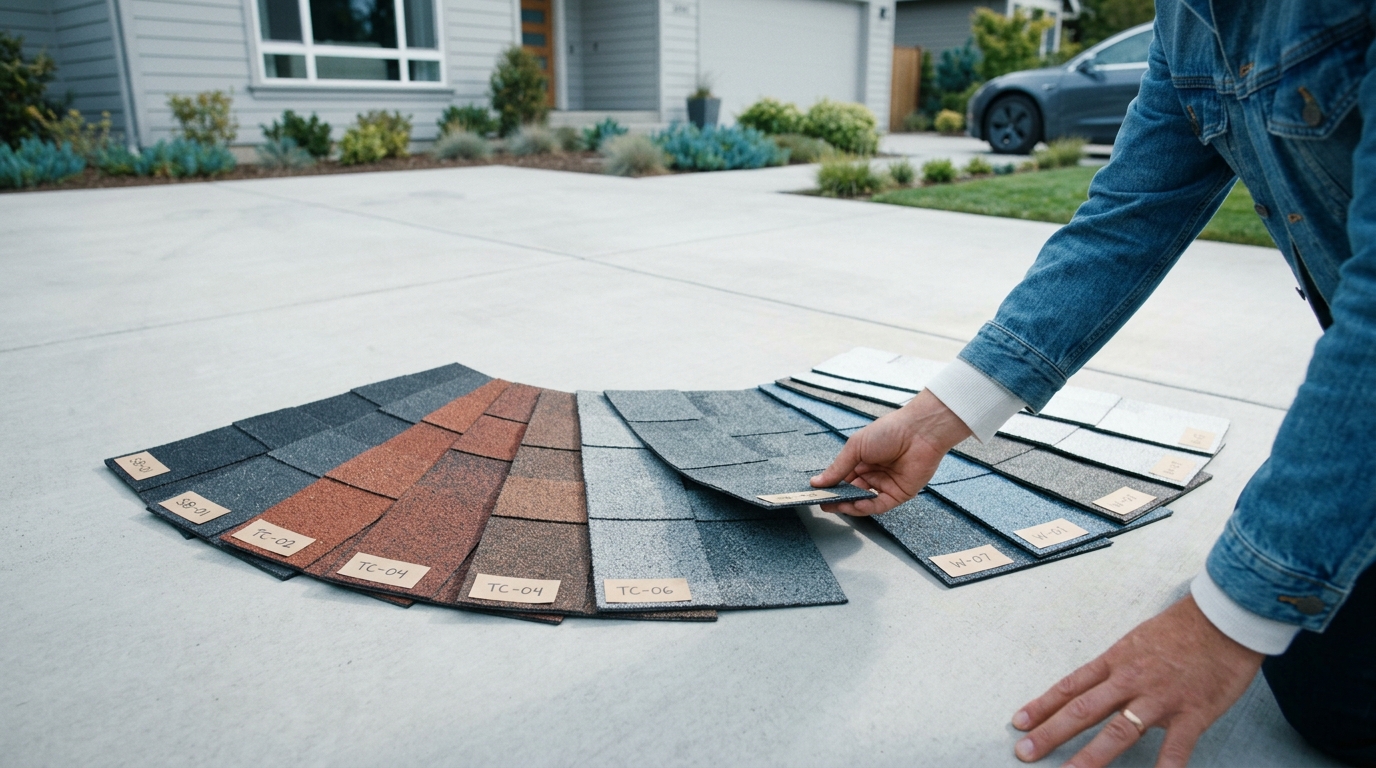
Roof color directly determines how much solar heat your home absorbs or reflects, with dark roofs absorbing up to 90% of solar radiation and cool-colored or reflective roofs rejecting up to 80% - a difference that can shift annual cooling costs by 15–25% in warm climates.
It sounds almost too simple: the color you paint or shingle your roof changes how your HVAC system works every single day. But the physics are real, the savings are measurable, and the decision affects everything from your summer electric bill to the lifespan of your roofing materials. Here's exactly what you need to know before you reroof or repaint.
The Science Behind Roof Color and Heat Transfer
Every surface has two key properties that govern how it handles sunlight: solar reflectance (how much sunlight it bounces away) and thermal emittance (how quickly it releases absorbed heat). Together, these values produce a metric called the Solar Reflectance Index (SRI). A higher SRI means a cooler roof.
Dark-colored roofs - charcoal, dark brown, black - typically carry an SRI of 0–15. A standard charcoal asphalt shingle sits around SRI 6. By contrast, a white or light-colored roof can reach SRI 80–110. That gap translates directly into attic temperature differences of 20–40°F on a hot summer afternoon.
When your attic runs 40°F cooler, your air conditioner doesn't have to work as hard to maintain 72°F inside. The Department of Energy has consistently documented that cool roofs reduce peak cooling demand by 10–15% in single-story buildings where the roof represents a large fraction of the building envelope.
Dark vs. Light Roofs: A Direct Comparison
Factor Dark Roof (SRI 0–15) Light / Cool Roof (SRI 65–110) Solar heat absorbed 70–90% 10–35% Attic temperature impact +20–40°F above ambient +5–10°F above ambient Cooling cost effect Higher (baseline) 15–25% lower in hot climates Heating cost effect Slightly lower in cold climates Slightly higher in cold climates Roof material lifespan Shorter (thermal cycling stress) Longer (less heat expansion) Urban heat island contribution Higher Lower Best climate fit Cold (IECC zones 6–8) Hot/mixed (IECC zones 1–4)Climate Zone Is Everything
Roof color isn't a one-size-fits-all decision - climate zone determines whether a cool roof saves you money or costs you money.
- Hot climates (IECC zones 1–3: Florida, Texas Gulf Coast, Arizona, Southern California): Cool roofs deliver the greatest return. Cooling dominates your energy budget year-round, and a light roof reduces that load substantially. White or light-gray shingles, metal roofing with reflective coatings, and TPO membranes are strong choices here.
- Mixed climates (IECC zones 4–5: Mid-Atlantic, Pacific Northwest, Midwest): The calculus gets nuanced. A cool roof saves on cooling but gives up some passive solar heating gain in winter. Medium-tone colors - light gray, weathered wood, light brown - often strike the best balance.
- Cold climates (IECC zones 6–8: Northern Minnesota, Maine, Rocky Mountain states, Canada border regions): A darker roof works in your favor. Passive solar gain through the roof helps offset heating costs. The energy penalty for having a reflective roof in these zones can outweigh any cooling savings.
A 2025 Oak Ridge National Laboratory modeling study confirmed that in IECC zone 2, switching from a dark asphalt shingle (SRI 6) to a cool-rated shingle (SRI 29) reduced annual net energy costs by an average of $175 per year for a 2,000 sq ft single-story home - and that figure increases as electricity prices rise.
Roofing Material Matters as Much as Color
Color alone doesn't tell the whole story. The material underneath the color layer changes how much heat is conducted into your home even when SRI values look similar on paper.
- Asphalt shingles: The most common roofing material in North America. Standard dark asphalt performs poorly thermally. However, Energy Star-rated "cool asphalt shingles" use granules coated with special pigments that reflect near-infrared light - achieving SRI values of 25–40 even in medium-tone colors like tan or terracotta.
- Metal roofing: Bare or painted metal roofing with reflective coatings reaches SRI 60–90. Standing seam metal in light colors is one of the best combinations of durability and energy performance available.
- Clay and concrete tile: The barrel shape creates air gaps that naturally improve ventilation, and light-colored clay tile can reach SRI 40–60. Popular in the Southwest and Florida.
- TPO and PVC membranes (flat roofs): White TPO membrane reaches SRI 104 - the gold standard for flat commercial roofs, increasingly used in residential applications.
- Slate and wood shake: Both have moderate SRI values and limited color flexibility, but slate's thermal mass does reduce heat transfer somewhat.
The Role of Attic Insulation and Ventilation
Roof color's impact doesn't operate in isolation. If your attic has R-49 or higher insulation - the current recommendation for most U.S. climate zones - the thermal barrier between your roof deck and living space is already significant. In a well-insulated attic, the marginal benefit of switching from a dark to a light roof narrows.
Conversely, in older homes with R-19 or lower attic insulation, a cool roof can make a dramatic difference because heat flows more directly from roof to living space. Before spending on a premium cool roof, audit your attic insulation - in many cases, adding insulation first delivers a faster return on investment.
Proper ridge and soffit ventilation also changes the equation. A well-ventilated attic flushes hot air continuously, reducing the temperature differential between roof deck and living space regardless of roof color. But ventilation and cool-roof color work synergistically - they're not substitutes for each other.
Aesthetics, HOAs, and Resale Value
Energy efficiency doesn't exist in a vacuum. A white roof on a traditional craftsman bungalow might clash with neighborhood aesthetics, violate HOA guidelines, or reduce curb appeal in ways that affect resale value. The good news: modern cool-pigment technology in asphalt shingles means you don't have to choose between a traditional-looking dark roof and energy performance. Manufacturers like GAF (Timberline Cool Series), Owens Corning (Duration Cool), and CertainTeed (Landmark Solaris) produce medium-tone shingles that look conventionally dark but carry Energy Star certification and SRI values of 25–35.
These products let you match your neighbor's charcoal-gray roof visually while still cutting your cooling load meaningfully - a practical compromise that more homeowners choose every year.
Real Cost Savings: What to Realistically Expect
Across warm U.S. climates, a well-chosen cool roof on a typical 2,000 sq ft single-story home reduces annual cooling energy use by 7–15%, translating to $100–$300 per year depending on local electricity rates and climate severity. Over a 20-year roof lifespan, that's $2,000–$6,000 in savings before accounting for the extended material life a cooler roof enjoys.
Some utility companies and state energy programs still offer rebates for Energy Star-rated roofing materials - check the Database of State Incentives for Renewables and Efficiency (DSIRE) at dsireusa.org for current offerings in your state before purchasing.
Roof Color Energy Efficiency FAQ
Does a white or light-colored roof increase heating costs in winter?
Yes, but modestly. In cold climates (IECC zones 6–8), a reflective roof foregoes some passive solar gain that would otherwise reduce heating loads. Studies show the winter heating penalty typically runs 3–8% of heating energy use for single-story homes, which in most cold climates outweighs the cooling savings. In mixed climates (zones 4–5), the net annual impact is often close to neutral, so focus on insulation quality first.
What SRI value qualifies a roof as "cool" under Energy Star?
Energy Star requires a minimum initial SRI of 25 for steep-slope roofs (greater than 2:12 pitch) and SRI 82 for low-slope roofs. After three years of weathering, the thresholds drop to SRI 15 and SRI 64 respectively, accounting for the fact that reflectance degrades with age and dirt accumulation.
Can I paint my existing dark roof a lighter color to improve energy efficiency?
Yes. Elastomeric roof coatings in white or light gray are a cost-effective retrofit option, especially for flat or low-slope roofs. A quality white elastomeric coating adds SRI 80–100 to a previously dark surface and costs $1–$3 per square foot installed - far less than full replacement. Steep-slope asphalt shingles are harder to coat effectively; in that case, waiting for natural replacement and choosing cool shingles is usually the better strategy.
Does roof color affect the lifespan of roofing materials?
Significantly. Dark roofs in hot climates regularly reach surface temperatures of 150–190°F on summer afternoons. This extreme thermal cycling accelerates the breakdown of asphalt binder in shingles, brittles sealants, and causes expansion-contraction stress on fasteners. Cool roofs in the same climates run 50–70°F cooler at peak, which meaningfully extends material life - some manufacturers offer longer warranty periods on Energy Star-rated products for this reason.
Are there cool roof options that don't look different from conventional roofing?
Absolutely. Cool-pigment granule technology - used by GAF, Owens Corning, CertainTeed, and others - reflects near-infrared wavelengths of sunlight while absorbing the visible wavelengths that give the shingle its color. The result is a shingle that appears charcoal, brown, or terracotta to the eye but performs thermally like a much lighter surface. These products carry Energy Star ratings and are available in virtually every standard residential shingle color.
