From the blog
How We Protect Your Landscaping and Property During a Roof Replacement in Nashville
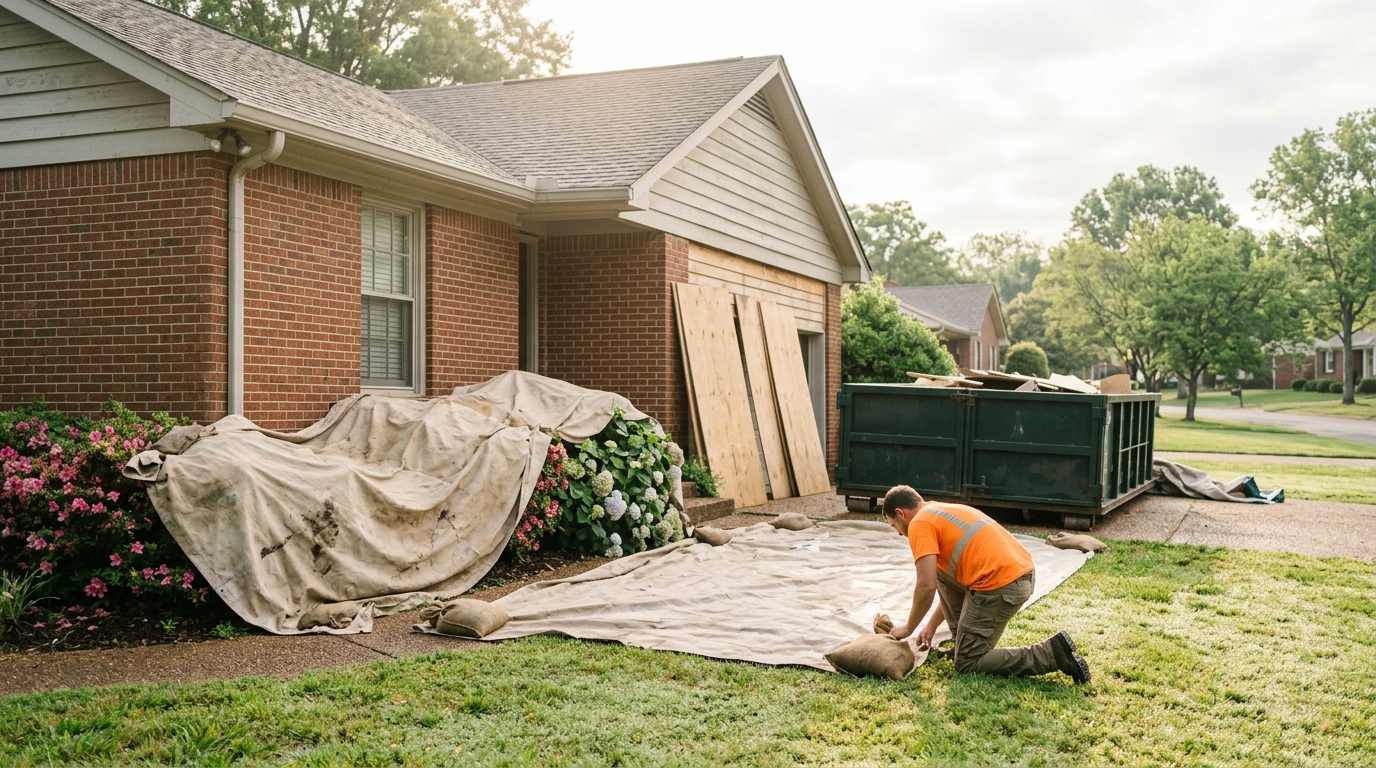
A typical Middle Tennessee roof replacement takes one to two days for an average 25–35 square home, and a professional crew protects your property with tarps, plywood, magnetic sweeps, and a full debris cleanup before leaving. Here is exactly what happens on installation day, how to prepare, and how landscaping, siding, and vehicles stay safe.
What to Expect on Roof Replacement Day: The Hour-by-Hour Timeline
Most crews arrive between 7:00 and 8:00 a.m. Here is the sequence on a standard asphalt shingle job in Nashville, Franklin, or Brentwood:
- 7:00–8:00 a.m., Arrival and walkthrough. The crew leader confirms the scope, shingle color, and any areas you want protected. Material was delivered the day before or arrives by truck with a boom lift.
- 8:00–9:00 a.m., Property protection. Tarps go over landscaping, AC units, and patios. Plywood or tarps shield windows and doors where needed.
- 9:00 a.m.–1:00 p.m., Tear-off. Old shingles and underlayment come off and drop into a trailer or dumpster positioned beside the house.
- Midday, Deck inspection. Crews check the plywood or decking for rot and replace bad sections.
- 1:00–5:00 p.m., Installation. Ice and water barrier, synthetic underlayment, drip edge, starter strip, shingles, flashing, and ridge cap go on.
- Late afternoon, Cleanup. Magnetic sweeps, ground-level debris pickup, and a final walkthrough.
Roofs over 40 squares, steep pitches above 8/12, or homes with multiple dormers and valleys run into a second day. Weather is the other variable. Crews do not tear off more roof than they can dry in the same day, so a pop-up Tennessee thunderstorm delays the schedule rather than exposing your home.
How to Prepare for a New Roof: Your Pre-Installation Checklist
Preparation takes about an hour and prevents most day-of problems. Complete these items the evening before:
- Move vehicles out of the driveway and off the street directly in front of the house. The crew needs the driveway for the trailer and material staging.
- Take wall hangings and shelf items down on the top floor. Tear-off vibration can shake pictures, mirrors, and collectibles loose, especially in homes with vaulted ceilings.
- Cover attic contents. Dust and granules sift through decking gaps. Use plastic sheeting over stored boxes, or move them out.
- Clear the perimeter. Move patio furniture, grills, planters, and children's toys at least 10 feet from the foundation.
- Mark sensitive items. Flag sprinkler heads, invisible dog fences, landscape lighting, and satellite cables so the crew works around them.
- Plan for pets and sleeping schedules. Tear-off is loud. Nail guns fire all day. Board pets or arrange a day away, and consider that anyone working from home or sleeping after a night shift will not get quiet.
- Confirm access. Unlock gates and tell the crew about HOA restrictions on work hours or dumpster placement. Many Brentwood and Franklin neighborhoods enforce both.
- Heavy canvas or poly tarps over shrubs and beds. Tarps are draped, not staked, so roots and branches are not damaged. Delicate plants such as hydrangeas, Japanese maples, and boxwoods get plywood lean-tos on top of the tarp to deflect shingle slabs.
- Debris chutes or trailers positioned against the eave. Dropping shingles straight into a trailer keeps most debris off the ground entirely. Where a trailer cannot reach, tarps catch what falls.
- Plywood over AC condensers and A/C lines. Granules clog coils and fins. A sheet of 1/2-inch plywood over the unit prevents both damage and an expensive service call.
- Ladder pads and ground protection. Rubber feet or boards under ladders protect lawns, pavers, and stamped concrete from dents and scuffs.
- Gutter and siding protection. Crews avoid prying against fascia and siding, and replace gutters or downspouts only when they are in the scope of work.
- Ridge line is straight and ridge cap is fully sealed.
- Flashing at chimneys, walls, and skylights is visible and sealed.
- Roof vents, pipe boots, and drip edge are installed.
- Landscape beds, AC unit, and lawn show no damage.
- No nails or debris remain in the driveway, street, or beds.
How We Protect Landscaping, Siding, and Outdoor Features
Landscaping damage comes from three sources: falling debris, foot traffic, and ladder or equipment placement. Each has a specific countermeasure.
Pools, ponds, and fountains need special attention. Cover them completely or turn off pumps, because granules and nails in filter systems cause costly repairs.
Nail and Debris Control: The Magnetic Sweep
A single roofing nail in a tire causes a $30–$300 repair, and one in a bare foot causes an ER visit. Professional crews run a rolling magnetic sweeper over the entire yard, driveway, and any parking areas at least once at the end of the day. Good crews do it twice: once after tear-off and again after installation.
The sweep covers more ground than most homeowners expect. Nails travel 15–20 feet from the house when shingles are pried off, and they hide in mulch and grass. Expect the crew to also hand-rake flower beds, check the gutters for granules, and blow off decks, patios, and walkways. Ask the crew lead to show you the sweep path during the final walkthrough.
Tarps vs. Plywood vs. Drop Cloths: Which Protects What
| Material | Best For | Limitation |
|---|---|---|
| Heavy poly or canvas tarps | Flower beds, shrubs, lawn edges, patios | Does not stop heavy impact from full shingle bundles |
| 1/2-inch plywood sheets | AC units, windows, fragile plants, walkways | Heavy and slow to position over large areas |
| Debris chutes or trailers | Primary tear-off collection | Requires driveway or side-yard access |
| Interior attic sheeting | Stored belongings, insulation | Homeowner usually sets this up before the crew arrives |
Cleanup and Final Walkthrough
Cleanup is where a roofing company's standards show. Before the crew leaves, expect these steps: all shingle scraps and packaging removed, tarps lifted and shaken out, magnetic sweep completed, gutters cleared of granules, and the trailer hauled away or scheduled for pickup the next morning.
Then walk the property with the crew lead. Check these points yourself:
Report any damage the same day with photos. Prompt documentation protects you, and reputable contractors repair or replace damaged items without argument. Ask for the final invoice, warranty registration, and permit closeout paperwork within a few days.
What Happens If Weather Interrupts the Job
Middle Tennessee spring and summer storms develop fast. A responsible crew watches radar and sequences work in sections. Underlayment goes down the same day as tear-off, and any open areas are dried in with synthetic underlayment and tarps before rain arrives. This is why asking, "How do you dry in at the end of each day?" is one of the best questions to put to a roofer before signing.
If a storm pauses the project, the crew returns once the deck is dry, typically within 24–48 hours. Wet decking is not shingled over, because trapped moisture causes rot and voids manufacturer warranties.
Roof Replacement Day FAQ
How long does a roof replacement take in Middle Tennessee?
Most single-family homes between 2,000 and 3,000 square feet are completed in one to two days. Complex roofs with steep pitches, multiple layers, or extensive decking repairs can take three days.
Do I need to be home during the roof installation?
No. You need to be reachable by phone, and someone should be available for the start-of-day walkthrough and the final inspection. Most homeowners leave for work and return to a finished roof.
Will the roofing crew damage my landscaping?
Minor stress to plants is possible, but proper tarping, plywood shielding, and debris trailers keep damage rare. Any damage should be photographed and reported to the contractor the same day.
How do you make sure no nails are left in my yard?
Crews run a rolling magnetic sweeper across the lawn, driveway, and street, then hand-rake beds and walkways. A final walkthrough with the crew lead confirms the property is clear.
Should my family and pets stay home during a roof replacement?
Plan for noise and vibration. Pets are best boarded or placed in a quiet interior room, and young children and anyone sensitive to loud noise are better off away from the house for the day.
