From the blog
Metal Roofing vs. Asphalt Shingles: Pros, Cons, and Costs
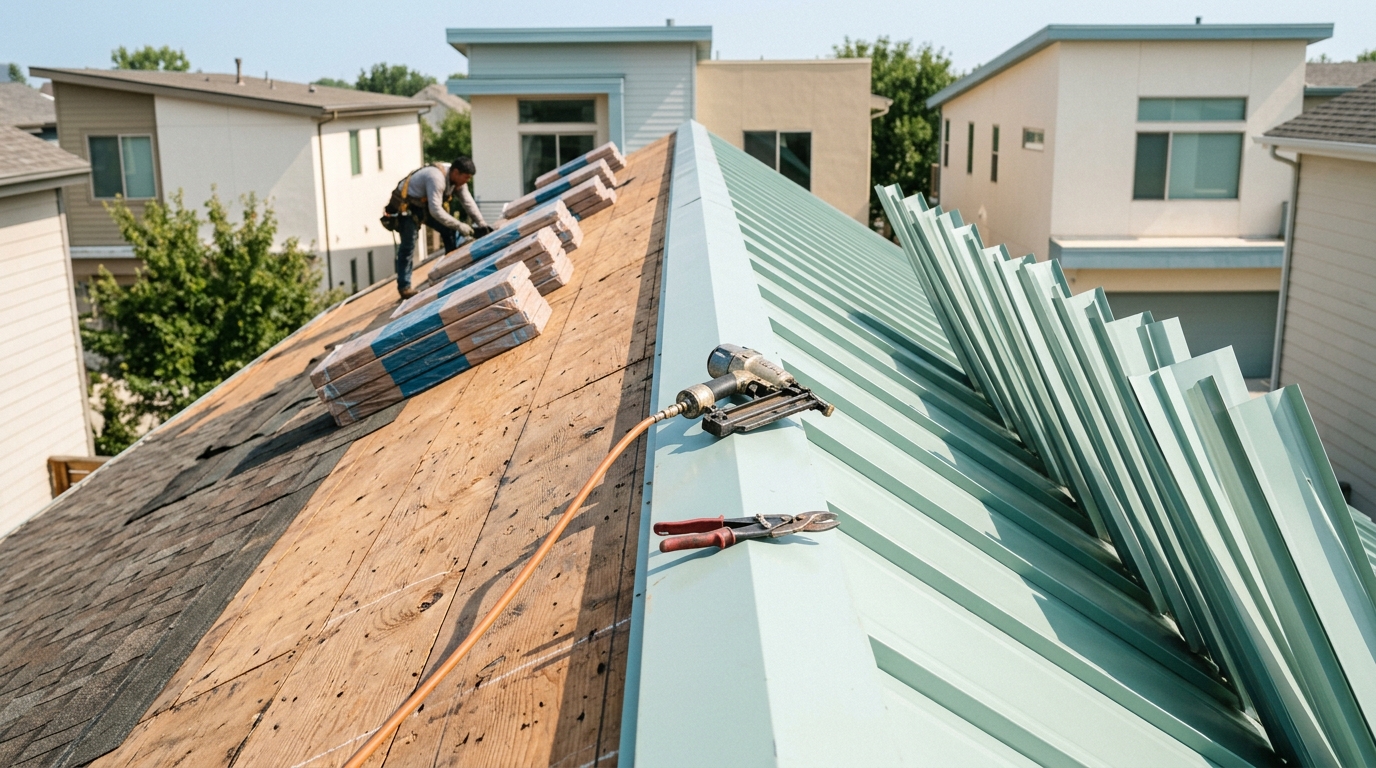
Metal roofing outlasts asphalt shingles by 25–35 years and costs 2–3× more upfront, but delivers lower lifetime costs for most homeowners who stay in their homes long-term. Asphalt shingles remain the dominant choice in North America due to lower installation costs and easier replacement logistics. Here's a full breakdown to help you decide.
Quick Cost Comparison: Metal vs. Asphalt
Pricing varies by region and material grade, but these ranges reflect typical installed costs per square foot in 2026:
- Asphalt shingles (3-tab): $3.50–$5.50 per sq ft installed
- Asphalt shingles (architectural/dimensional): $5.00–$8.00 per sq ft installed
- Standing seam metal roofing: $10.00–$18.00 per sq ft installed
- Metal shingles or stone-coated steel: $7.50–$14.00 per sq ft installed
- Corrugated metal panels: $6.50–$11.00 per sq ft installed
For a 2,000 sq ft roof, that puts total project costs at roughly $7,000–$16,000 for asphalt and $13,000–$36,000 for metal. The gap is real, but it doesn't tell the whole story.
Metal Roofing: Pros and Cons
Advantages of Metal Roofing
- Lifespan of 40–70 years. Standing seam steel and aluminum roofs routinely last 50+ years with minimal maintenance. Copper and zinc roofs can exceed 100 years.
- Superior weather resistance. Metal roofs handle wind speeds up to 140 mph (Class 4 impact ratings available) and shed snow efficiently due to low-friction surfaces.
- Energy efficiency. Reflective metal roofs reduce cooling loads by 10–25% in warm climates, according to Oak Ridge National Laboratory research.
- Low maintenance. No granule loss, no curling, no moss growth. Inspect twice a year and keep gutters clear - that's the bulk of the maintenance demand.
- Recyclable material. Most metal roofing contains 25–95% recycled content and is 100% recyclable at end of life, unlike asphalt shingles, which fill landfills.
- Insurance discounts. Many carriers offer 5–30% premium reductions for Class 4 impact-rated metal roofs, which partially offsets installation cost.
Disadvantages of Metal Roofing
- Higher upfront cost. The 2–4× price premium requires long time horizons to recoup through savings and avoided replacements.
- Noise. Without proper insulation and solid sheathing, rain on a metal roof is noticeably louder than on asphalt. Proper installation mitigates this significantly.
- Expansion and contraction. Metal panels expand and contract with temperature changes. Improper fastening leads to oil-canning (waviness) and fastener loosening over time.
- Difficult repairs. Matching panels for spot repairs years later can be challenging if the product line changes. Standing seam especially requires skilled contractors.
- Limited contractor availability. Skilled metal roofing installers are less common than asphalt contractors, especially in rural markets.
Asphalt Shingles: Pros and Cons
Advantages of Asphalt Shingles
- Low upfront cost. The most affordable roofing option for most residential applications, with near-universal contractor availability keeping labor competitive.
- Easy installation and repair. Any licensed roofing contractor can install, repair, or replace asphalt shingles. Spot repairs are straightforward and inexpensive.
- Wide aesthetic variety. Architectural shingles now convincingly mimic slate, cedar shake, and tile at a fraction of the material cost.
- Proven performance. Decades of data exist on how asphalt shingles perform in every climate zone across North America.
- Suitable for low slopes. Architectural shingles work on roofs with pitches as low as 2:12 with proper underlayment, offering flexibility metal panels sometimes can't match.
Disadvantages of Asphalt Shingles
- Short lifespan. 3-tab shingles last 15–20 years; architectural shingles last 25–30 years under good conditions. Hot climates and poor attic ventilation accelerate degradation.
- Higher lifetime cost. A homeowner who stays 40 years will replace an asphalt roof at least once, often twice, erasing the initial cost advantage.
- Environmental impact. The U.S. disposes of an estimated 11–13 million tons of asphalt shingle waste annually, and recycling options remain limited in many regions.
- Vulnerable to algae and moss. Dark streaks from Gloeocapsa magma algae are common in humid climates without algae-resistant shingles (look for the AR suffix in product specs).
- Poor performance in extreme heat. In climates exceeding 90°F regularly, asphalt shingles absorb and radiate heat, increasing cooling costs compared to reflective metal.
Side-by-Side Comparison: Metal Roofing vs. Asphalt Shingles
Factor Metal Roofing Asphalt Shingles Lifespan 40–70+ years 15–30 years Installed Cost (per sq ft) $6.50–$18.00 $3.50–$8.00 Wind Resistance Up to 140+ mph 60–130 mph (grade-dependent) Energy Efficiency High (reflective coatings) Low–Moderate Maintenance Minimal Moderate (granule loss, algae) Recyclability 100% recyclable Limited recycling options Contractor Availability Moderate (specialist needed) Very high (universal) Noise Level Higher without insulation Quiet Best Climate All climates; excels in heat and snow Moderate climatesWhich Roof Is Right for You?
Choose metal roofing if: you plan to stay in your home 15+ years, live in a high-wind or heavy-snow region, want minimal maintenance, or value long-term environmental impact. The upfront investment pays off most clearly in climates with temperature extremes and in states where insurers offer meaningful Class 4 impact discounts.
Choose asphalt shingles if: you're on a tight budget, plan to sell within 10 years, or need a fast installation with maximum contractor flexibility. Architectural dimensional shingles with a 30-year warranty are the clear best-value option within the asphalt category - skip 3-tab entirely unless cost is the absolute primary driver.
One underrated factor: your attic's ventilation quality determines how long either roof lasts. A poorly ventilated attic can cut asphalt shingle life by 30–40% and cause premature corrosion on improperly installed metal roofs. Fix ventilation first, then choose your material.
Metal Roofing Vs Asphalt Shingles FAQ
Does metal roofing increase home resale value?
Yes. A metal roof typically recoups 60–85% of its installation cost at resale, compared to 60–70% for architectural asphalt shingles, according to remodeling cost-vs-value data. In markets where buyers are educated about lifespan and energy savings, a metal roof can be a genuine selling point that speeds sale timelines.
Is metal roofing louder than asphalt shingles during rain?
On a roof with solid wood sheathing, attic insulation, and proper underlayment, the noise difference between metal and asphalt is negligible inside the home. The "loud rain" reputation applies mainly to exposed-fastener metal panels on open framing - common in agricultural buildings, not residential construction.
How long does a metal roof last compared to asphalt shingles?
Standing seam steel and aluminum roofs last 40–70 years. Copper and zinc roofs last 80–100+ years. Standard architectural asphalt shingles last 25–30 years. In a 50-year period, most homeowners will replace an asphalt roof at least once, while a metal roof installed today should still be serviceable.
Can you install metal roofing over existing asphalt shingles?
In many cases, yes. Most building codes allow one layer of existing roofing beneath new metal panels, which saves on tear-off labor costs ($1.00–$2.50 per sq ft). The existing shingles must be flat and structurally sound. Always verify local code requirements and have a contractor assess the decking condition before committing to an overlay installation.
What metal roofing material lasts the longest?
Copper roofing has the longest proven lifespan - 80 to 100+ years - but costs $25–$40 per sq ft installed, making it a specialty choice. For most residential projects, Galvalume steel (steel coated with aluminum-zinc alloy) or aluminum standing seam offers the best balance of longevity (50+ years) and cost. Zinc is a strong mid-tier option at 60–80 year lifespans and is especially popular in European residential construction.
