From the blog
Navigating the Insurance Supplement Process for Roof Claims in Middle TN
Navigating the Insurance Supplement Process for Roof Claims in Middle Tennessee
When a Middle Tennessee storm damages your roof, your insurance payout is rarely the final number. The supplement process, where your contractor identifies covered damage that was missed or undervalued in the initial adjuster estimate, routinely adds thousands of dollars to approved claims. Understanding how this process works from inspection through final payment gives homeowners in Nashville, Franklin, Brentwood, Murfreesboro, and Hendersonville a decisive advantage when filing a roof claim in Tennessee.
How Middle Tennessee Storm Patterns Create Complex Roof Claims
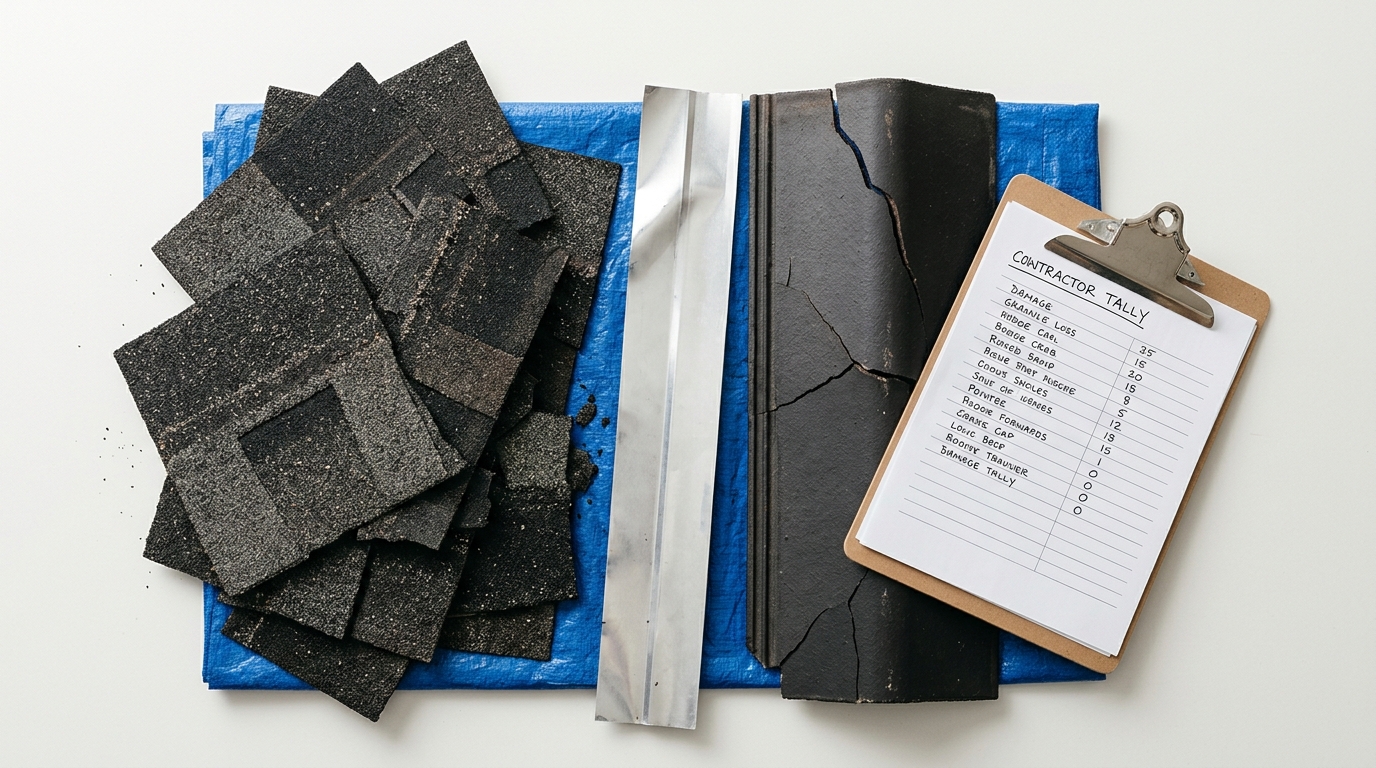
Middle Tennessee sits in a corridor that channels severe weather from the Gulf of Mexico directly into the Cumberland Plateau. Hail events in the Nashville metro area produce stones ranging from pea-sized (0.25 inches) to baseball-sized (2.75 inches), and the type of damage each size produces differs significantly. Small hail bruises asphalt shingles and fractures granule bonds without leaving visible dents; large hail cracks decking, creases flashing, and shatters ridge caps. Both types of damage are covered under a standard homeowner's policy, but adjusters working under time pressure miss granule loss and soft-metal damage at a high rate.
Wind damage from Middle Tennessee's frequent severe thunderstorms creates a separate set of claim complications. Lifted shingles often reseat themselves after a storm passes, hiding the broken sealant strips that allow water infiltration months later. Wind speeds above 60 mph, common in Franklin and Murfreesboro during derecho events, can also cause micro-tears in underlayment that don't appear on a surface inspection. These hidden losses make professional documentation essential before you allow an adjuster to close your file.
Step-by-Step: The Roof Insurance Claim Process in Tennessee
- Document damage before anything is touched. Photograph every affected surface from ground level, then hire a qualified roofing contractor to perform a full inspection. Drone inspections, now standard among reputable Middle Tennessee roofers, capture high-resolution images of every slope without creating additional wear on compromised shingles.
- File your claim promptly. Tennessee's statute of limitations for property insurance claims is typically tied to your policy language, but most standard homeowner policies require notice "as soon as practicable." Waiting more than 30 days after a storm can give your insurer grounds to question whether observed damage predates the event.
- Meet the adjuster with your contractor present. An experienced roofing contractor who handles storm damage roof repair in Nashville and surrounding counties knows exactly what line items adjusters overlook: ice-and-water shield replacement, drip edge code upgrades, steep-slope labor charges, and soft-metal damage to gutters, vents, and flashing. Having your contractor on-site during the adjuster walk converts a one-sided inspection into a collaborative one.
- Review the Scope of Loss carefully. The adjuster's estimate arrives as a Xactimate report, the industry-standard estimating software used by carriers across Tennessee. Line by line, compare the adjuster's measurements against your contractor's independent takeoff. Discrepancies in square footage, waste factor, and material line items are the most common sources of underpayment.
- Submit a supplement if the estimate is incomplete. Your contractor prepares a written supplement that itemizes every missed or undervalued line item, supported by photographs, measurements, and code citations. Most Tennessee carriers accept supplements through their online portals within 30–60 days of the initial claim decision.
Understanding the Supplement Process: What Gets Missed Most Often
The insurance supplement process is not an adversarial tactic. It is a contractual mechanism built into every homeowner's policy to ensure that the actual cost to restore a home to pre-loss condition is what gets paid. In Middle Tennessee, the following items are missed or undervalued in a significant share of initial adjuster estimates.
| Missed Line Item | Why It Gets Missed | Typical Cost Impact |
|---|---|---|
| Ice-and-water shield replacement | Adjuster assumes re-use; Tennessee code requires replacement when decking is exposed | $300–$900 per roof |
| Drip edge code upgrade | Older homes lack drip edge; re-roofing triggers code compliance requirement | $200–$600 per roof |
| Soft-metal damage (gutters, vents, flashing) | Requires close inspection; often missed from ground-level adjuster walk | $500–$2,500 per claim |
| Steep-slope labor surcharge | Applies above 6:12 pitch; many estimates default to standard-slope pricing | $150–$400 per square |
| Waste factor on complex roofs | Standard 10% waste assumes simple geometry; hip roofs and dormers require 15–20%+ | $400–$1,200 per roof |
| Permit fees | Required by Williamson, Rutherford, and Davidson counties; often not included | $150–$500 per permit |
Actual Cash Value vs. Replacement Cost Value: A Critical Distinction
Tennessee homeowner policies pay roof claims in one of two ways, and the difference directly controls how much you receive. Actual Cash Value (ACV) policies depreciate the payout based on the age and condition of your existing roof. A 15-year-old roof on a 20-year shingle may receive only 25–40 cents per dollar of replacement cost. Replacement Cost Value (RCV) policies pay the full replacement cost, typically in two installments: the ACV check upfront, and the recoverable depreciation check after repairs are completed and documented.
Before you sign a contractor agreement, confirm whether your policy is ACV or RCV. If you hold an RCV policy, your contractor should submit a Certificate of Completion and final invoice to your insurer to trigger the recoverable depreciation payment. Many Middle Tennessee homeowners leave this final check uncollected simply because they did not know to request it.
Working with a GAF Master Elite Installer on Your Claim
GAF Master Elite installers represent fewer than 3% of roofing contractors nationwide. In Middle Tennessee, choosing a Master Elite contractor for your storm damage roof repair brings three specific advantages during the insurance claim process. First, Master Elite contractors carry the documentation infrastructure that insurers expect: commercial-grade insurance, written warranties, and verifiable licensing. Second, they install GAF's System Plus and Golden Pledge warranty products, which cover both materials and workmanship and transfer to a new owner if the home sells. Third, their familiarity with Xactimate pricing means their supplement submissions use the same line-item language adjusters understand, reducing back-and-forth delays.
For hail damage roof claims in Franklin, TN and surrounding Williamson County, working with a contractor recognized by your insurer also reduces the likelihood of a re-inspection request, which can add 30–45 days to your claim timeline.
What to Watch Out For: Storm Chaser Red Flags
After every major hail or wind event in Middle Tennessee, out-of-state contractors flood neighborhoods in Nashville, Brentwood, and Murfreesboro offering free inspections and promising to "handle everything with your insurance." Some of these contractors perform adequate work. Many do not. Specific warning signs include requests that you sign an Assignment of Benefits (AOB) agreement before your claim is approved, pressure to choose materials before your adjuster has inspected, and contractor bids that arrive before the storm is 48 hours old with no written estimate or scope of work.
Tennessee does not recognize Assignment of Benefits for property insurance the same way Florida does, but signing a contract that gives a contractor unilateral control over your claim can still create legal complications if the work is disputed. Always retain a copy of every document you sign, and verify your contractor's Tennessee contractor license number through the Tennessee Department of Commerce and Insurance before work begins.
Roof Insurance Claim FAQ for Middle Tennessee Homeowners
How long does the roof insurance claim process take in Tennessee?
Tennessee law requires insurers to acknowledge a claim within 10 days and render a coverage decision within 15 days of receiving all requested documentation. The full cycle from initial inspection through final payment on an RCV policy, including the supplement negotiation and recoverable depreciation release, typically runs 45–90 days for straightforward claims and up to 120 days when re-inspections or appraisals are required.
Will filing a roof claim raise my homeowner's insurance premium?
Filing a single weather-related claim in Tennessee generally does not trigger a premium surcharge on its own, because hail and wind damage are categorized as non-fault weather losses. However, two or more claims within a 3-year period can affect your renewal terms. Review your policy's claims history provisions before filing any claim, and discuss the cost-benefit calculation with your agent if your damage is close to your deductible threshold.
What is the insurance supplement process and how does it differ from filing a new claim?
A supplement is an addition to an existing, already-approved claim. It does not restart the claims process or create a new claim on your record. Your contractor submits documented evidence of line items missed in the original adjuster estimate, and the insurer reviews and either approves or denies each item. Approved supplement items are added to your existing claim payout without affecting your claim count.
Does wind damage to my roof in Murfreesboro require a separate deductible from hail damage?
It depends on your policy language. Some Tennessee homeowner policies include a combined "wind and hail" deductible that applies to both perils under a single storm event. Others separate the perils. Review your declarations page for a "hurricane deductible" or "wind/hail deductible" rider, which can range from 1–5% of your home's insured value and often applies separately from your standard deductible. A licensed public adjuster or your agent can clarify which deductible structure applies to your claim.
Can I choose any contractor for my insurance-funded roof repair in Tennessee?
Yes. Tennessee law gives homeowners the right to choose their own licensed contractor for insurance repairs. Your insurer can recommend contractors, but they cannot require you to use a specific company. Selecting a contractor with documented experience in storm damage roof repair and familiarity with the Xactimate supplement process protects your claim outcome far more than selecting a contractor simply because the insurer suggests one.
