From the blog
Protecting Your Middle TN Landscaping and Property During a Roof Replacement
A roof replacement in Middle Tennessee takes one to two days for most residential homes, and the crew will work across your entire roofline, which means your yard, landscaping, driveway, and interior walls are all affected. Knowing exactly what happens before, during, and after installation lets you protect what matters and avoid surprises.
What the Crew Does to Your Property Before the First Shingle Goes Down
Professional roofing crews in the Brentwood and Franklin area arrive early, typically between 7:00 and 7:30 a.m., to stage materials before the heat of the day builds. The first hour is almost entirely logistics: a delivery truck drops pallets of shingles on your driveway or at the curb, a dumpster or trailer is positioned to catch tear-off debris, and the crew walks the roofline to plan the sequence of work.
Your driveway will be occupied for the full day. If you have vehicles in the garage, move them out the night before so the crew can access your property freely and so shingles loaded onto the roof via a mechanical lift do not damage car finishes. A single pallet of architectural shingles weighs roughly 3,000 pounds, and the lift apparatus sits on your driveway surface. Place plywood sheets under the lift feet if you have newer stamped concrete or pavers; ask your contractor to do this explicitly if they do not offer it.
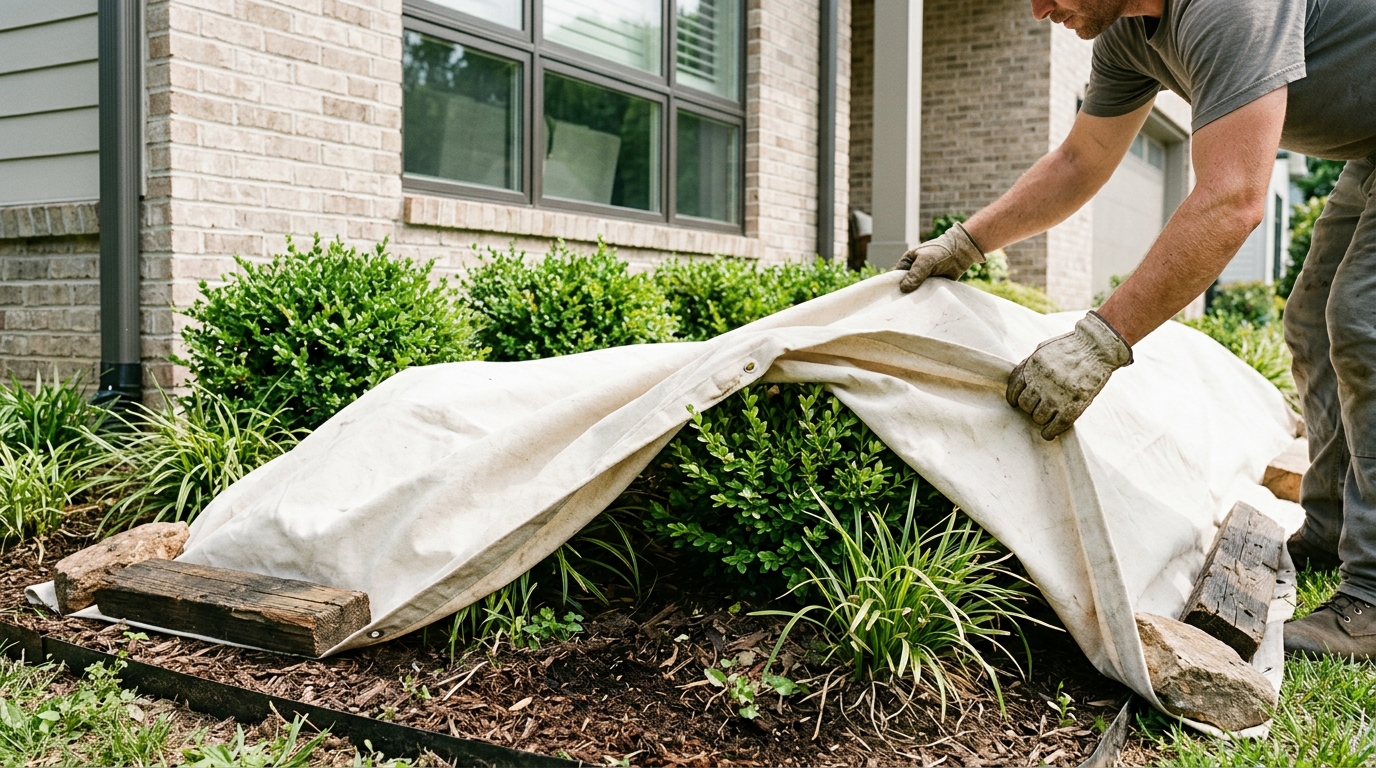
Tarps should go down over all plantings within 10 feet of the foundation on every side before tear-off begins. Nails, granules, and shingle pieces travel farther than most homeowners expect. On a two-story home with a steep-pitch roof, debris can land 15–20 feet from the drip edge. Walk the perimeter with your project manager before they start and point out any beds with annuals, vegetable gardens, or newly seeded lawn areas so those zones get extra coverage.
How to Prepare Your Landscaping the Day Before
Preparation the afternoon before installation day is the single highest-leverage action you can take. Here is a specific checklist to work through:
- Water shrubs, perennials, and garden beds thoroughly. Hydrated plants handle physical impact and temporary light deprivation better than dry ones.
- Pull potted plants, outdoor furniture, grills, and decorative items at least 20 feet from the house on all sides. Move them to your garage or a far corner of the yard entirely if possible.
- Stake or tie back climbing plants and trellised vines so crews can access the fascia and soffit without tearing roots from the wall.
- Mark any buried irrigation heads or landscape lighting wires near the foundation using small flags. Alert your project manager to their location so no one drives a ladder leg through them.
- Remove bird feeders, wind chimes, and hanging planters from any overhang or porch area under the roofline.
- Roll up garden hoses and move them; crews will use your exterior spigot to wet down debris and dust during cleanup, so keep the spigot accessible but clear the hose from foot traffic paths.
Established shrubs like boxwoods, hollies, or ornamental grasses directly against the foundation are rarely pulled back by homeowners before the crew arrives. They take the most punishment. Ask your contractor whether they use rigid plywood shields in addition to tarps for plants taller than three feet, since tarps alone can compress and snap woody stems under the weight of falling shingles.
Inside the House: What Vibration Does to Your Walls and Ceilings
Tear-off is loud and generates significant vibration throughout the structure. Framed artwork, mirrors, shelving, and ceiling fans on the top floor will shake. In older homes with plaster ceilings, small cracks can appear at existing weak points. This is not a sign that something went wrong; it is normal mechanical transmission through the rafters and walls.
Before installation day, walk through every room on the upper floor and remove anything hanging on the walls that you would not want to fall. Take down framed photos, mirrors, and decorative shelving. In rooms with open shelving, lay books and displayed items flat or move them to a lower floor. Pull attic access panels tight and seal them with painter's tape to keep dust and insulation debris from falling into living spaces when decking boards are removed or renailed.
If you have a home security system with glass-break sensors, notify your monitoring company the day before so the constant vibration does not trigger repeated false alerts and dispatch.
Roof Replacement Timeline: What Happens Hour by Hour
Understanding the sequence helps you anticipate when noise peaks, when crews need access to certain sides of the house, and when the job is actually complete versus when it looks complete.
| Phase | Approximate Timing | What Is Happening | Noise Level |
|---|---|---|---|
| Material staging and setup | 7:00–8:00 a.m. | Shingles loaded to roof, dumpster positioned, tarps laid | Moderate (truck engine, lift operation) |
| Tear-off | 8:00–10:30 a.m. | Old shingles, underlayment, and damaged decking removed | High (scraping, hammering, debris impact) |
| Deck inspection and repair | 10:30–11:30 a.m. | Rotted or soft sheathing replaced, deck fastened | High (nail guns, circular saws) |
| Underlayment and ice and water shield | 11:30 a.m.–1:00 p.m. | Synthetic underlayment and leak barriers installed | Low to moderate |
| Shingle installation | 1:00–4:30 p.m. | Starter course, field shingles, ridge cap laid | Moderate (pneumatic nail guns) |
| Flashing, vents, and trim | Running parallel with shingles | Valleys, pipe boots, ridge vents, drip edge finalized | Moderate |
| Cleanup and magnet roll | 4:30–6:00 p.m. | Debris removed, rolling magnet pulled through yard and driveway | Low |
Most standard residential replacements in the 2,000–2,800 square foot range finish in a single day. Complex roofs with multiple dormers, steep pitches above 8:12, or significant decking damage can extend into a second morning. Your contractor should communicate this possibility at contract signing, not as a surprise at 5:00 p.m.
The Magnetic Sweep: Why It Matters More Than You Think
Every reputable roofing contractor in Middle Tennessee rolls a large industrial magnet across every inch of your yard, driveway, and street-facing areas at the end of the job. A standard residential replacement releases between 1,000 and 3,000 roofing nails during tear-off. Even with tarps, nails scatter widely. A single nail through a car tire or a dog's paw pad is a serious problem, and it is entirely preventable with a proper magnet sweep.
Before the crew leaves, walk the yard yourself with a handheld magnet along the perimeter of your garden beds, under deck joists, and around any area where tarps may have bunched and allowed nails to slide underneath. The crew should be willing to re-sweep any area you flag. This is a standard expectation, not an unreasonable request.
Pets, Children, and Neighbors During Installation
Keep dogs and cats indoors for the entire workday. Roofing crews move quickly and carry heavy materials through gates and side yards. An unfamiliar dog in the yard creates a safety hazard for the crew and a liability situation for you. The noise level, typically 85–95 decibels during active tear-off, also causes significant stress in pets.
Let neighbors on both sides and directly behind you know the night before. This is a courtesy in any neighborhood, but in established Brentwood and Hendersonville subdivisions with smaller lot spacing, debris and noise affect adjacent properties meaningfully. It also prevents a neighbor from parking in the spot your contractor needs for the dumpster or material delivery.
If you have children at home, keep them inside during tear-off and shingle installation. After cleanup, inspect the yard before letting them play outside, regardless of how thorough the magnet sweep was.
After the Crew Leaves: Your Post-Installation Walkthrough
Do not let the crew leave without completing a joint walkthrough. Confirm the following before signing any completion documentation:
- All valleys and pipe boot flashings are sealed with roofing mastic, not left dry.
- Ridge vent runs the full length of the ridge and is capped with ridge cap shingles, not bare.
- All drip edge is nailed tight with no lifting corners, particularly on rakes.
- Gutters are cleared of granule debris, which can clog downspouts within a week if not removed.
- Dumpster pickup is scheduled and you have a confirmed date.
- Your warranty documentation, including the manufacturer's shingle warranty and the contractor's workmanship warranty, is in hand or sent to your email before the crew drives away.
Photograph the completed roof from multiple angles the same afternoon, including close-ups of all flashing and the ridge. These images serve as your baseline if an insurance claim arises from future storm damage in Murfreesboro, Nashville, or anywhere else in Middle Tennessee.
Roof Replacement Day FAQ for Middle Tennessee Homeowners
How long does a roof replacement take in Middle TN?
Most single-story or two-story homes between 1,500 and 3,000 square feet are completed in one full workday, typically 7:00 a.m. to 6:00 p.m. Homes with complex rooflines, multiple penetrations, or significant decking damage may require a partial second day. Your contractor should identify this risk during the estimate, not on installation day.
Will the crew protect my shrubs and flower beds during tear-off?
Professional crews will lay tarps over landscaping before tear-off begins. However, you should move any potted plants and lightweight decorative items yourself the day before, and ask your contractor explicitly about rigid plywood protection for taller shrubs close to the foundation. Tarps alone do not prevent compression damage from heavy shingle debris landing on woody plants.
Do I need to be home during my roof replacement?
You do not need to be present the entire day, but you should be reachable by phone and available for the first hour and the final walkthrough. The first hour is when the crew confirms access, staging placement, and any scope changes discovered during early tear-off. The final walkthrough before the crew leaves is when you verify all work points and collect your warranty documents.
What happens if it rains during my roof replacement?
Reputable contractors monitor weather forecasts and will not begin a full tear-off if significant rain is expected within the workday window. If an unexpected storm moves through during installation, the crew will apply temporary synthetic underlayment over any exposed decking immediately. Fully installed underlayment provides meaningful short-term waterproofing protection, but any exposed raw decking should not remain uncovered overnight.
How soon after roof replacement can I walk on my new roof?
You should stay off the roof entirely for at least 24 hours to allow sealant strips under each shingle to activate and bond. After that, walking on a completed architectural shingle roof is acceptable for inspection purposes, but limit foot traffic, avoid walking in valleys, and never walk on a wet roof surface. For any work that requires roof access within the first week, have your roofing contractor perform it rather than doing it yourself.
