From the blog
Roof Color Science: Choosing the Best Shingle Color for Energy Efficiency in Tennessee's Climate
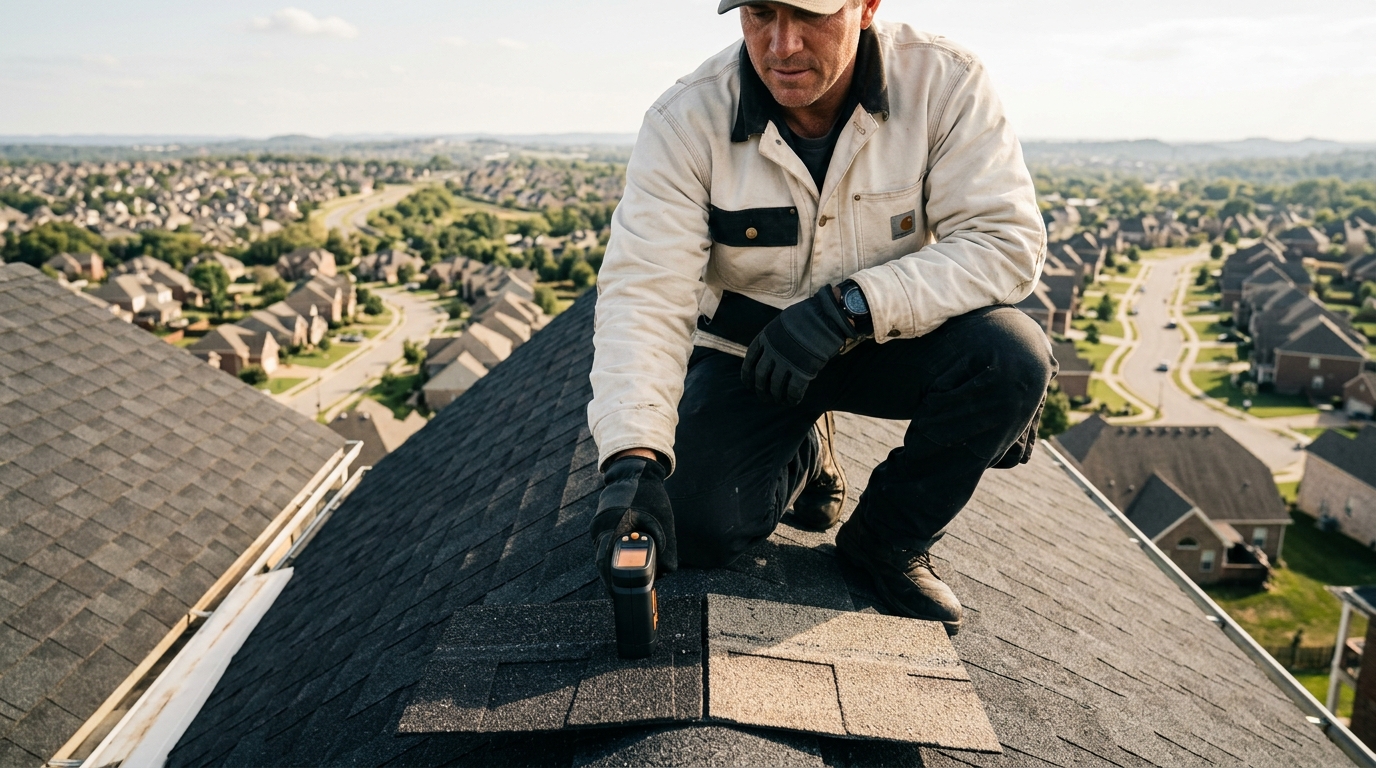
The Best Roofing Materials for Tennessee Start With Understanding How Color and System Components Work Together
In Middle Tennessee's climate, shingle color directly affects attic temperatures by 20–40°F, and the right roofing system can reduce cooling loads by up to 15% annually. This guide covers the physics of roof color science, the GAF product lines best suited to Nashville's heat and storm exposure, and the system components that determine whether a new roof performs or fails within a decade.
How Tennessee's Climate Creates Specific Roofing Demands
Middle Tennessee sits in a mixed-humid climate zone (IECC Zone 4A), which means roofing materials face a punishing combination of summer heat, winter ice, and frequent severe weather. Nashville averages 50+ thunderstorm days per year, with hail events concentrated in the March through June window. Murfreesboro, Brentwood, and Franklin see surface temperatures on dark asphalt shingles that regularly exceed 160°F in July and August.
That thermal load matters for two reasons. First, it accelerates shingle granule loss and blistering, shortening the functional lifespan of cheaper shingles by 5–8 years. Second, it drives attic temperatures high enough to force HVAC systems to work significantly harder, raising cooling costs throughout the summer. Choosing roofing materials for Tennessee means balancing UV reflectance, impact resistance, and wind uplift rating, not just curb appeal.
The Physics of Shingle Color and Solar Reflectance
Shingle color is not just aesthetic. It determines the Solar Reflectance Index (SRI), a composite measure of how much solar energy a surface reflects versus absorbs. Standard dark asphalt shingles carry an SRI in the 5–20 range. Light-colored or "cool roof" shingles can reach an SRI of 25–40 without specialized coatings, and products like GAF's Timberline Cool Series push into the 25–35 range using specialized granule technology that reflects near-infrared radiation.
Here is the practical translation for a Nashville homeowner: a south-facing roof with dark charcoal shingles will absorb roughly 85–90% of incident solar energy on a clear summer day. A medium-toned weathered wood or driftwood shingle absorbs closer to 75–80%. A tan or light gray option drops that figure to 65–70%. Each 10-point reduction in absorption can lower peak attic temperatures by 8–12°F, which translates to measurable HVAC savings over a Tennessee summer.
That said, Tennessee's winters are real. A roof that reflects too aggressively in January increases heating loads slightly, though the net annual energy balance in Zone 4A almost always favors a lighter or medium-toned shingle over a dark one when the cooling season spans five to six months.
GAF Shingle Lines Best Suited to Nashville's Conditions
GAF is the largest roofing manufacturer in North America, and its product tiers map directly onto the range of needs Middle Tennessee homeowners face. Understanding which line matches your exposure and budget prevents the common mistake of over-specifying in one area while leaving a critical vulnerability elsewhere.
| GAF Product Line | Wind Rating | Impact Rating | Warranty Period | Best Use Case in Middle TN |
|---|---|---|---|---|
| Timberline HDZ | 130 mph | Class 3 | Limited Lifetime | Standard residential replacement in lower-hail-frequency zones |
| Timberline UHDZ | 130 mph | Class 3 | Limited Lifetime | Steeper pitches and premium aesthetic applications in Franklin, Brentwood |
| Timberline AS II | 130 mph | Class 4 (UL 2218) | Limited Lifetime | High-hail-risk neighborhoods, insurance premium reduction |
| Timberline Cool Series | 130 mph | Class 3 | Limited Lifetime | South-facing roofs, homes with aging HVAC systems, energy-efficiency focus |
The Timberline AS II deserves particular attention for Middle Tennessee. Class 4 impact resistance under UL 2218 testing means the shingle survives a 2-inch steel ball drop from 20 feet without cracking. Many Tennessee insurance carriers currently offer premium discounts of 20–30% for homes with Class 4 shingles installed, which can offset a meaningful portion of the material cost differential over a standard Class 3 product within five to seven years of ownership.
Roofing System Components: What Goes Under and Around the Shingles
Shingles are the most visible roofing component, but they are only one layer of a system. In Tennessee's climate, three underlayer decisions determine whether a new roof performs for 30 years or develops leaks and deck rot within a decade.
Synthetic underlayment vs. felt: Traditional 15 lb. or 30 lb. felt underlayment absorbs moisture and tears under foot traffic. GAF's FeltBuster synthetic underlayment provides 4x the tear resistance, a slip-resistant surface for installers, and a 6-month UV exposure rating that protects the deck during staged installations or weather delays. For any full replacement in Nashville or surrounding areas, synthetic underlayment is the baseline standard.
Ice and water barrier placement: Tennessee building code requires ice and water shield at eaves and valleys, but best practice extends it to all penetrations, skylights, and chimney surrounds. GAF WeatherWatch mineral-surfaced barrier uses a self-adhering rubberized asphalt layer that seals around nails, preventing the capillary water infiltration that destroys decking silently over several winters.
Ventilation and its interaction with shingle temperature: Ridge and soffit ventilation form a balanced system that pulls cooler outside air through the soffit and exhausts heated attic air at the ridge. GAF's Cobra Ridge Vent allows 18 square inches of net free area per linear foot. A properly ventilated attic running at 130°F versus an unventilated one running at 165°F is the difference between a shingle warranty that holds and one the manufacturer can void on grounds of inadequate airflow. Proper ventilation also reduces the moisture accumulation that drives mold growth in Middle Tennessee's humid summers.
Choosing Shingle Colors for Specific Middle Tennessee Neighborhoods
Beyond energy performance, color selection involves HOA requirements, resale value, and architectural compatibility. Several practical rules apply across the Nashville metro.
Historic districts in Franklin and older Brentwood neighborhoods often restrict shingle colors to earth tones. Weathered wood, slate, and charcoal remain the most HOA-compliant and resale-neutral options across the market. In Hendersonville and Murfreesboro, where newer construction dominates, homeowners have more latitude and frequently benefit from medium-tone options like driftwood or pewter gray that balance reflectance with visual weight.
For homes with brick exteriors, the undertone of the brick should drive shingle selection. Red-orange brick reads best with warm browns and weathered wood tones. Gray or beige brick pairs naturally with slate, pewter, or charcoal. Selecting a shingle color that fights the masonry undertone is the most common aesthetic mistake in the region and one that affects appraisal comparisons during resale.
Homes with a significant south- or west-facing roof plane gain the most from lighter shingle selections. A GAF Timberline HDZ in Barkwood or Oyster Gray instead of Charcoal can reduce that roof surface temperature by 15–20°F on a clear August afternoon, with measurable downstream effects on HVAC runtime and duct stress in the conditioned space below.
Why GAF Master Elite Certification Matters for System Warranties
The full GAF Golden Pledge Limited Warranty, which covers both materials and workmanship for 25 years, is only available through GAF Master Elite certified contractors. Fewer than 3% of roofing contractors in the United States hold this designation. It requires passing ongoing training, maintaining proper licensing and insurance, and sustaining positive customer review thresholds.
For a Middle Tennessee homeowner, the certification has two concrete implications. First, if workmanship defects cause leaks or premature failure within the warranty period, GAF, not just the contractor, stands behind the repair. Second, if the installing contractor goes out of business (which occurs frequently in storm-chase seasons following major hail events in the Nashville area), the homeowner's warranty remains intact and transferable to a new owner, which adds documented value at resale.
Roof Color and Energy Efficiency FAQ
What is the most energy-efficient shingle color for a Nashville home?
Medium-to-light tones such as driftwood, oyster gray, or tan deliver the best net annual energy performance in Middle Tennessee's Zone 4A climate. They reflect enough solar energy in the cooling season to lower attic temperatures by 15–20°F compared to charcoal shingles, without creating a meaningful heating penalty in winter. GAF's Cool Series in these tones combines reflective granule technology with conventional aesthetics.
Does a Class 4 impact-resistant shingle actually reduce insurance premiums in Tennessee?
Yes. Many Tennessee homeowners insurance carriers currently offer premium discounts of 20–30% for homes with verified Class 4 shingles (UL 2218 rated). The GAF Timberline AS II is one of the most widely accepted Class 4 products in the region. Homeowners should request a written confirmation of the discount from their carrier before installation and provide the carrier with the product documentation after completion.
How long do asphalt shingles actually last in Tennessee's climate?
Premium architectural shingles like the GAF Timberline HDZ or UHDZ carry limited lifetime warranties, but functional lifespan in Middle Tennessee's climate runs 25–35 years with proper installation and balanced attic ventilation. Inadequate ventilation, poor underlayment selection, or improper flashing can reduce that figure to 15–20 years. Dark shingles on south-facing planes in unventilated attics consistently reach the lower end of that range.
What roofing components does a full roof replacement in Middle Tennessee include?
A complete system replacement includes tear-off and disposal of existing shingles, deck inspection and repair, ice and water barrier at eaves and all penetrations, synthetic underlayment across the full deck, starter strip shingles at eaves and rakes, field shingles, ridge cap shingles, new pipe boots and flashing at all penetrations, and ridge vent installation. Contractors who quote significantly below market are almost always omitting one or more of these components.
Can I transfer my GAF warranty if I sell my home in Franklin or Brentwood?
Yes. GAF's Golden Pledge and Silver Pledge warranties are transferable to a subsequent homeowner one time within the warranty period, typically for a transfer fee of $150 or less. The transfer must be registered with GAF within a defined window after closing. A transferable workmanship warranty from a GAF Master Elite installer is a documented selling point that real estate agents in Middle Tennessee increasingly highlight in listings.
