From the blog
Signs Your Roof Needs Repair Before It Needs Replacing
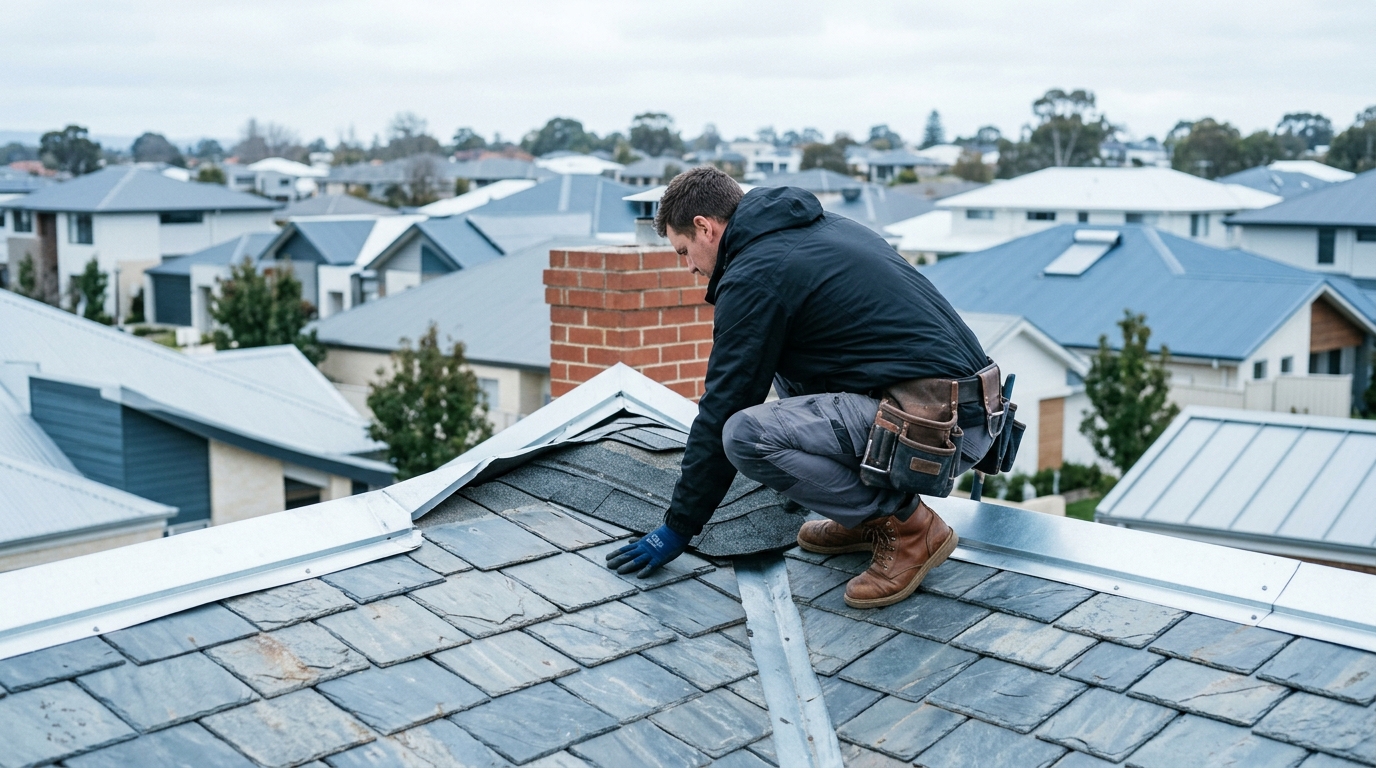
Most roofs send clear distress signals for months - sometimes years - before they reach the point of full replacement. Catching those signals early saves homeowners an average of $8,000–$15,000 by choosing a targeted repair over a complete tear-off. Here are the specific signs that mean your roof needs repair now, not replacement yet.
1. Missing or Curling Shingles in Isolated Sections
When shingles are missing or curling at the edges (called "cupping") in one or two distinct zones, that's a repair problem, not a whole-roof problem. A full replacement becomes necessary only when more than 30% of the shingle surface shows this damage. If you're seeing a patch above a dormer, along one slope, or near a valley, a roofing contractor can replace those shingles individually without touching the rest of the roof.
What to look for: Shingles that curl upward at the edges, buckle in the middle, or are visibly absent after a storm. The surrounding shingles should lay flat and show consistent granule coverage.
2. Granule Loss Concentrated in Specific Areas
Asphalt shingles shed granules naturally over time, but when you find heavy granule accumulation in your gutters or visible bare patches on the shingles themselves, the protective layer is compromised. The critical distinction: granule loss spread evenly across the entire roof signals end-of-life and points toward replacement. Granule loss localized to one side - typically the south-facing slope that takes the most UV exposure - is a repair candidate.
Check your downspout discharge area after a rainstorm. A small amount of granules is normal. A cup or more per downspout per storm means the shingles in that drainage zone are degrading faster than the rest.
3. Flashing Failures Around Penetrations
Flashing is the metal material that seals roof penetrations - chimneys, skylights, vent pipes, and roof-to-wall intersections. Flashing failures are among the most common causes of interior water damage, and they're almost always a repair, not a replacement issue. A roofer can re-seal or replace flashing in a few hours without disturbing a single shingle beyond the immediate area.
Signs of flashing failure include:
- Rust stains running down your chimney exterior
- Water stains on interior ceilings directly below a skylight or chimney
- Visible gaps or lifted metal edges around roof penetrations
- Caulk that has cracked, dried, or separated from the metal
4. A Single Active Leak With a Traceable Source
One active leak with a clear origin point - a nail pop, a cracked boot around a plumbing vent, a failed shingle seam - is textbook repair territory. The mistake homeowners make is assuming one leak means the whole roof is compromised. It usually doesn't. A skilled roofer can trace the water entry point, fix it, and verify the repair with a water test in a single visit.
The replacement conversation starts when you find multiple unrelated leak points across different sections of the roof, or when the decking (the plywood beneath the shingles) shows widespread rot or delamination.
5. Sagging That's Limited to One Small Area
A sagging roof sounds catastrophic, but context matters. A small, localized sag - say, a 2-foot depression along one rafter line - typically indicates a single damaged or rotted rafter or a section of deteriorated decking. That's a structural repair with a defined scope. A roof that sags across an entire span, or shows a visible dip in the ridge line itself, is a structural replacement conversation.
Never ignore any sag. But a contractor who quotes you a full replacement for a single sagging spot without inspecting the decking and rafters directly is not giving you an accurate diagnosis.
6. Daylight Visible in the Attic - But Only in One Spot
Go into your attic on a bright afternoon. If you see daylight coming through in one concentrated area, you have a localized penetration that needs patching. If you see daylight in multiple locations or a general diffuse brightness throughout the roof deck, the sheathing has failed broadly and replacement is the likely recommendation.
While you're in the attic, look for water stains on the rafters and insulation. Fresh, dark staining indicates an active leak. Old gray staining may be a historical issue that's already been addressed or sealed naturally.
Repair vs. Replace: A Direct Comparison
Sign Likely Action Typical Cost Range Missing shingles in 1–2 zones Repair $150–$500 Flashing failure at chimney or skylight Repair $200–$900 Single active leak, traceable source Repair $300–$1,500 Localized granule loss on one slope Repair or monitor $0–$400 Small sagging section, isolated rafter Structural repair $600–$2,500 Shingle damage across >30% of surface Replace $9,000–$25,000+ Multiple unrelated leaks in different areas Replace $9,000–$25,000+ Widespread decking rot or delamination Replace $12,000–$30,000+7. Your Roof Is Under 20 Years Old
Age is one of the most useful diagnostic filters. A standard architectural asphalt shingle roof carries a functional lifespan of 25–30 years. If your roof is under 20 years old and showing damage, that damage almost always has a specific, repairable cause - storm impact, improper installation of a penetration, or animal activity. Replacing a 12-year-old roof because of a chimney flashing failure is almost always the wrong financial decision.
If your roof is 22–27 years old and showing multiple symptoms simultaneously, replacement is worth calculating against repair. A roofing contractor can provide a remaining-life assessment based on shingle flexibility, granule coverage percentage, and decking condition - not just visual appearance from the ground.
How to Get an Accurate Diagnosis
The fastest way to get a reliable answer is to hire an independent roofing inspector - not a contractor who earns revenue from the replacement. Independent inspectors typically charge $150–$400 for a documented assessment with photographs. That report gives you a neutral baseline before you talk to any contractor about scope of work.
When you do talk to contractors, ask them to show you the specific damaged material, explain why repair won't solve the problem if they're recommending replacement, and provide a written scope of work before you sign anything. A contractor who recommends full replacement without accessing the attic or physically inspecting the decking is not giving you an informed quote.
The Bottom Line
Roof repair is the right call when damage is localized, the roof is under 20 years old, and the underlying deck and structure are sound. Replacement is the right call when damage is widespread, the roof is past 25 years, or repair costs would exceed 50% of replacement cost without extending the roof's meaningful life. Knowing the difference keeps thousands of dollars in your pocket.
How do I know if my roof needs repair or full replacement?
If damage is isolated to less than 30% of the roof surface, the underlying decking is intact, and the roof is under 20 years old, repair is almost always the right first step. Full replacement becomes necessary when damage spans multiple unrelated zones, the decking shows widespread rot, or the roof has exceeded 25 years of service life.
What are the most common repairable roof problems?
The most common repairable issues are missing or curling shingles in isolated sections, failed flashing around chimneys or skylights, cracked pipe boot seals around plumbing vents, and single-point leaks with a traceable source. Each of these can typically be resolved for under $1,500 without replacing the entire roof.
How much does a roof repair cost compared to replacement?
Targeted roof repairs typically range from $150 to $2,500 depending on the scope and material involved. Full roof replacements for a standard single-family home run $9,000 to $30,000 or more depending on roof size, pitch, and materials chosen. Catching a problem at the repair stage saves an average of $8,000–$15,000.
Can a leaking roof always be repaired instead of replaced?
A single leak with an identifiable source - a failed flashing joint, a cracked shingle, a lifted seam - is almost always repairable. Multiple simultaneous leaks in different parts of the roof, or a leak caused by widespread shingle deterioration, typically indicate the roof has reached end-of-life and replacement is the more cost-effective solution.
How often should I have my roof inspected?
Roofing professionals recommend a professional inspection every 3 years for roofs under 15 years old, and annually once a roof passes the 15-year mark. After any severe weather event - hail, high winds above 60 mph, or heavy snow loads - an inspection is warranted regardless of the roof's age. Early detection of minor damage is consistently the least expensive outcome.
