From the blog
The 'Act of God' Clause in Tennessee Homeowner's Insurance: What It Means for Your Storm Damaged Roof
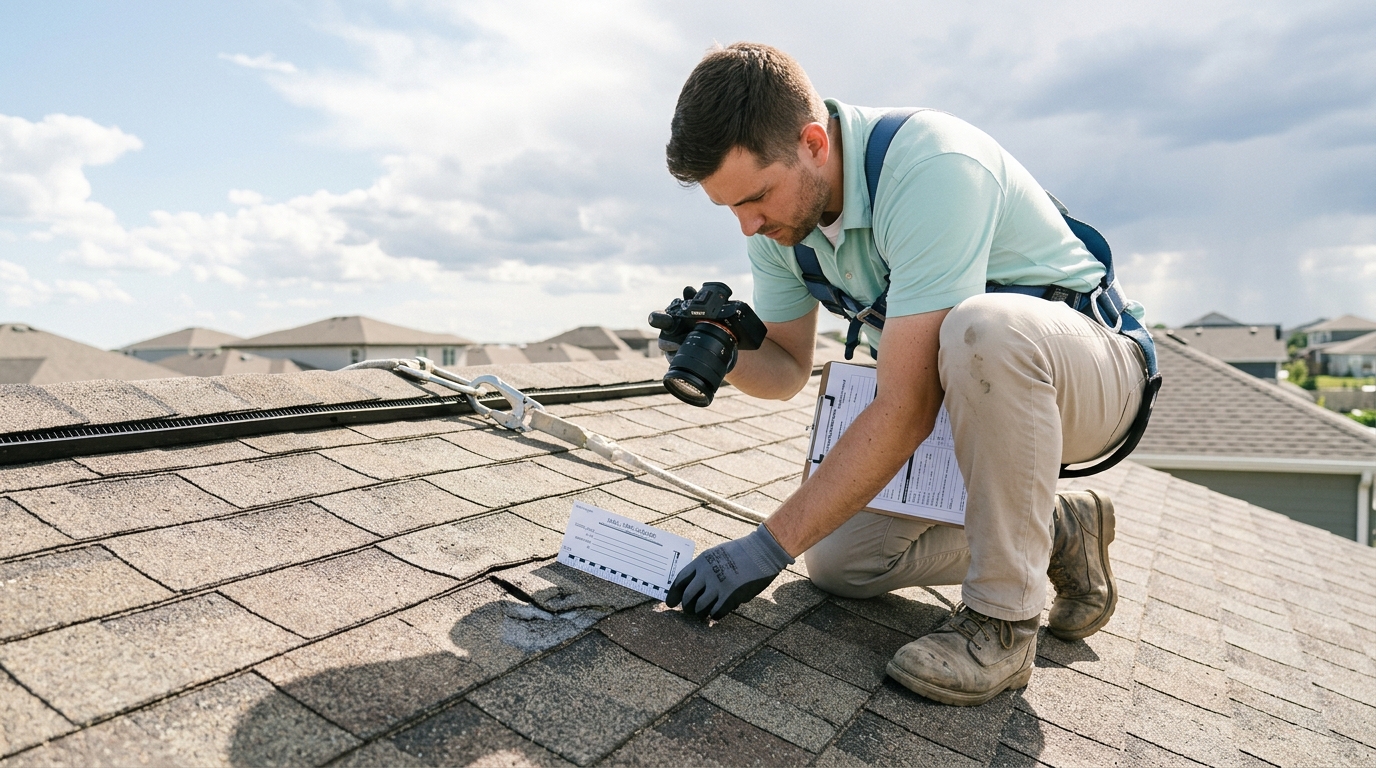
What the 'Act of God' Clause Actually Means for Tennessee Roof Claims
Tennessee homeowner's insurance policies cover sudden, accidental storm damage to your roof, including wind, hail, and tornado destruction, under what insurers broadly call "Act of God" or "fortuitous event" provisions. Coverage applies when damage is unpredictable and outside your control. What gets denied is damage resulting from neglect, age-related deterioration, or pre-existing conditions the insurer argues you failed to maintain. Knowing this distinction before you file determines whether your claim succeeds or stalls.
Middle Tennessee sees some of the most active severe weather corridors in the Southeast. The Nashville metro, Franklin, Murfreesboro, Brentwood, and Hendersonville all sit within a region that averages more than 50 days of thunderstorm activity annually. Hailstones larger than one inch in diameter cause impact damage that a standard 30-year architectural shingle simply cannot absorb without cracking, bruising, or granule loss. Wind events regularly exceed 60 mph during spring and fall fronts, lifting shingles at ridgelines, rakes, and eaves. These are precisely the losses the Act of God clause is designed to cover, provided you document them correctly and file promptly.
How Tennessee Insurance Policies Define Storm Damage
Most homeowner's policies written in Tennessee are HO-3 open-peril forms, which cover all causes of roof loss except those explicitly excluded. The major exclusions relevant to roofing are: wear and tear, gradual deterioration, faulty installation, and cosmetic damage that does not impair function. This last exclusion has become increasingly common in policy endorsements after major hail years, so review your declarations page carefully before assuming all visible hail hits are compensable.
Tennessee follows a replacement-cost value (RCV) or actual-cash-value (ACV) structure depending on your policy election. Under RCV, the insurer pays to restore the roof to like kind and quality using current material pricing, minus your deductible. Under ACV, the payout is reduced by depreciation. A 15-year-old shingle roof on an ACV policy may receive a settlement that covers only 40–55% of actual replacement cost, leaving a significant gap the homeowner must fund out of pocket. If your policy was written several years ago, confirm with your agent whether you carry RCV coverage, because the difference in a full replacement can amount to $8,000–$15,000 on a typical Middle Tennessee home.
Separate hail deductibles are another provision to check. Many Tennessee policies issued after 2012 include a wind/hail deductible stated as a percentage of insured dwelling value rather than a flat dollar amount. On a home insured for $400,000, a 1% wind/hail deductible means $4,000 comes out of your pocket before coverage begins. A 2% deductible doubles that to $8,000. This does not mean you should not file; it means you need an accurate scope of damage before deciding whether the net claim is worth pursuing.
Identifying Storm Damage That Qualifies for a Roof Insurance Claim in Tennessee
The roof insurance claim process in Tennessee begins with documentation you can gather before the adjuster ever arrives. Inspect your property from the ground using binoculars immediately after a storm, and photograph the following indicators:
- Granule accumulation in gutters or at downspout outlets, which signals shingle bruising from hail impact
- Missing, lifted, or curled shingles along ridges, rakes, and field areas, which indicates wind uplift
- Dents or dimpling on metal components: ridge caps, step flashing, pipe boots, gutters, and fascia
- Cracked or split shingles concentrated in patterns consistent with directional wind or hail trajectories
- Interior water staining on ceilings or in the attic, which establishes that damage has already allowed water infiltration
A professional drone roof inspection provides the most defensible documentation. High-resolution aerial imagery captures damage patterns across the full roof plane, identifies the storm's impact direction, and creates a timestamped visual record that correlates with National Weather Service data for your specific ZIP code and storm date. This correlation is critical when an insurer disputes whether damage occurred in the reported event or predates it.
Filing a Roof Claim in Tennessee: The Step-by-Step Process
The roof insurance claim process in Tennessee involves eight practical steps, each with a specific function in protecting your settlement:
- Document the storm event. Save the National Weather Service storm report, local radar archives, and any dated photographs taken within 24–48 hours of the weather event.
- Mitigate further damage immediately. Tennessee insurance law and virtually all HO-3 policies require you to take reasonable steps to prevent additional loss. Tarping a breached roof section satisfies this obligation and is a reimbursable expense under most policies.
- Notify your insurer promptly. Tennessee does not set a statutory deadline for filing a first-party property claim, but policies typically require "timely" notice. File within 7–14 days of the storm to avoid any timeliness dispute.
- Schedule your contractor inspection before the adjuster arrives. An experienced local roofing contractor can identify and photograph all covered damage, including items a desk adjuster may overlook, such as flashing damage, ridge vent cracking, and satellite dish penetration failures.
- Attend the adjuster inspection. Walk the adjuster through every documented damage item. Present your contractor's written scope alongside your photo documentation. A shared inspection reduces the likelihood of a supplemental claim dispute later.
- Review the initial estimate line by line. Compare the adjuster's scope against your contractor's. Missing line items, incorrect material quantities, or below-market unit pricing are the three most common reasons homeowners receive underpaid initial settlements.
- Request a supplement if items are missing. Supplements are standard in roofing claims. Your contractor submits a revised scope with supporting documentation; the insurer reviews and adjusts the settlement. This process can take 2–6 weeks but regularly adds $2,000–$6,000 to covered claims.
- Complete the work and submit for recoverable depreciation. Under an RCV policy, the insurer releases withheld depreciation after you provide a completion invoice from a licensed contractor. Do not skip this step; it is money already owed under your policy.
Storm Damage Roof Repair in Nashville and Franklin vs. Full Replacement: How to Decide
Not every storm damage claim in Middle Tennessee results in a full replacement, and insurers will push for repair whenever it is defensible. The decision depends on two factors: the percentage of damaged shingles and the age of the existing roof.
| Damage Scenario | Typical Insurer Position | Homeowner Consideration |
|---|---|---|
| Less than 10% of shingles damaged, roof under 10 years old | Spot repair with matching shingles | Acceptable if color match is achievable; request documented manufacturer match |
| 10–25% of shingles damaged, roof 10–15 years old | Partial replacement of damaged slopes | Negotiate for full replacement if shingle line is discontinued or matching is impossible |
| More than 25% of shingles damaged, any age | Full replacement typically warranted | Confirm insurer includes all accessories: drip edge, underlayment, ridge cap, pipe boots |
| Functional damage plus roof over 20 years old | ACV payout with significant depreciation | Consider upgrading to impact-resistant shingles to qualify for future premium discounts |
In Franklin and Brentwood, where many homes carry premium architectural or designer shingles, the matching standard is especially important. Tennessee courts have generally held that insurers must restore a roof to a uniform appearance when replacement of a portion creates a visible mismatch, a principle rooted in the "like kind and quality" language standard in most HO-3 policies.
Working With a GAF Master Elite Contractor on Your Hail Damage Claim
Selecting a GAF Master Elite certified installer for hail damage roof claims in Franklin, TN and across Middle Tennessee carries two concrete advantages in the insurance claim context. First, Master Elite contractors are authorized to issue the GAF Golden Pledge Limited Warranty, which provides up to 50-year coverage on materials and 25-year coverage on workmanship. This warranty transfers with the home and is a documented upgrade that an insurer cannot argue against when you elect impact-resistant shingles as part of your replacement scope.
Second, GAF Master Elite status requires contractors to maintain active licensure, insurance, and ongoing training, all factors that reduce the risk of the installation quality disputes that can void a future claim. When your insurer asks for contractor credentials during the claim process, a Master Elite certification provides immediate, verifiable third-party validation.
When selecting a contractor for wind damage roof repair in Murfreesboro or any part of Middle Tennessee, verify the Tennessee contractor's license number through the Tennessee Department of Commerce and Insurance contractor lookup tool, confirm general liability and workers' compensation certificates are current, and avoid any company that solicits immediately after a storm with requests to sign an Assignment of Benefits document before you have reviewed your policy.
Storm Damage Roof Claim FAQ for Middle Tennessee Homeowners
Does filing a roof insurance claim in Tennessee raise my premium?
A single weather-related claim rarely triggers a rate increase on its own, because storm damage is classified as a non-fault event. However, two or more claims within a three-year period can affect your renewal terms or eligibility with your current carrier. Ask your agent about your claim history before filing smaller claims where your deductible approaches the repair cost.
How long does the roof insurance claim process in Tennessee typically take?
Tennessee Code Annotated Section 56-7-1250 requires insurers to acknowledge a claim within 10 days and make a coverage decision within 15 days of receiving all requested documentation. In practice, straightforward claims settle in 3–6 weeks from filing to payment. Claims involving supplemental negotiations or disputes over scope can extend to 60–90 days.
What if my insurer denies my hail damage roof claim in Franklin, TN?
Request the denial in writing with the specific policy language cited. You have the right to invoke the appraisal process written into most Tennessee HO-3 policies, where each party selects a licensed appraiser and an umpire resolves disputes. You can also file a complaint with the Tennessee Department of Commerce and Insurance if you believe the denial is in bad faith. Consulting a licensed public adjuster or an insurance attorney at this stage is advisable.
Are gutters covered under a storm damage claim in Middle Tennessee?
Hail and wind damage to gutters is covered under most Tennessee homeowner's policies as part of the dwelling structure. Document denting, separation from fascia, and downspout damage with clear photographs. Gutters are frequently omitted from initial adjuster estimates but are routinely added through the supplement process when documented damage is presented.
Can I choose my own roofing contractor after a storm damage claim?
Yes. Tennessee law gives you the right to select any licensed contractor to perform covered repairs. Your insurer can specify quality standards and material type, but cannot require you to use a preferred vendor list. Choose a contractor with verifiable local references, active licensure in Tennessee, and experience navigating the supplement process with your specific insurance carrier.
