From the blog
The Final Walk-Through: Our Quality Checklist After Your New Roof Is Installed
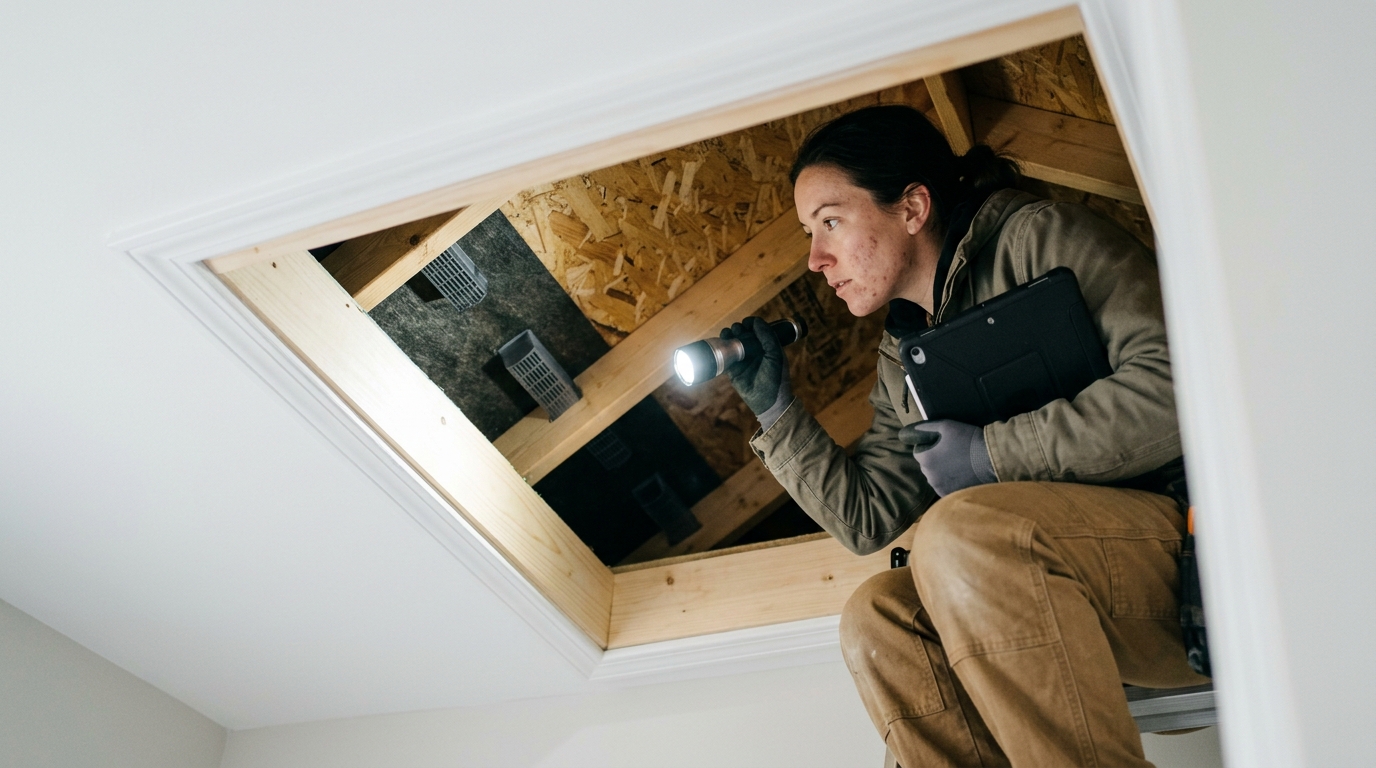
After a new roof is installed in Middle Tennessee, a professional final walk-through inspection covers six distinct checkpoints: shingle alignment and fastening, flashing integrity at every penetration, attic ventilation confirmation, gutter and drip edge attachment, debris clearance (including a magnetic sweep for nails), and warranty documentation. Skipping any one of these steps leaves gaps that void manufacturer coverage or create leak paths within the first storm season.
Why the Final Walk-Through Is a Contractual and Structural Necessity
Most homeowners assume the work is done when the last shingle goes down. In reality, the installation itself accounts for roughly 80 percent of the project, and the final inspection accounts for the other 20 percent that determines whether the work holds up over a 30-year warranty period. GAF Master Elite contractors, the designation Ironclad Roofing holds, are required to perform structured post-installation reviews as a condition of issuing the Golden Pledge Limited Warranty, which covers both materials and workmanship. If the walk-through reveals a missed step, correcting it on day one costs nothing. Correcting it after a leak has damaged your decking costs thousands.
The walk-through also creates a documented baseline. Should you ever file an insurance claim for future storm damage, a signed inspection report from your installation date proves the roof's condition at project completion, which adjusters use to distinguish pre-existing issues from new storm damage.
Step 1: The Ironclad Customer Journey Begins with Drone Roof Inspection
Before a single shingle is ordered, Ironclad Roofing conducts a drone roof inspection for every Nashville-area property. Drones equipped with high-resolution cameras capture every square foot of the roof plane without a single boot placed on potentially compromised decking. The footage is reviewed to identify granule loss, soft spots, damaged flashing, and areas of standing water caused by improper slope.
This step matters for the final walk-through because it creates a pre-installation benchmark. After installation is complete, the same camera angles are revisited to confirm that every identified problem area received corrective work. Homeowners in Brentwood and Franklin with steep-pitch roofs especially benefit because inspector safety on a 12:12 pitch is a real liability, while a drone covers it in minutes with better detail.
The drone inspection report is delivered digitally so you can review it on your phone. It feeds directly into the material estimate and, when applicable, the insurance supplement documentation.
Step 2: Insurance Claim Coordination Before Work Begins
For storm-damaged roofs, the roofing process timeline includes an insurance phase that many homeowners underestimate. Ironclad's crew walks the property with you and the adjuster's report in hand, cross-referencing line items. Common adjuster oversights include missing ice-and-water shield allowances, omitted drip edge line items, and undervalued ridge cap. Each of these omissions, if not corrected before the scope is finalized, comes out of either your pocket or the contractor's margin, which in turn affects material quality.
Once the approved scope is confirmed, material orders are placed. GAF Timberline HDZ shingles, the most common selection for Middle Tennessee replacements, typically arrive within 3–5 business days from Nashville-area distributors. Scheduling follows material delivery so the full job runs without interruption.
Step 3: Roof Installation Process Day by Day
A standard Middle Tennessee residential roof replacement follows this sequence:
- Tear-off: Existing shingles, underlayment, and any damaged decking are removed. Decking is inspected for rot, delamination, or soft spots. Damaged sheathing panels are replaced at this stage.
- Drip edge installation: Metal drip edge is fastened along the eaves first, then along the rakes after underlayment is applied, following manufacturer installation guidelines.
- Ice-and-water shield: In Middle Tennessee, this self-adhering membrane is required in valleys and along eave lines per IRC code. It provides the waterproofing layer most critical to leak prevention at vulnerable penetration points.
- Synthetic underlayment: Covers the field of the roof, overlapped per manufacturer specs (typically 4 inches on horizontal laps, 6 inches at vertical joints).
- Shingle installation: Starter strip is applied first, then field shingles working up the slope. Nailing pattern and nail placement relative to the shingle's nail line are verified by the crew lead.
- Flashing installation: Step flashing at walls, valley flashing, and pipe boot flashing are installed as shingle courses approach each penetration, not retrofitted after the field is complete.
- Ridge vent and ridge cap: Continuous ridge vent is cut and installed before ridge cap shingles are applied, completing the ventilation system.
A typical 25–35 square residential roof in Murfreesboro or Hendersonville takes one full day for the installation crew, plus a half-day buffer for material staging and debris removal.
The Six-Point Final Walk-Through Checklist
This is the checklist Ironclad Roofing completes before any paperwork is signed:
| Checkpoint | What Is Verified | Why It Matters |
|---|---|---|
| Shingle alignment and fastening | Nail placement within the nail line, no exposed fasteners, consistent offset between courses | Improper nailing voids the GAF material warranty |
| Flashing integrity | Step flashing at walls, pipe boots sealed, chimney counter-flashing seated | Flashing is responsible for the majority of residential roof leaks |
| Attic ventilation | Ridge vent clear of obstruction, intake vents unblocked, net free area meets code | Improper ventilation voids manufacturer warranties and causes premature shingle failure |
| Gutter and drip edge | Drip edge overlaps gutter flange, no gutter sections bent or displaced during tear-off | Displaced drip edge causes fascia rot within 12–24 months |
| Magnetic nail sweep | Entire yard, driveway, and landscaping swept with rolling magnet | Stray roofing nails damage tires and injure children and pets |
| Warranty documentation | GAF warranty registration submitted, workmanship warranty paperwork signed and delivered | Warranty is not active until registered; registration is time-sensitive |
Warranty Activation: What a Lifetime Workmanship Warranty Actually Covers
The term "lifetime warranty" appears in roofing marketing constantly, and its actual scope varies significantly between contractors. Here is what the Ironclad workmanship warranty covers versus what it does not:
- Covered: Any leak or structural failure attributable to installation error, including improper flashing, incorrect nail placement, inadequate underlayment overlap, or missed decking replacement
- Covered: Labor costs to correct any covered defect for the life of the warranty period
- Not covered: Damage caused by subsequent storm events, acts of nature, or homeowner modifications to the roof surface
- Not covered: Failures caused by pre-existing structural issues in the attic framing that were not visible or disclosed at the time of installation
The GAF Golden Pledge Limited Warranty, available exclusively through Master Elite contractors, extends the manufacturer's material coverage to 50 years and adds a labor warranty component that non-certified contractors cannot offer. To activate it, Ironclad submits the registration directly to GAF within the required post-installation window. You receive confirmation documentation to keep with your homeowner records.
What Happens After the Walk-Through Is Complete
Once all six checkpoints are cleared and warranty documents are signed, Ironclad delivers a project closeout packet that includes the drone inspection before-and-after comparison, the signed installation checklist, warranty registration confirmation, and the final invoice reconciliation. If your project was insurance-funded, the closeout packet also includes the supplemental documentation submitted on your behalf, which is useful if the insurance company requests project records during future claims.
Homeowners in Nashville and surrounding Middle Tennessee communities should schedule their own interior attic check 30 days after installation. Look for daylight penetration at the ridge, check that insulation baffles are not blocking intake vents, and confirm there is no moisture on the sheathing after the first heavy rain. This is not a sign that something went wrong; it is simply a proactive habit that catches any edge-case issues before they develop into repair-level problems.
Roof Replacement Walk-Through FAQ
How long does the final walk-through take after roof installation?
A thorough final walk-through on a standard Middle Tennessee residential roof takes 45–90 minutes. Larger properties with multiple penetrations, steep pitches, or complex roof geometry take closer to two hours. The drone comparison review is completed in advance so the physical inspection focuses on ground-level and attic checkpoints that require a person on-site.
Do I need to be present for the final walk-through?
Yes. Homeowner presence is strongly recommended because the walk-through is also when warranty documentation is reviewed and signed. Questions about specific features, such as how the ridge vent operates or where flashing was added, are best answered with the crew lead present and the roof visible. Remote sign-off is available for investment properties but is not the preferred process.
What does a drone roof inspection in Nashville cost?
Ironclad Roofing provides the drone inspection at no charge as part of the initial estimate process. Standalone drone inspections requested outside of a project estimate are priced separately and quoted at the time of scheduling. Expect market rates for professional drone roof inspections in the Nashville area to range from $150–$350 depending on roof complexity and report format.
How soon after installation is the GAF warranty registered?
GAF requires registration within a defined post-installation window, typically 30 days. Ironclad submits the registration directly within 48–72 hours of project completion so the warranty is active before the homeowner's first post-installation rain event. You receive a confirmation email from GAF directly once registration is processed.
Can the roofing process timeline be accelerated for insurance deadlines?
In most cases, yes. Insurance policies in Tennessee set specific deadlines for completing repairs after a claim is approved, often 12 months from the date of loss. Ironclad coordinates material delivery and crew scheduling to fit within those windows. If your claim approval is approaching its deadline, communicate that date at the first consultation so scheduling is prioritized accordingly.
