From the blog
The Homeowner's Guide to Tennessee Code Upgrade Coverage for Roofs
Tennessee Code Upgrade Coverage for Roofs: What Your Policy Actually Pays For
When a storm damages your roof in Middle Tennessee, your homeowners insurance policy does not automatically pay to rebuild your roof exactly as it was. Tennessee building codes change over time, and if your home is more than a few years old, bringing your roof up to current code during replacement can add thousands of dollars in costs that a standard policy will not cover unless you have the right endorsement. Understanding the difference between actual cash value and replacement cost value, knowing which exclusions apply, and reading your policy's declarations page correctly are the three skills that determine whether you come out ahead or pay out of pocket.
ACV vs. RCV on Roof Claims in Tennessee: The Core Difference
Actual cash value (ACV) and replacement cost value (RCV) are the two settlement methods insurers use, and the gap between them on a roofing claim in Tennessee can be substantial.
RCV pays the full cost to replace your damaged roof with materials of like kind and quality at current prices, minus your deductible. If a hailstorm destroys a 30-square architectural shingle roof and replacement costs $18,500, an RCV policy pays $18,500 minus your deductible after you complete the work and submit the final invoice.
ACV pays that same replacement cost minus depreciation. Insurers calculate depreciation based on the roof's age and expected lifespan. A 15-year-old shingle roof with a 25-year rated life carries roughly 60% depreciation in many Tennessee adjustments. On that same $18,500 roof, an ACV settlement might pay only $7,400 before your deductible. You absorb the remaining $11,100.
Many Tennessee homeowners are surprised to discover their policy shifted to ACV settlement for roofs over 10 years old. Several major carriers introduced age-based ACV endorsements after severe hail years and those provisions are now common in Middle TN markets. Check your policy's declarations page for language like "cosmetic damage exclusion," "limited roof coverage," or "roof surface payment schedule." Any of these phrases signals ACV treatment, not full RCV.
| Settlement Type | How Depreciation Is Handled | Typical Out-of-Pocket on $18,500 Claim (15-yr Roof) | Best For |
|---|---|---|---|
| RCV (Replacement Cost Value) | Recoverable after work is complete | Deductible only (e.g., $1,000–$2,500) | Most homeowners seeking full protection |
| ACV (Actual Cash Value) | Permanently withheld | $11,100+ plus deductible | Lower premiums, newer roofs, investment properties |
What a Standard Tennessee Homeowners Policy Covers for Roofs
A standard HO-3 policy, the most common form sold in Tennessee, covers your roof under Coverage A (Dwelling) on an open-perils basis. That means all causes of loss are covered unless explicitly excluded. In a roofing context, the perils that trigger claims most often in the Nashville, Franklin, Murfreesboro, and Hendersonville areas include wind, hail, lightning, falling objects, and ice damming.
The critical phrase in Coverage A is "direct physical loss." Your roof must sustain direct, physical damage from a covered peril. Functional damage (shingles that look fine but have lost their granule integrity from hail impact) qualifies as direct physical loss in Tennessee when documented with a proper inspection. Cosmetic-only damage, such as surface dents that do not compromise waterproofing, is frequently excluded under cosmetic damage endorsements that insurers added broadly after 2020.
Coverage A also applies to attached structures like covered porches and integrated garage roofs. Detached garages and outbuildings fall under Coverage B (Other Structures), which is typically limited to 10% of your Coverage A dwelling limit. If your home is insured for $400,000, your detached garage roof has $40,000 in available coverage, which is separate from any claim on the main dwelling.
Code Upgrade Coverage: The Endorsement Most Homeowners Overlook
Tennessee adopted the 2021 International Residential Code, and local jurisdictions including Nashville and Williamson County enforce specific amendments on top of it. When your roof is damaged and requires replacement, your contractor must bring the work up to the code in effect at the time of repair, not the code in effect when your home was built.
Common code-required upgrades on Middle Tennessee roof replacements include:
- Ice and water shield installation at eaves and valleys (required in cold-weather zones even when the original roof had felt underlayment only)
- Upgraded ventilation to meet current net free area ratios
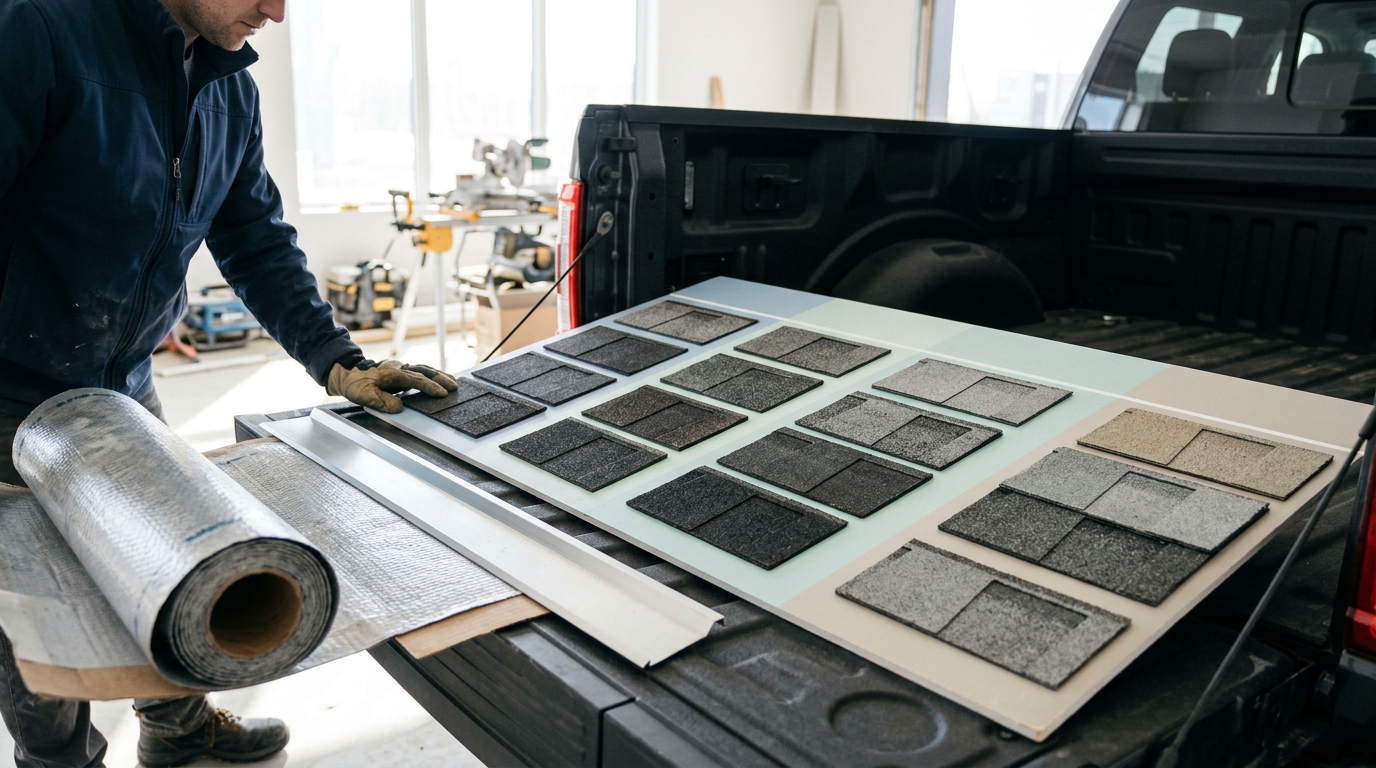
- Drip edge metal along rakes and eaves where none previously existed
- Sheathing replacement when existing boards do not meet current span ratings
- Deck fastening pattern upgrades in wind-zone compliance areas
None of these upgrades are covered by a base HO-3 policy unless you carry an Ordinance or Law endorsement, sometimes called a Building Code Upgrade endorsement. This endorsement adds coverage in three components: loss to the undamaged portion of the structure required by code, demolition costs, and increased cost of construction to meet current code. On a typical Nashville-area roof claim, Ordinance or Law coverage adds $2,000–$6,000 in legitimate recoverable costs that would otherwise come out of your pocket.
Request the endorsement limits from your agent before a loss occurs. Policies that carry Ordinance or Law at 10% of Coverage A on a $400,000 dwelling provide $40,000 in code upgrade coverage. Homes built before 2000 frequently need higher limits given how significantly roofing and ventilation codes have evolved.
Common Roofing Exclusions in Tennessee Insurance Policies
Several exclusions apply specifically to roofing situations and catch homeowners off guard at claim time. The most significant ones in Tennessee policies are:
- Wear and tear / deterioration: Granule loss from age, cracking sealant tabs, or general weathering are not covered perils regardless of your policy type. Insurers distinguish between storm acceleration of deterioration (potentially covered) and deterioration that would have occurred without any storm event (not covered).
- Faulty workmanship: If a previous contractor installed your shingles incorrectly and your roof leaks as a result, the resulting damage is excluded. The workmanship warranty from your contractor, not your insurer, is your recourse.
- Neglect: If a known leak went unrepaired and the resulting water damage spread, insurers can deny the expanded claim on neglect grounds. Document any repairs you make and report potential storm damage promptly.
- Earth movement: Structural shifts that cause roof framing or flashing failures are excluded under the standard earth movement exclusion.
- Cosmetic damage only: As noted above, many carriers in Tennessee now exclude claims where hail caused visible marks but did not functionally damage the roof's weatherproofing. The exclusion language varies by carrier, so read your policy specifically for the word "cosmetic."
How to Read Your Tennessee Insurance Policy for Roof Damage Claims
Your policy is divided into sections, and three of them govern roof claims directly. Start with the declarations page, which lists your Coverage A limit, your deductible type (flat dollar vs. percentage), and any endorsements. A wind/hail deductible stated as 1% of Coverage A on a $400,000 home means you pay $4,000 before insurance begins paying, not the $1,000 flat deductible listed for other perils.
Next, read the Coverage A insuring agreement and the perils section. Confirm whether your policy is open perils (all causes covered unless excluded) or named perils (only listed causes covered). HO-3 policies are open perils on the dwelling; HO-1 and HO-2 policies are named perils and provide narrower roofing coverage.
Finally, read the conditions section for the time limits on filing a claim. Tennessee does not set a universal deadline by statute for property claims, but your policy contract typically requires prompt notice of loss and may include a one-year or two-year suit limitation clause. Missing these windows can forfeit coverage entirely even on a legitimate claim.
If the policy language is unclear, a licensed public adjuster or a roofing contractor experienced with insurance supplements can help identify covered line items before you accept a settlement. GAF Master Elite contractors, for example, carry training in insurance documentation and can prepare scope-of-loss reports that align with Xactimate, the software most Tennessee adjusters use to calculate settlements.
Tennessee Roof Insurance Claims FAQ
What is the difference between RCV and ACV on a roof claim in Tennessee?
RCV (replacement cost value) pays the full cost to replace your roof at current prices minus your deductible, while ACV (actual cash value) subtracts depreciation from that amount before paying. On an older roof, the depreciation deduction under ACV can exceed 50% of the replacement cost, leaving a large gap the homeowner must cover.
Does a standard Tennessee homeowners policy cover code upgrades to my roof?
No. A base HO-3 policy does not cover the additional cost of bringing your roof up to current building code during replacement. You need an Ordinance or Law endorsement (also called Building Code Upgrade coverage) specifically added to your policy. Without it, costs for items like new drip edge, upgraded underlayment, or ventilation corrections come entirely out of your pocket.
What does a wind and hail deductible mean for Nashville homeowners?
A wind/hail deductible is a separate, higher deductible that applies specifically to claims caused by wind or hail, which are the most frequent causes of roof damage in Middle Tennessee. It is usually stated as a percentage of your Coverage A limit rather than a flat dollar amount. A 1% deductible on a $350,000 home means you pay $3,500 before your insurer pays anything on a hail claim.
Can my insurer deny my roof claim because of cosmetic damage only?
Yes. Many Tennessee carriers now include cosmetic damage exclusions that bar payment for hail damage that dents or marks shingles but does not compromise their waterproofing function. A professional drone inspection or in-person assessment by a GAF-certified contractor can document functional damage, such as granule loss, bruising, and fracturing, that distinguishes your claim from a purely cosmetic one.
How long do I have to file a roof damage claim in Tennessee after a storm?
Tennessee law does not mandate a single filing deadline for property claims, but your policy contract controls the timeline. Most policies require prompt written notice of loss and include a suit limitation clause of one to two years from the date of loss. Filing as soon as storm damage is discovered protects your right to the full claim and prevents insurers from attributing new damage to ongoing deterioration rather than the covered storm event.
