From the blog
The Ultimate Guide to Navigating a Denied Roof Insurance Claim in Tennessee
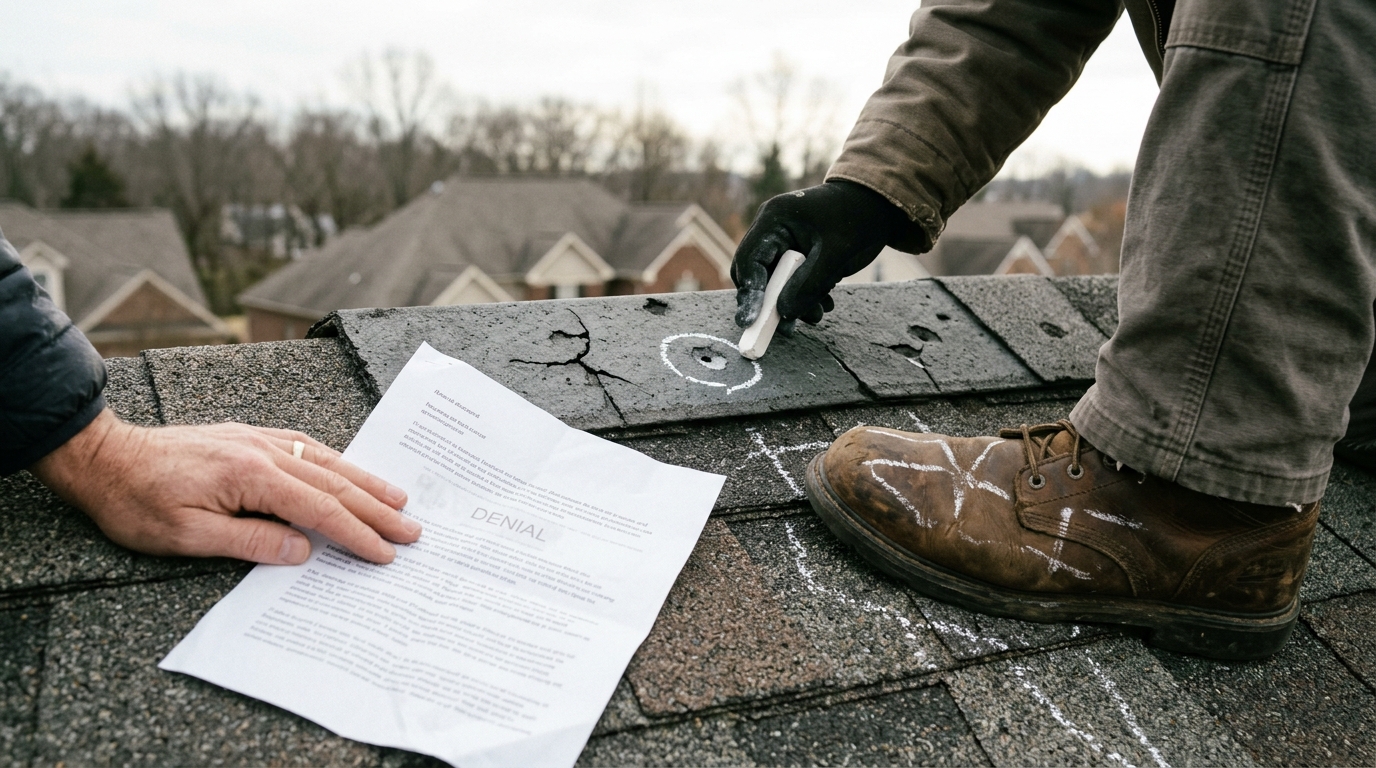
A denied roof insurance claim in Tennessee does not mean the process is over. Homeowners have the legal right to dispute a denial, request a re-inspection, and invoke appraisal or litigation provisions written directly into their policy. Understanding where denials come from and what actions reverse them is the difference between paying tens of thousands of dollars out of pocket and getting a legitimate storm damage claim paid in full.
Why Tennessee Roof Insurance Claims Get Denied
Insurance carriers deny roof claims for several specific reasons, and knowing which one applies to your situation determines the correct response. The most common denial categories in Middle Tennessee include:
- Maintenance exclusion: The adjuster classifies damage as the result of neglect, granule loss from age, or pre-existing deterioration rather than a discrete storm event.
- Cosmetic damage ruling: Many carriers have added cosmetic damage exclusions to Tennessee policies, particularly after large hail events. Under these endorsements, dented metal trim or scuffed shingles that do not impair function are excluded from coverage.
- Causation dispute: The carrier argues the damage predates the storm date listed on the claim, or that wind speeds in your zip code did not meet the threshold required to cause the observed pattern.
- Improper documentation: The claim was filed without photos, measurements, or a contractor estimate that correlates damage to a specific weather event.
- Policy exclusions: Flood-driven damage, mold resulting from an unreported leak, or damage to detached structures not listed on the policy schedule.
Reading the denial letter carefully matters. Tennessee law requires insurers to state the specific policy language supporting a denial. That cited language is the target of your dispute.
Tennessee Homeowner Rights After a Denial
Tennessee Code Annotated Title 56 governs insurance practices in the state. Under the Tennessee Unfair Claims Settlement Practices Act, an insurer must acknowledge a claim within 10 days of receiving it, investigate promptly, and provide a written denial with reasoning within 15 business days of completing that investigation. If those timelines are violated, the homeowner has grounds to file a complaint with the Tennessee Department of Commerce and Insurance (TDCI).
Beyond regulatory complaints, your policy almost certainly contains an appraisal clause. This provision allows you to hire an independent appraiser, the insurer hires one of their own, and the two appraisers select an umpire. A binding award is issued based on majority agreement. Invoking appraisal is separate from litigation and is typically faster. In contested hail damage claims across Franklin, Murfreesboro, and Hendersonville, appraisal has produced award increases of 30–60 percent over the original settlement offer when the homeowner's appraiser documents damage correctly.
Documenting Hail and Wind Damage the Right Way
The most effective way to reverse a denial is to present documentation that a field adjuster cannot dismiss. For homeowners in Nashville, Franklin, and Brentwood dealing with hail damage roof claims, the documentation package should include:
- A certified weather report from a third-party meteorological service (HailTrace, DTN, or similar) confirming hail size and storm date at your property's GPS coordinates.
- A drone inspection report with geo-tagged, high-resolution photos identifying impact marks by roof section, slope, and square footage affected.
- A written scope of loss from a licensed roofing contractor that references Xactimate line items or an equivalent estimating standard, matching damage observations to the documented storm event.
- Photos of collateral damage: dented gutters, damaged window screens, bruised fascia, and pitted HVAC equipment. Hail does not discriminate; damage to soft metals corroborates the roof claim.
Drone inspections are particularly valuable for insurance disputes in Tennessee because they produce timestamped, overhead imagery that shows damage density patterns. A random impact pattern across multiple slopes indicates hail. Damage concentrated on one face of the roof indicates wind-driven debris. Each pattern supports a different argument against a denial.
Working With a GAF Master Elite Contractor on a Disputed Claim
Not every roofing contractor is qualified to support an insurance dispute. A GAF Master Elite installer represents fewer than 2 percent of roofing contractors nationwide and carries authorization to issue the Golden Pledge lifetime warranty, which includes a 25-year workmanship guarantee backed by GAF directly. That credential matters for claims because it signals to the carrier and any umpire that the contractor's scope and pricing are defensible.
When selecting a contractor to assist with a denied wind damage roof claim in Murfreesboro or a hail damage roof claim in Franklin, TN, evaluate them on three specific capabilities:
- Insurance literacy: Can they produce a scope using Xactimate or a comparable platform that mirrors the format adjusters use? A handwritten estimate will not carry weight in an appraisal proceeding.
- Drone inspection capacity: Do they deploy licensed drone operators who produce geo-tagged reports, or do they rely on a ladder-and-eyeball assessment?
- Re-inspection experience: Have they attended re-inspections with carrier adjusters and successfully supplemented denied line items?
Public adjusters are another option, but Tennessee law caps their fee at 10 percent of the final settlement. For a $30,000 roof replacement, that is $3,000 in addition to contractor costs. A GAF Master Elite contractor with in-house claims support can often achieve comparable outcomes without that fee layer.
The Formal Dispute and Re-inspection Process
Once documentation is assembled, submit a written dispute to the carrier's claims department referencing the specific policy exclusion cited in the denial letter. Request a re-inspection and specify that your licensed contractor will be present. In Tennessee, insurers are not required to allow contractor attendance at re-inspections, but most carriers will accommodate the request rather than face a later appraisal proceeding.
During the re-inspection, the contractor should walk the adjuster through each documented impact point. Bring printed copies of the meteorological report and the drone inspection photos. If the adjuster upholds the denial after the re-inspection, the next step is invoking the appraisal clause in writing. Send that invocation by certified mail to the insurer's claims address listed in the policy.
If appraisal fails or the policy does not contain an appraisal clause, a Tennessee-licensed insurance attorney can evaluate a bad faith claim under TCA 56-7-105. A successful bad faith action entitles the homeowner to the original claim amount plus a 25 percent penalty and attorney's fees. That statute creates significant leverage during negotiation even if a lawsuit is never filed.
Timelines: How Long You Have to Act in Tennessee
Tennessee's statute of limitations for breach of an insurance contract is six years from the date of the loss under TCA 28-3-109, though many homeowners policies contain a shorter contractual limitation, often one or two years from the date of loss. Read your policy's "Suit Against Us" provision before assuming you have six years. Missing a contractual deadline voids your right to litigate regardless of the merits of your claim.
For storm damage roof repair in Nashville and surrounding Middle Tennessee counties, the practical timeline recommendation is:
- File the initial claim within 30 days of the storm event.
- Obtain a contractor inspection and weather report within 60 days.
- Submit a formal written dispute within 30 days of receiving a denial.
- Invoke appraisal within 60 days if the re-inspection denial stands.
Acting within these windows preserves every option, including appraisal, TDCI complaint, and litigation.
Preventing Future Claim Complications
Homeowners in Middle Tennessee who experience repeat storm seasons benefit from annual roof inspections documented in writing. A dated inspection report showing no pre-existing damage before a storm event removes the carrier's most common denial argument. Seamless gutter systems, drip edge installation, and proper attic ventilation also reduce the conditions that insurers cite as contributory neglect.
Keeping photos of your roof's condition after every significant replacement or repair, with dates and contractor invoices attached, creates a baseline record that supports future claims throughout the life of the roof.
Roof Insurance Claim FAQ for Tennessee Homeowners
How long does a roof insurance claim take in Tennessee?
From initial filing to settlement, straightforward claims in Tennessee typically resolve in 30–60 days. Disputed claims that proceed to re-inspection add 2–4 weeks. Appraisal proceedings, which require selecting an umpire and scheduling both appraisers, generally conclude within 60–90 days of being formally invoked. Litigation timelines extend to 12–36 months.
Can a roofing contractor help me file a roof insurance claim in Tennessee?
Yes. A licensed Tennessee roofing contractor can document damage, produce a scope of loss, attend re-inspections, and supplement denied line items. Tennessee law does prohibit contractors from negotiating the final settlement amount on your behalf; that function belongs to the homeowner, a public adjuster, or an attorney. Contractors can prepare and present documentation without crossing that line.
What is the difference between an appraisal and a lawsuit for a denied roof claim?
Appraisal is a contractual dispute resolution process built into most homeowners policies. It is binding, faster than litigation, and does not require an attorney. A lawsuit under Tennessee bad faith statutes is a court proceeding that can result in the claim amount plus a 25 percent statutory penalty and attorney's fees. Most disputed claims in Middle Tennessee resolve at the appraisal stage without reaching litigation.
Does filing a roof insurance claim in Tennessee raise my premiums?
Tennessee insurers can adjust premiums at renewal following a claim, but they cannot cancel a policy solely because a homeowner filed a single weather-related claim. Policies with multiple claims within a three-year window carry a higher non-renewal risk. Reviewing your carrier's claims history policy before filing is advisable when the damage is minor enough to repair out of pocket.
What qualifies as a legitimate hail damage roof claim in Franklin, TN?
A legitimate hail damage claim requires evidence that hail of sufficient size (generally 1 inch or larger causes functional shingle damage) struck the property on a specific date, that the observed impact marks match that hail size in pattern and density, and that the damage compromises the roof's ability to shed water or has shortened its remaining service life. Cosmetic exclusion endorsements in some Franklin-area policies narrow the qualifying threshold, so reviewing your policy's specific language before filing is essential.
