From the blog
What to Ask a Roofing Contractor Before You Sign Anything
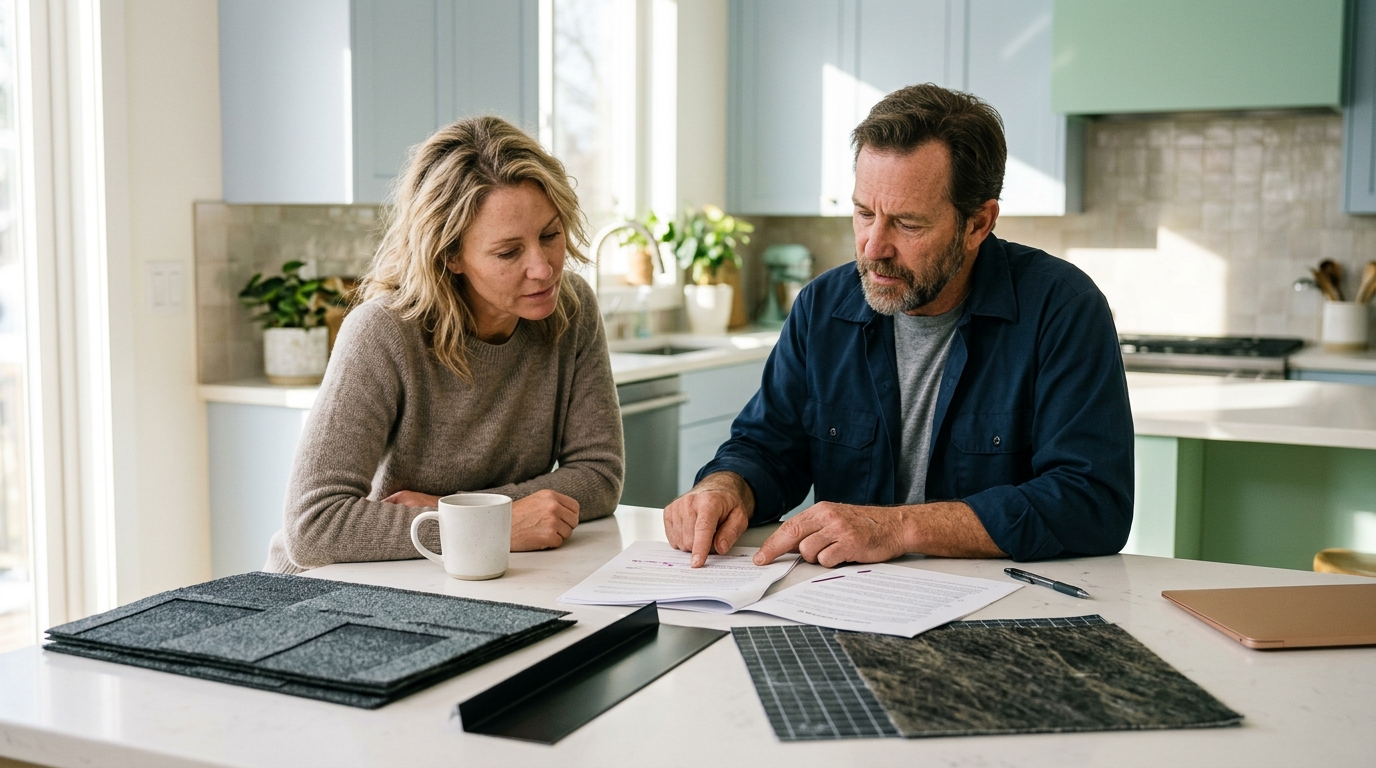
Before you sign a roofing contract, ask these 10 essential questions: proof of license and insurance, a written itemized estimate, manufacturer certifications, subcontractor disclosure, warranty terms, payment schedule, permit responsibility, cleanup plan, project timeline, and references from recent local jobs. Skipping even one of these can cost you thousands.
A new roof is one of the largest single investments you'll make in your home - typically ranging from $8,000 to $25,000 or more depending on material and square footage. The roofing industry also has one of the highest rates of contractor fraud of any home improvement category. The questions below are your filter. Use every one of them.
1. Are You Licensed and Insured in This State?
This is non-negotiable. Ask for the contractor's state license number and look it up on your state's contractor licensing board website before your conversation goes any further. Licensing requirements vary by state, but a legitimate roofer operating in a licensed state will hand you that number without hesitation.
Then ask for two separate insurance certificates: general liability insurance and workers' compensation insurance. General liability covers damage to your property. Workers' comp covers any worker injured on your roof. If a crew member falls and the contractor carries no workers' comp, you can be held financially responsible through your homeowner's insurance - and your rates will reflect it.
Call the insurance company directly to verify the policy is active. Certificates can be faked or show expired policies.
2. Are You a Certified Installer for the Shingles You're Recommending?
Major shingle manufacturers - GAF, Owens Corning, CertainTeed, and Atlas - offer tiered contractor certification programs. GAF's Master Elite certification, for example, is held by fewer than 3% of roofing contractors in the U.S. These certifications matter because they unlock enhanced warranty options that a non-certified installer cannot offer you.
A certified installer for a premium product line can typically offer a workmanship warranty of 25 years or more alongside the manufacturer's material warranty. An uncertified installer can only offer you the base manufacturer warranty, which often excludes labor costs entirely.
3. Will You Pull the Permit?
In most jurisdictions, roof replacement requires a permit. If a contractor suggests skipping it to save money or speed up the job, walk away. An unpermitted roof can:
- Void your homeowner's insurance claim coverage
- Create problems when you sell the home (title searches flag unpermitted work)
- Leave you liable if the installation fails inspection after the fact
The permit fee is the contractor's responsibility to pull and should be included in your written estimate. Ask specifically: "Will you pull the permit, and is that cost included in this quote?"
4. Who Actually Does the Work - Your Crew or Subcontractors?
Many roofing companies function as sales organizations. They sign the contract, then hand the job to a subcontracted crew. That's not automatically a problem, but you need to know it's happening. Ask:
- Are the workers on my roof your direct employees or subcontractors?
- If subcontractors, are they covered under your insurance policy or their own?
- Who is the project supervisor, and will they be on-site daily?
If the answer is subcontractors with their own insurance, request a certificate from the subcontracting company as well. Gaps in coverage at the sub level still expose you.
5. What Does the Written Estimate Itemize?
Never accept a single-line estimate. A legitimate written estimate should break out:
- Tear-off and disposal of existing roofing material
- Decking inspection and repair cost (per sheet of plywood, priced separately)
- Underlayment type and brand
- Ice and water shield coverage (linear feet)
- Shingle brand, product line, and color
- Ridge cap type
- Flashing (chimney, skylights, pipe boots)
- Ventilation (ridge vents, soffit vents)
- Labor
- Permit fee
- Cleanup and haul-away
If a contractor hands you a one-page estimate with a single dollar figure, that's a red flag. Vague contracts make it easy to swap cheaper materials than you were promised.
6. What Are the Warranty Terms - and Who Backs Them?
Roofing warranties come in two forms, and you need both explained in writing:
Warranty Type What It Covers Who Backs It Typical Duration Manufacturer Material Warranty Defects in the shingle itself Shingle manufacturer (GAF, Owens Corning, etc.) 25–50 years (prorated after Year 10 in most base plans) Contractor Workmanship Warranty Installation errors (leaks, improper flashing, etc.) The roofing contractor 1–25 years depending on certification levelThe workmanship warranty is the more important one in practice, because most roof failures in the first decade are installation errors, not material defects. A contractor offering only a 1-year workmanship warranty on a 30-year shingle is not giving you the coverage the marketing implies.
7. What Is the Payment Schedule?
A standard, legitimate payment structure looks like this: a deposit of 10–30% upfront, with the balance due upon completion and your inspection. Contractors who demand 50% or more before work begins are a significant fraud risk. Contractors who ask for full payment upfront should be disqualified immediately.
Never pay the final balance until you have walked the property, confirmed all debris is removed, and verified the permit has been signed off by your local building inspector.
8. How Will You Protect My Property During the Job?
Roofing is a destructive process. Old shingles, nails, and debris rain off your roof for hours. Ask the contractor specifically:
- Will you use tarps to protect landscaping, AC units, and decks?
- How do you handle nail cleanup - do you use magnetic rollers?
- Who is responsible for damage to gutters, siding, or windows during installation?
Get the answers in writing inside the contract. Verbal promises evaporate on completion day.
9. What Is the Realistic Project Timeline?
Most residential roof replacements take one to three days for an average-sized home. Get a written start date and a written completion date. Ask what happens if weather delays the job, and get the contractor's communication protocol in writing - who contacts you, how, and when.
Contractors who refuse to commit to a timeline or constantly push start dates are often juggling more jobs than they can handle. Your project will stall while they prioritize other customers.
10. Can You Provide Three Local References from the Past Six Months?
Ask for references - then actually call them. Ask each reference: Did the crew show up on time? Was the estimate accurate or did costs inflate mid-job? Did cleanup meet your expectations? Would you hire them again? A contractor with nothing to hide will provide references without hesitation.
Also check the contractor's Better Business Bureau profile, Google reviews, and any state contractor complaint database. Look specifically for patterns: repeated complaints about cleanup, surprise charges, or warranty non-response are disqualifying.
Red Flags That Should End the Conversation Immediately
- Storm chasers: Contractors who appear in your neighborhood immediately after a hail event and pressure you to sign the same day
- No physical address: A P.O. box or no local office means no accountability
- Unusually low bids: A bid 30–40% below others usually signals material substitution or unlicensed labor
- Signing over your insurance claim: Assignment of Benefits (AOB) agreements transfer your insurance rights to the contractor- do not sign these
- No written contract: A verbal agreement is unenforceable for a job of this scale
Do I need a permit for a roof replacement?
In most U.S. jurisdictions, yes. Roof replacement requires a building permit, and your contractor should pull it on your behalf. The cost should be included in your written estimate. An unpermitted roof can void insurance coverage and create legal complications when you sell your home.
How much should a roofing deposit be?
A legitimate roofing contractor asks for 10–30% upfront as a deposit, with the remainder due upon satisfactory completion of the job. Requests for 50% or more upfront, or for full payment before work begins, are strong indicators of contractor fraud.
What is the difference between a manufacturer warranty and a workmanship warranty?
A manufacturer warranty covers defects in the shingle material itself and is backed by the shingle company (GAF, Owens Corning, CertainTeed, etc.). A workmanship warranty covers installation errors and is backed by your roofing contractor. Workmanship warranties range from 1 year to 25 years depending on the contractor's certification level. Most early roof failures are installation errors, making the workmanship warranty the more practically important of the two.
What is a certified roofing contractor, and why does it matter?
Shingle manufacturers like GAF and Owens Corning offer tiered certification programs for roofing contractors who complete training and meet quality standards. Certified contractors - such as GAF Master Elite installers - can offer enhanced warranty packages that non-certified contractors cannot. These enhanced warranties often extend workmanship coverage to 25 years and include non-prorated material coverage.
How do I verify a roofing contractor's license and insurance?
Ask for the contractor's state license number and look it up on your state's official contractor licensing board website. For insurance, request certificates for both general liability and workers' compensation, then call the issuing insurance company directly to confirm the policies are active and cover the dates of your project. Do not rely solely on the certificate document - certificates can be outdated or falsified.
