From the blog
Working From Home? How to Prepare for a Roof Replacement Day in 2026
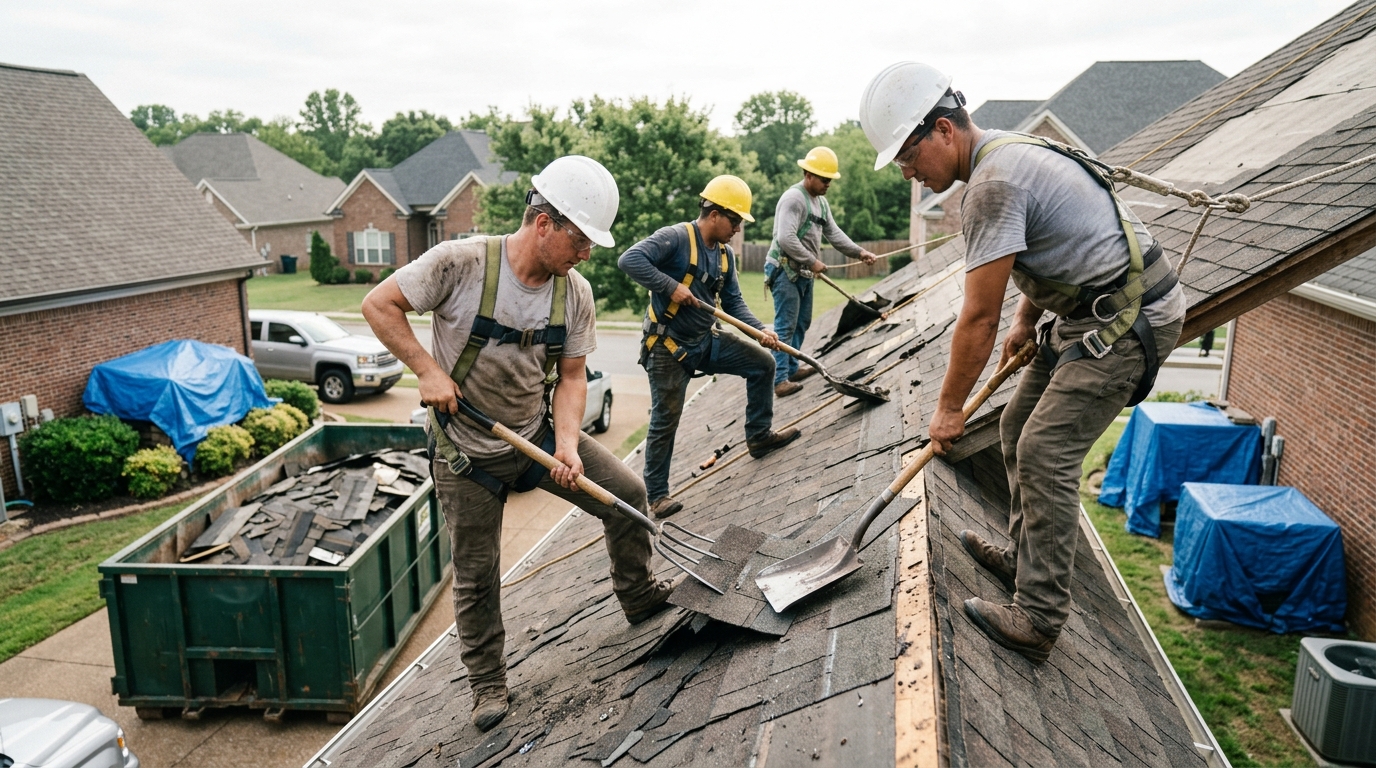
A typical Middle Tennessee roof replacement takes one day for a home under 3,000 square feet with a simple roofline, and two to three days for larger or steeper homes. Crews arrive between 7:00 and 8:00 a.m., and most are finished with cleanup by 4:00 to 6:00 p.m. If you work from home, plan for 8 to 10 hours of continuous noise, vibration, and limited driveway access.
What Happens on Roof Replacement Day: Hour-by-Hour Timeline
Knowing the sequence helps you schedule calls and meetings around the loudest phases. This is the standard order for a single-day tear-off and install on an asphalt shingle roof.
- 7:00 to 8:00 a.m., arrival and setup. The crew delivers materials (often staged on the roof the day before or by a boom truck that morning), positions a dumpster or debris trailer, and lays tarps over landscaping, AC units, and siding.
- 8:00 to 11:00 a.m., tear-off. Crews strip old shingles, underlayment, and nails down to the decking. This is the loudest phase. Expect constant scraping, shovels, and falling debris.
- 11:00 a.m. to 12:00 p.m., decking inspection. Rotted or damaged plywood or OSB is replaced. Any extra decking is typically billed per sheet under the terms of your contract, so confirm that rate in writing beforehand.
- 12:00 to 4:00 p.m., dry-in and installation. Crews install ice and water shield in valleys and eaves, synthetic underlayment, drip edge, and starter strips, then nail shingles row by row.
- 3:00 to 5:00 p.m., ridge, vents, and flashing. Ridge caps, pipe boots, and ventilation components go on last.
- 4:00 to 6:00 p.m., cleanup and inspection. Crews run a magnetic sweep for nails and do a final walkthrough with the project lead.
Weather changes this schedule. Crews stop when rain or lightning threatens, and a roof is never left open overnight without a full dry-in. Expect a reschedule call from your project manager the evening before if the forecast is bad.
How to Prepare the Inside of Your Home
Tear-off vibration shakes nails, dust, and old insulation fibers loose in the attic and can rattle items off walls. Work through this checklist 24 hours ahead.
- Take down wall hangings on exterior walls and in rooms directly under the roof, including mirrors, framed photos, and shelves.
- Cover attic contents. Move stored items out or cover them with plastic sheeting. Debris sifts through attic floors during tear-off.
- Protect furniture and electronics in top-floor rooms with drop cloths.
- Clear a path to the attic access in case the crew needs to check decking or ventilation from below.
- Secure fragile items such as china cabinets and glass displays, which are the most common casualties of roof vibration.
How to Prepare Your Yard, Driveway, and Exterior
The crew needs unobstructed access to the roof perimeter and a clear spot for the dumpster and trucks.
- Clear the driveway. Park vehicles on the street or at a neighbor's home. Falling nails and debris can damage cars, and equipment needs the space.
- Move patio furniture, grills, planters, and yard decorations at least 10 feet from the foundation.
- Trim back low branches that block ladder or tarp placement.
- Mark sprinkler heads, landscape lighting, and invisible fence lines so crews avoid them.
- Tell neighbors. A brief heads-up about noise and truck traffic prevents complaints, which matters in HOA neighborhoods in Brentwood and Franklin where dumpster placement may be regulated.
Ask your contractor how they protect the property. A professional crew uses tarps over shrubs, plywood against delicate surfaces, and a magnetic roller on the lawn and driveway after cleanup. If your contractor does not mention a magnetic sweep, ask for one.
Working From Home During a Roof Replacement
Remote work during tear-off is difficult. Sound levels on the roof reach levels where video calls become unusable in upper-floor rooms. You have three realistic options, and each has trade-offs.
| Option | Best For | Trade-Off |
|---|---|---|
| Work off-site (office, library, coworking space) | Video-heavy roles and client calls | Requires leaving the home, so you cannot answer crew questions in person |
| Work from a basement or ground-floor interior room | Phone-based or focused tasks | Still hears tear-off thumping and vibration |
| Take the day off or shift hours | Meeting-heavy schedules | Uses PTO, though it lets you handle the final walkthrough |
If you stay, wear noise-canceling headphones, move your workstation away from the roofline, and schedule important calls for the 12:00 to 2:00 p.m. window, when crews shift from tear-off to shingle installation. Nailing is still audible, but it is lower and more rhythmic than tear-off scraping. Also expect brief power or internet interruptions only if the crew is working near the service mast, which is rare but worth mentioning to your project manager.
Pets, Children, and Health Considerations
Dogs and cats often panic from the vibration and noise. Board pets for the day, or place them in the quietest interior room with white noise. Infants and children who nap should be at a relative's home if possible. Anyone with respiratory conditions should avoid the attic and upper floors, since tear-off releases fine dust. Keep children away from windows and the yard, where nails can land.
What to Expect for Cleanup and Final Inspection
Cleanup is part of the job, not an add-on. A complete cleanup includes removing all old shingles and packaging, sweeping gutters, running a magnetic roller across the yard, driveway, and flowerbeds, and hauling away the dumpster or trailer.
Before the crew leaves, walk the property with the project lead and check:
- Ridge lines are straight, and shingles are aligned without exposed nails.
- Flashing around chimneys, skylights, and walls is sealed and visible.
- Gutters are free of debris and undamaged. Ask about seamless gutter replacement while the roof is bare if your gutters are over 15 years old.
- Vents and pipe boots are secure.
- Your lawn and landscaping are free of nails and shingle scraps.
Request photos of the finished roof and your warranty paperwork. GAF Master Elite contractors can offer lifetime workmanship coverage and manufacturer system warranties, so confirm which one you are receiving and when it is registered.
After Installation: The First 72 Hours
New shingles release small granules during the first rain, which is normal. Check your attic the first time it rains for water stains or daylight at penetrations. Report any leaks immediately, because most workmanship warranties require prompt notice. Expect an occasional stray nail in the following weeks, and keep the magnet roller handy or ask the contractor to return for a second sweep.
Roof Replacement Day FAQ
How long does a roof replacement take in Middle Tennessee?
Most homes between 1,500 and 3,000 square feet take one day. Larger homes, steep pitches, multiple layers of old shingles, or extensive decking repair extend the project to two or three days.
Do I need to be home during a roof replacement?
No. You do not need to be present, but you should be reachable by phone. Being available for the final walkthrough helps confirm the work matches your contract.
What if it rains on installation day?
Reputable crews reschedule when rain is forecast. If weather arrives mid-project, they dry-in the exposed sections with underlayment and tarps so no part of the roof is left open to moisture.
Can I stay in my house during tear-off?
Yes. It is safe, but it is loud, dusty, and shaky. Remote workers are better off relocating for the first four hours of the day.
Who is responsible for damage to my property?
Your contractor. A licensed and insured roofer carries general liability and workers' compensation coverage. Ask for certificates of insurance before the job begins and photograph your landscaping, siding, and driveway the day before.
