From the blog
The 21-Point Drone Roof Inspection: What We Look For (And Why It Matters)
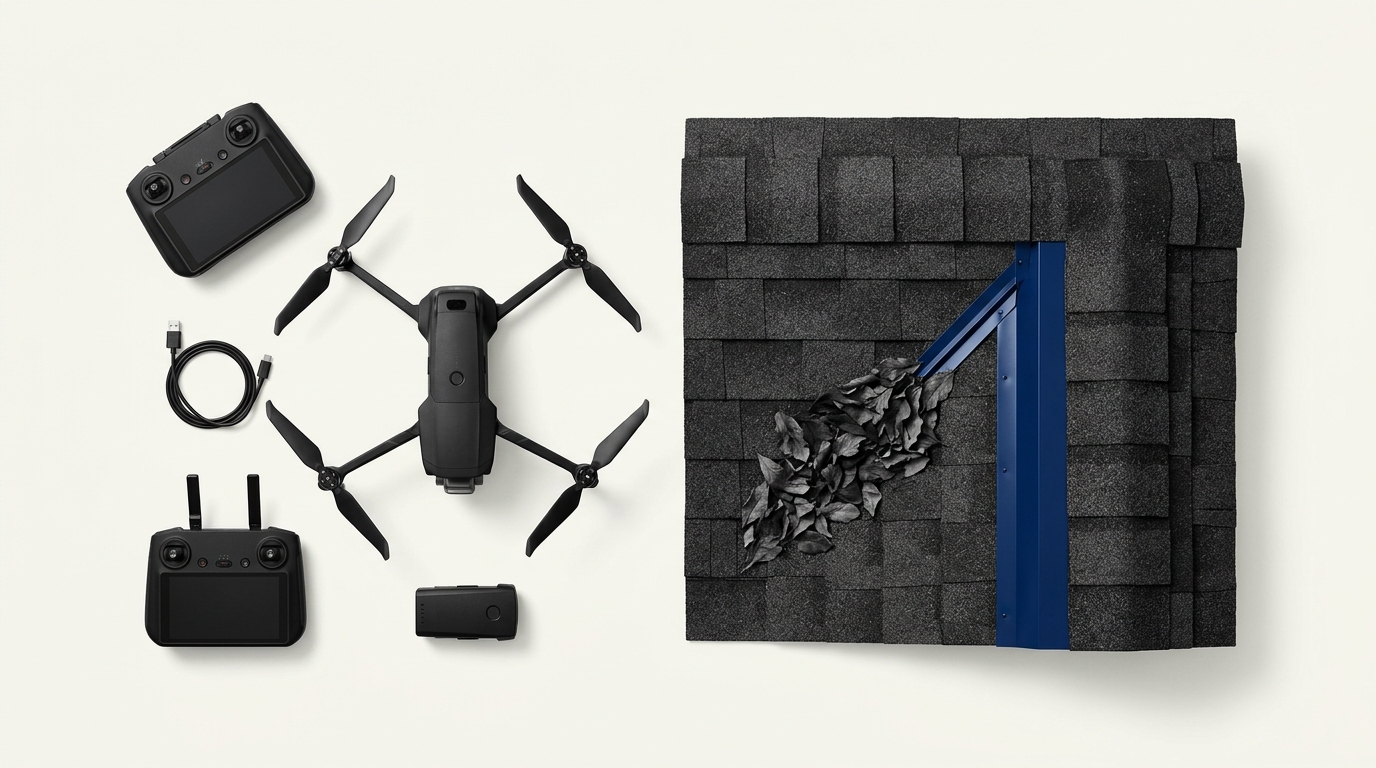
A professional drone roof inspection evaluates 21 distinct structural and material checkpoints - from ridge caps and flashing seals to granule loss and soffit ventilation - giving Middle Tennessee homeowners a complete picture of their roof's condition without a single ladder on the property. Here is exactly what our certified inspectors assess and why each point directly affects your roof's lifespan and your insurance claim eligibility.
Why Drone Inspections Outperform Traditional Walk-Overs
Traditional ladder-and-boot inspections miss an average of 30% of surface area on complex rooflines - a figure documented repeatedly by roofing industry researchers. Our drone inspection platform captures 4K aerial footage of every slope, valley, and penetration point, then produces a timestamped digital report you can submit directly to your insurance adjuster. For homeowners in Nashville, Franklin, Brentwood, Murfreesboro, and Hendersonville, that documentation is frequently the difference between a full replacement claim approval and a partial payout.
The Complete 21-Point Inspection Checklist
Our inspectors work through four categories: Structural Integrity, Surface and Material Condition, Water Management, and Ventilation and Insulation.
Category 1 - Structural Integrity (Points 1–6)
- Ridge Line Alignment- A sagging or bowed ridge is a primary signal of deck failure or rafter damage beneath the shingles.
- Eave and Fascia Straightness- Uneven eaves indicate water infiltration or wood rot in the fascia board, which accelerates gutter failure.
- Deck Softness Indicators- The drone camera captures surface depression patterns that suggest rotted or delaminated OSB decking underneath.
- Hip and Valley Symmetry- Asymmetrical hips signal structural shifting, often caused by foundation settlement common in Middle Tennessee's clay-heavy soils.
- Chimney and Skylight Squareness- Penetrations that have shifted out of plane create gaps at the flashing line, the most common source of interior water damage.
- Overall Plane Consistency- Each slope is photographed at multiple angles to detect any localized deflection invisible from ground level.
Category 2 - Surface and Material Condition (Points 7–13)
- Shingle Granule Coverage- Granule loss exposes the asphalt mat to UV degradation and is the clearest early indicator that a roof is approaching end-of-life.
- Cracking and Curling Patterns- Thermal cycling in Tennessee - where temperatures swing 60°F or more between winter lows and summer highs - causes shingles to curl at edges (cupping) or lift at centers (clawing).
- Missing Shingles- Every missing tab is mapped by GPS coordinate in the drone report for precise contractor bidding and insurance documentation.
- Hail Impact Bruising- The drone camera detects the characteristic circular mat bruising that adjusters require for storm damage claims. Hail hits are invisible from ground level.
- Wind Uplift Damage- Lifted tab edges and broken seals are photographed in high resolution, proving wind-speed-related damage for insurance purposes.
- Moss, Lichen, and Algae Growth- Biological growth accelerates shingle breakdown by retaining moisture and lifting granules. Middle Tennessee's humidity makes this a near-universal concern on roofs older than 10 years.
- Blistering and Shrinkage- Both indicate manufacturing defects or improper ventilation and may trigger a warranty claim rather than an insurance claim.
Category 3 - Water Management (Points 14–18)
- Valley Flashing Condition- Open or woven valleys are inspected for metal corrosion, cracked sealant, and shingle lifting at the transition line.
- Step and Counter Flashing at Walls- Separated or improperly lapped step flashing is the leading cause of wall-cavity moisture intrusion in two-story homes.
- Pipe Boot and Collar Integrity- Cracked rubber boots around plumbing penetrations fail within 10–15 years and are a frequent source of slow, invisible leaks.
- Drip Edge Coverage- Missing or undersized drip edge allows water to wick under the shingle starter course, rotting the decking at the eave line.
- Gutter Attachment and Overflow Points- Overflowing gutters are photographed to identify debris dams or undersized downspouts that send water behind the fascia.
Category 4 - Ventilation and Insulation (Points 19–21)
- Ridge Vent Continuity- Blocked or discontinuous ridge vents create heat and moisture buildup that degrades shingles from the underside and voids most manufacturer warranties.
- Soffit Vent Obstruction- The drone inspects soffit panels for paint-over blockage or insulation encroachment that restricts intake airflow.
- Attic Exhaust Balance- The ratio of intake to exhaust area is calculated from the inspection data. An imbalanced system is the single biggest reason roofs in Middle Tennessee underperform their rated lifespan.
Roof Repair vs. Replacement: What the Data Tells Us
After completing the 21-point assessment, our inspectors place every roof in one of three categories:
Condition Score Recommended Action Typical Driver 85–100 (Excellent) Preventive maintenance only Minor sealant touch-up, gutter cleaning 65–84 (Fair) Targeted repair Flashing replacement, isolated shingle swap Below 65 (Poor) Full replacement Widespread granule loss, structural damage, or ageHomeowners often ask whether repair or replacement is more cost-effective. The answer depends on age. A roof scoring Fair at year 8 of a 30-year shingle system is an excellent repair candidate. The same score at year 22 means repair money is spent protecting a surface with less than 8 years of remaining service life - replacement is the financially sound choice.
How Long Does a Roof Last in Tennessee?
Asphalt shingles rated for 30 years typically deliver 18–22 years of reliable performance in Middle Tennessee. The gap is caused by three regional factors: intense UV exposure from 200+ sunny days per year, high humidity that accelerates biological growth, and severe convective storms that produce both hail and straight-line wind events multiple times each year. GAF Timberline HDZ shingles installed by a GAF Master Elite Certified contractor with balanced attic ventilation consistently reach the top of that range. Standard contractor installations with ventilation deficiencies average closer to 15–18 years.
5 Common Roof Problems Drone Inspections Catch Early
- Pipe boot failure- A $200 repair when caught early; a $4,000+ repair when it produces attic mold before discovery.
- Step flashing separation- Commonly misdiagnosed as a window leak because water travels along the wall cavity before appearing inside.
- Ridge vent blockage- Causes attic temperatures to exceed 160°F in Tennessee summers, cooking shingles from below and reducing lifespan by 20–30%.
- Granule accumulation in gutters- A reliable early warning that shingles are shedding protective coating and will need replacement within 3–5 years.
- Hail bruising- Invisible from the ground, fully documentable from 30 feet of altitude, and required by insurance carriers to substantiate storm damage claims.
Roof Maintenance Tips That Extend Lifespan
- Schedule a professional drone inspection after every hail event producing stones 3/4 inch or larger - the threshold at which asphalt shingles sustain measurable mat damage.
- Keep gutters clear of debris twice per year (spring and late fall) to prevent water backup under the starter course.
- Trim tree limbs to maintain a minimum 6-foot clearance from the roof surface to reduce moss growth and eliminate abrasion damage.
- Apply a zinc- or copper-based algae inhibitor treatment every 2–3 years on north-facing slopes where biological growth establishes fastest.
- Verify attic insulation is pulled back 3 inches from each soffit vent to maintain unobstructed airflow year-round.
What Happens After Your Drone Inspection Report
Within 24 hours of the flight, you receive a full PDF report with GPS-tagged photographs for every flagged checkpoint, a condition score, and a recommended action summary. If storm damage is identified, our team assists with the insurance claim documentation process - submitting the report directly to your adjuster in the format carriers operating in Tennessee require. If replacement is recommended, we provide a line-item estimate using current material pricing for your specific roof geometry.
Roof Maintenance Tips FAQ
How long does a drone roof inspection take?
The drone flight itself takes 20–45 minutes depending on roof complexity and square footage. The 21-point analysis and written report are delivered within 24 hours. No one needs to be home during the inspection.
Will the drone inspection damage my roof or void my warranty?
No. The drone never contacts the roof surface. Because no boots walk on the shingles, a drone inspection is actually the safest assessment method for preserving shingle integrity and does not affect manufacturer warranty terms.
How do I know if I need a roof repair or a full replacement?
The primary factors are age, the extent of damage, and ventilation condition. Roofs under 15 years old with isolated damage are strong repair candidates. Roofs over 20 years old with granule loss across 30% or more of their surface area, or with deck softness in multiple locations, warrant full replacement. Your drone inspection condition score quantifies this decision.
Does homeowners insurance cover roof replacement in Tennessee?
Most standard HO-3 policies in Tennessee cover sudden storm damage - hail, wind, and falling objects - but exclude deterioration from age or lack of maintenance. The key is documentation: carriers require photographic evidence of the specific storm event's impact. A drone inspection report with GPS-tagged, timestamped images is the most effective documentation format for claim approval.
How often should I have my roof inspected in Middle Tennessee?
Annual inspections are the industry standard recommendation for roofs over 10 years old. Additionally, schedule an inspection within 30 days after any hail event with reported stone sizes of 3/4 inch or larger, or after any wind event producing sustained speeds above 60 mph - both are common in the Nashville metro area during spring storm season.
