From the blog
Tornado vs. Straight-Line Wind Damage on Roofs: A Franklin, TN Guide
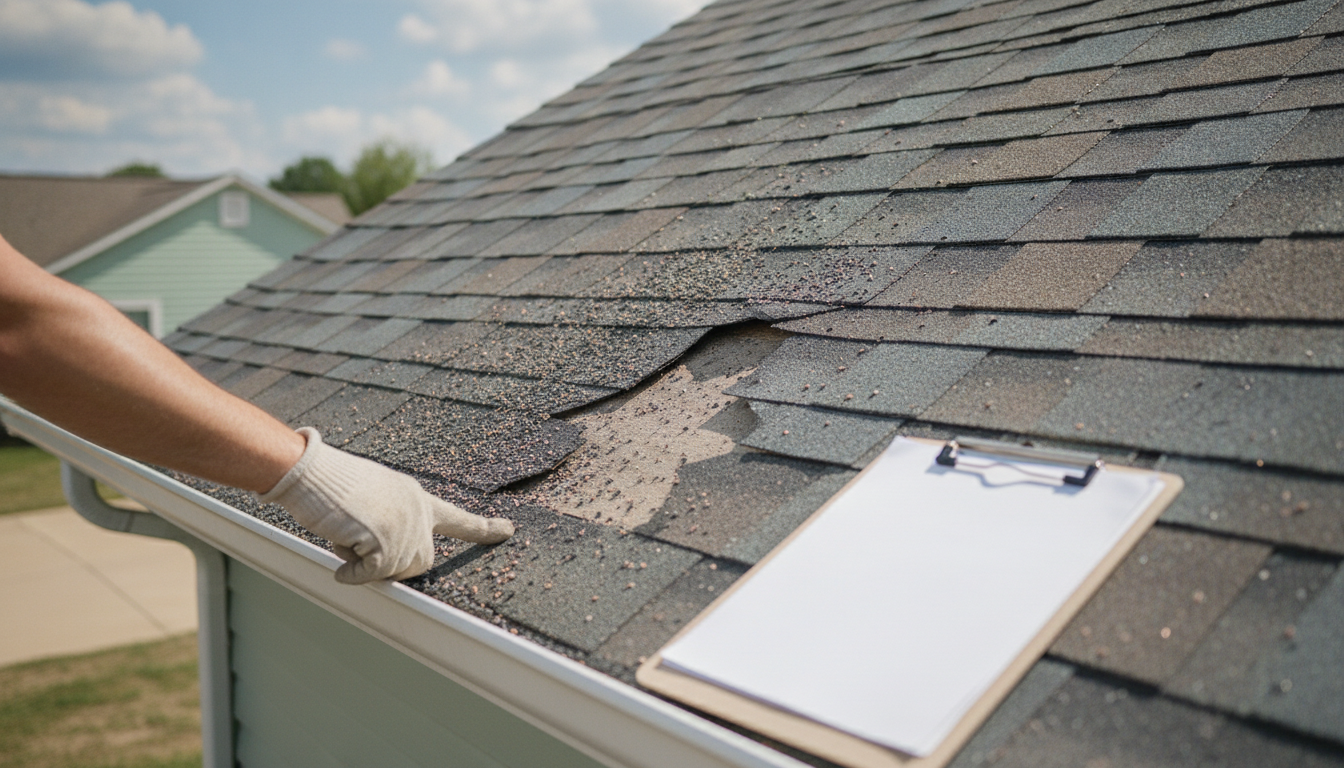
Tornado and straight-line wind damage produce distinct damage patterns on roofs, and correctly identifying which type of storm caused your damage directly determines how your insurance adjuster evaluates your claim in Franklin, TN and across Middle Tennessee.
How Tornado Damage Differs from Straight-Line Wind Damage
Both tornadoes and straight-line winds routinely top 60–100+ mph in Middle Tennessee, but the physics behind each event leaves a different fingerprint on your roof. Understanding the difference matters before you file a roof insurance claim in Tennessee, because adjusters are trained to spot inconsistencies between a homeowner's reported storm type and the actual damage pattern.
Tornado Damage: Rotational, Unpredictable, and Concentrated
Tornado winds rotate. That rotational force creates damage that looks chaotic from the street: shingles missing in swirling or random patterns, ridge caps peeled in multiple directions, and sections of decking lifted while adjacent sections remain intact. You may also see structural shifts, such as a fascia board pulled outward rather than blown in a single direction. Debris impact is severe and nondirectional. Tree limbs, fence panels, and other projectiles hit from multiple angles.
Straight-Line Wind Damage: Directional and Predictable
Straight-line winds, including derecho events that regularly affect the Nashville and Murfreesboro corridors, travel in one direction. The damage pattern reflects that. Shingles lift and peel from a single facing slope, typically the side facing the storm's origin. Gutters and flashing fold in one direction. Satellite dishes and vents bend the same way. If your neighbor's damage mirrors yours directionally, straight-line winds are the likely cause.
Tornado vs. Straight-Line Wind Damage: 6 Key Differences
| Damage Indicator | Tornado | Straight-Line Wind |
|---|---|---|
| Shingle loss pattern | Random, multidirectional | Uniform, single facing slope |
| Ridge cap condition | Peeled in multiple directions | Lifted or missing on windward side |
| Debris impact angle | Multiple angles | Single predominant direction |
| Structural shifts | Common (rafter separation, decking uplift) | Rare unless wind exceeds 90 mph |
| Neighborhood pattern | Spotty, skips houses | Consistent across a wide swath |
| Insurance classification | Typically "tornado" peril | Typically "windstorm" peril |
The insurance classification column above matters more than most Franklin homeowners realize. Some Tennessee policies carry separate deductibles for named perils. Review your declarations page before filing so you know exactly which deductible applies to your event.
The Roof Insurance Claim Process in Tennessee: Step by Step
Filing a roof insurance claim in Tennessee follows a specific sequence. Skipping steps or completing them out of order delays payment and sometimes results in claim denial.
- Document damage immediately. Photograph every affected area before touching anything. Capture wide shots showing your entire roof slope, then close-ups of lifted shingles, exposed decking, damaged flashing, and dented gutters. Time-stamp every image.
- Schedule a professional inspection. A qualified roofing contractor, particularly one who uses drone roof inspection technology, can access slopes and angles safely while producing a detailed photographic record. Drone inspections capture areas invisible from a ladder and create timestamped flight logs that carry weight with adjusters.
- File your claim promptly. Tennessee's standard homeowner policies require "prompt" notice after a loss. Most insurers define this as 30–60 days, but reading your specific policy language is essential. Late filing gives insurers grounds to reduce or deny the claim.
- Meet the adjuster with your contractor present. This is the single most impactful step most homeowners skip. When your roofing contractor walks the adjuster through documented damage points in real time, missed items get caught before the adjuster closes the inspection file.
- Review the scope of loss carefully. The adjuster produces a scope document listing every line item and its estimated cost. Compare it against your contractor's written estimate. Discrepancies in square footage, material grade, or omitted line items (such as underlayment, ice and water shield, or drip edge) are common and correctable through a supplement.
- Authorize repairs after settlement. Work does not need to wait for final payment if you have an agreed scope. Many reputable Franklin and Nashville roofing companies work directly with insurers to finalize supplemental payments while repairs proceed.
Hail Damage and Wind Damage: When Both Occur Together
Middle Tennessee storms frequently combine hail and wind, which complicates the hail damage roof claim process in Franklin, TN. Hail leaves circular bruise marks or granule displacement in a spatter pattern across all slopes regardless of wind direction. Wind damage concentrates on specific slopes. When both are present, a thorough inspector documents each type separately.
Hail size thresholds matter to adjusters. A 2025 Insurance Institute for Business and Home Safety study confirmed that functional damage to standard three-tab shingles begins at 1-inch hailstones. Class 4 impact-resistant shingles, which GAF Master Elite installers can provide in Franklin and Brentwood, resist functional damage up to 2-inch hail. If your current roof lacks this rating, a full replacement with upgraded shingles often results in a homeowner's insurance premium reduction of 20–30% from participating Tennessee insurers.
Signs Your Roof Needs Repair vs. Full Replacement After Storm Damage
Not every storm-damaged roof in Murfreesboro or Hendersonville requires full replacement. The determining factors are damage percentage, shingle age, and underlying deck integrity.
- Repair is appropriate when fewer than 25–30% of shingles are affected, the decking shows no soft spots or delamination, flashing is intact, and the roof is fewer than 10 years old.
- Replacement is appropriate when more than 30% of shingles are damaged, the roof is within 5 years of its manufacturer lifespan, decking is compromised in multiple locations, or granule loss has accelerated to the point that shingles are losing weather resistance.
- Replacement is required by code in some Tennessee jurisdictions when repairs exceed a specific percentage of total roof area. Metro Nashville and Williamson County inspectors can flag this during permit review.
Working with GAF Master Elite Contractors in Middle Tennessee
GAF Master Elite status is held by fewer than 2% of roofing contractors in the United States. Contractors who hold this designation can offer the Golden Pledge Limited Warranty, which covers both materials and workmanship for up to 25 years. For homeowners in Franklin, Brentwood, and Nashville navigating wind damage roof claims, a warranty-backed installation provides documented quality evidence that strengthens the value of the replaced asset.
When selecting a contractor after storm damage, confirm that they are licensed in Tennessee, carry a minimum of $1 million in general liability coverage, and hold manufacturer-certified installer status. Ask specifically whether they provide a written lifetime workmanship warranty separate from the manufacturer's material warranty. These are two distinct documents covering two distinct categories of failure.
Preventing Future Storm Damage to Your Middle Tennessee Roof
Mitigation steps taken before the next severe weather season reduce both damage severity and future claim frequency. Franklin and Nashville homeowners with roofs approaching the 15-year mark benefit most from proactive inspection and targeted upgrades.
- Install Class 4 impact-resistant shingles during your next replacement cycle.
- Upgrade to six-nail shingle attachment patterns instead of the four-nail standard in high-wind zones.
- Apply secondary water barrier (peel-and-stick underlayment) across the entire deck, not just at eaves and valleys.
- Inspect and reseal all roof penetrations, including pipe boots, HVAC curbs, and skylights, annually before spring storm season.
- Keep gutters clear year-round so water does not back up under shingles during heavy rain events.
Storm Damage Roof FAQ for Franklin and Middle Tennessee Homeowners
How long do I have to file a wind damage roof claim in Tennessee?
Tennessee law does not set a universal deadline for filing homeowner insurance claims, but most policies contain a prompt-notice provision requiring you to notify your insurer as soon as practicable after a loss. In practice, filing within 30 days of the storm event protects your claim. Some policies carry a hard contractual deadline of 12 months to complete repairs or pursue legal action. Review your declarations page immediately after damage occurs.
Will my insurance company cover a full roof replacement after a storm in Franklin, TN?
Coverage depends on your policy type and roof age. Replacement cost value (RCV) policies pay for a new roof of like kind and quality after the deductible. Actual cash value (ACV) policies depreciate the payment based on the roof's age and condition. Roofs over 20 years old are sometimes only eligible for ACV coverage regardless of policy type. Confirm your coverage category before the adjuster visits.
Can a roofing contractor supplement my insurance claim after the initial settlement?
Yes. Supplemental claims are standard in the roofing industry and legally permissible in Tennessee. If the initial adjuster scope omitted line items, used incorrect measurements, or applied outdated material pricing, your contractor submits a supplement with supporting documentation. Most supplements are resolved within 2–4 weeks of submission.
What is a drone roof inspection and why does it matter for my insurance claim?
A drone roof inspection uses FAA-authorized unmanned aerial vehicles to photograph every square foot of your roof, including high-pitched slopes and areas inaccessible by ladder. The resulting timestamped image set documents pre-repair damage in a format that adjusters and insurance reviewers accept. Drone inspections are particularly valuable in tornado damage scenarios where evidence must clearly show multidirectional impact patterns.
Do I need a permit to replace my roof in Williamson County or Nashville after storm damage?
Yes. Both Metro Nashville (Davidson County) and Williamson County require a building permit for full roof replacements. Permits ensure the work is inspected and that the installation meets current Tennessee Residential Code wind-load requirements. A licensed contractor handles permit procurement as part of the project scope. Unpermitted roof work can create complications during future home sales or follow-on insurance claims.
